



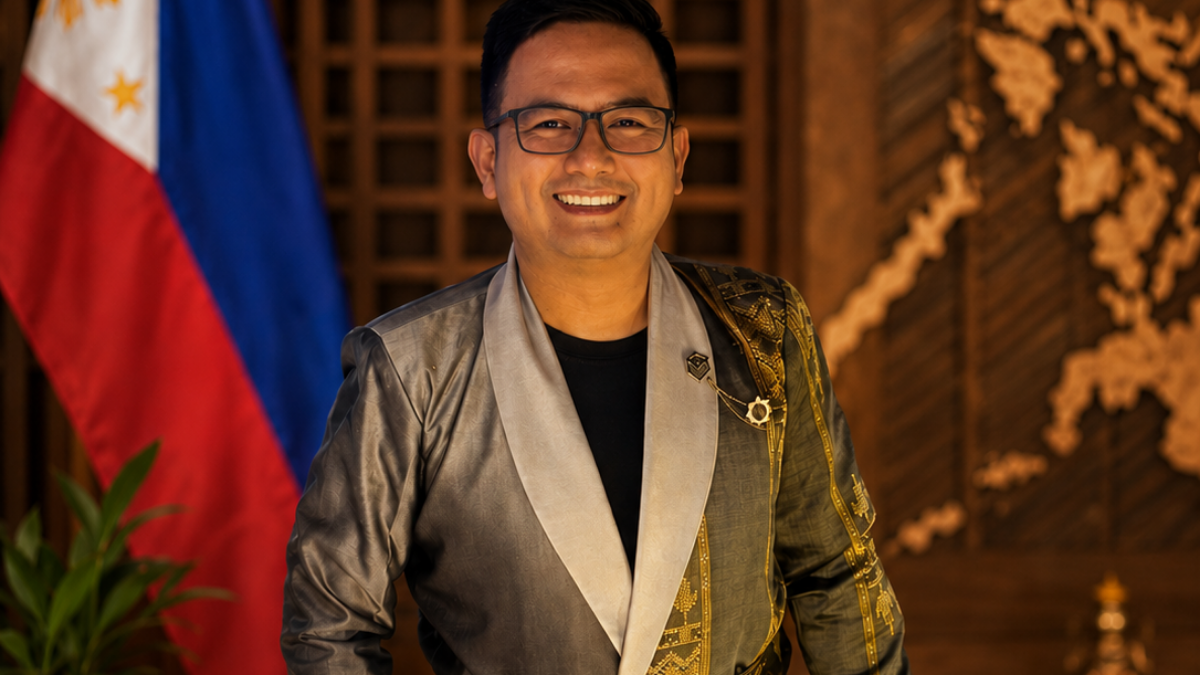

Ask any overseas Filipino worker what they gave up to get where they are, and the answer usually arrives in the language of absence — the birthdays not attended, the graduations watched through a phone screen, the parents cared for from four thousand kilometers away. Sherwin Onrubia Zuñiga has lived every line of that ledger, and yet the story he tells about seventeen years in Saudi Arabia is not one of sacrifice alone. It is a story about how a young man who started as a Jollibee crew member came to design the gowns worn on Jeddah’s biggest stages, host the podcasts that give voice to his fellow migrants, and sit across the table from ambassadors and consuls general — all while never quite settling on a single job title.

At 41, he is the Regional Managing Director Office Manager of Digitect – Smart Platform Solutions Co. in Jeddah. But that line on a business card explains almost nothing about him. “I am blessed to wear many hats as a media practitioner, event director, host, mentor, and entrepreneur, and community leader,” the Filipino creative shares with TGFM, “but at the heart of it all, I am simply someone who loves creating things that inspire and bring people together.” It is a description that sounds, at first, like a man spread thin. Spend a little time with his story, though, and the opposite becomes clear. Every hat is stitched from the same thread.


A dream that started at the counter
Sherwin’s professional life began behind a fast-food counter in the Philippines, at Jollibee, where he worked as a store marketing assistant and service crew while putting himself through college. He is quick to say the job gave him more than a paycheck. “Jollibee was more than just my first job, it became my training ground in life,” the former working student recalls. The discipline, the teamwork, the endless practice of customer service — these were the raw materials of everything that came later.
In 2009, that same company carried him abroad. He joined Jollibee KSA under NESMA Trading Company as a store marketing assistant and crew member, trading the familiar for a country where the language, the climate, and the customs were all foreign at once. Like most who make that leap, he started at the bottom and climbed. Over the years the industries changed beneath him — customer service, healthcare administration, marketing, media, events management, executive support — but the upward motion stayed constant.
The reason for the leap was not ambition in the abstract. It was need. Growing up, he watched his family struggle with the ordinary arithmetic of scarcity: not enough food, not enough money, a pile of responsibilities that kept growing. Then, in his early years abroad, both of his parents suffered strokes. The timing could not have been crueler. Thousands of kilometers away, he became the family’s primary breadwinner and sole provider almost overnight.
“Working abroad was not simply a career choice; it was a necessity,” the eldest brother says. The dream he left home carrying was specific and heavy — medical care for his parents, tuition for his siblings, a future for a family that had rarely been handed opportunities. He mentions the outcome with obvious pride. His three sisters all became professional teachers. His younger brother followed him into the OFW life and now works abroad too.
The designer nobody expected
Here is where the executive assistant’s résumé takes a turn most people would never guess from the office titles. When Sherwin is not managing an office or coordinating business operations, he is designing gowns.
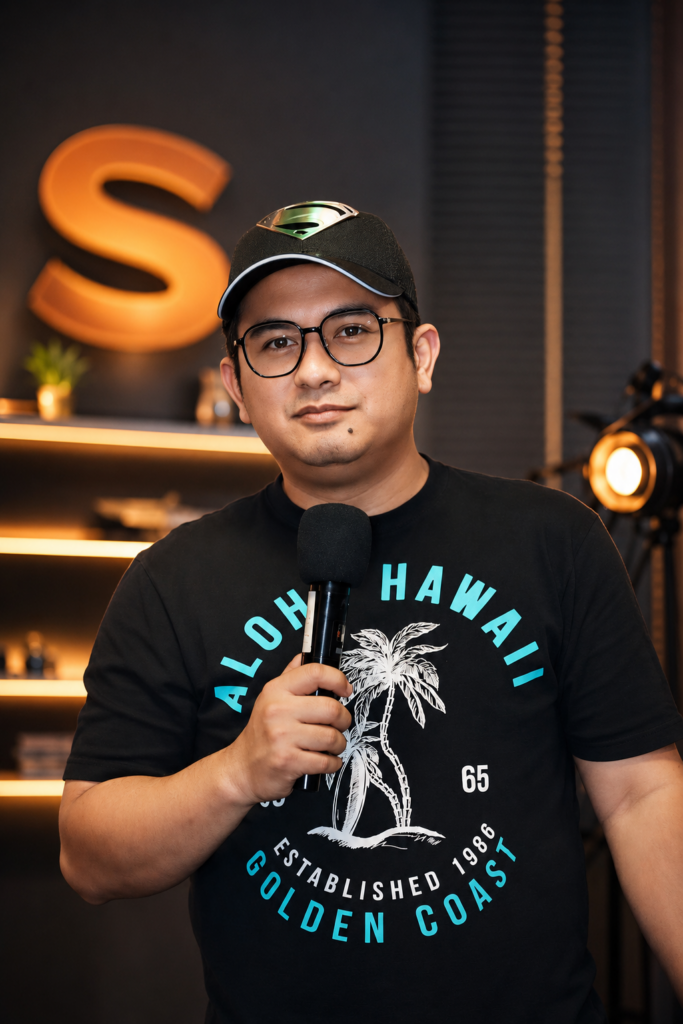
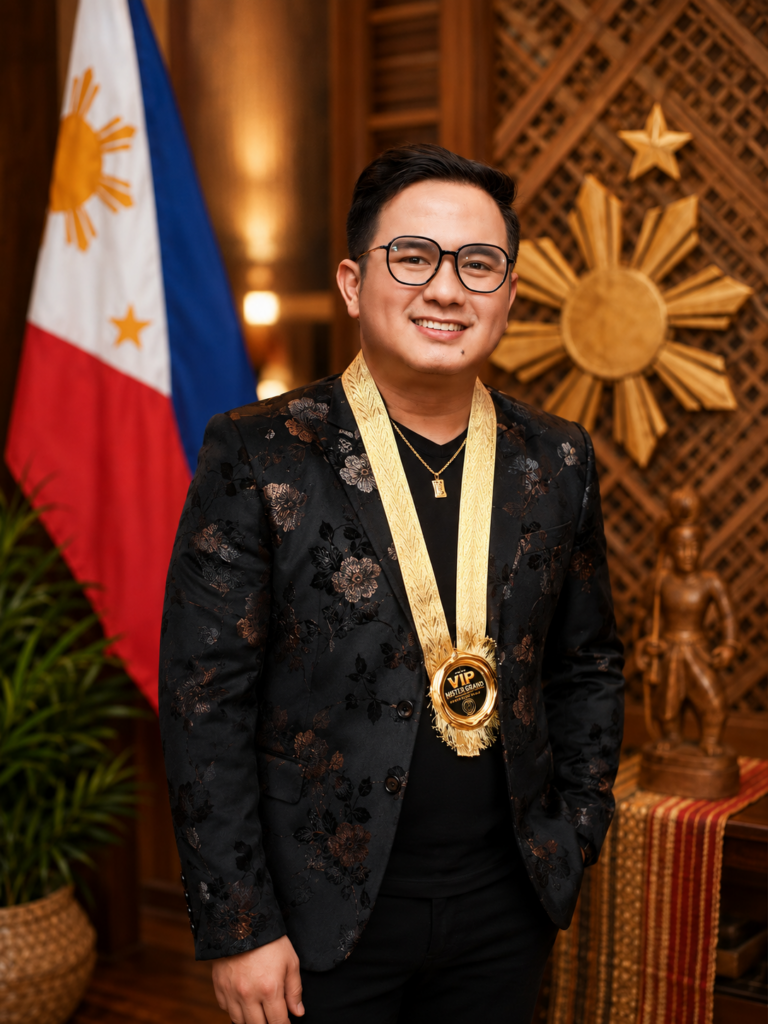
As the creative director behind MBIP Wardrobes, he conceptualizes and creates Filipiniana gowns, Barong Tagalog, suits, cultural attire, pageant wardrobes, and stage costumes. It is not a hobby he treats lightly. “Designing allows me to express my creativity while promoting Filipino culture and craftsmanship,” the self-taught designer says. “Seeing my creations worn on stage, in pageants, and during special occasions gives me a sense of fulfillment and pride.”
That creative streak eventually placed him at the center of something historic. He served, by his account, as content manager and show director for the Philippines Night staged during Jeddah Season — the Saudi government’s push to open the Kingdom’s entertainment scene to expatriate communities. The Filipino community was among the first to take that stage, showcasing its culture and traditions to thousands of spectators. Public records of the event bear out his role: he appears in official documentation as director of Mr. Blue Initiatives and Productions, alongside the Filipino artists who headlined the concerts. For a man who once handled marketing for a burger chain, standing behind a production that represented an entire nation was a distance traveled that no title could measure.
Mr. Blue Initiatives and Productions — MBIP — is his own creation, and he speaks of it as a life’s work rather than a side venture. He is its founder, director, and overall creative head, and a co-founder of the Filipino Artists Guild KSA, or FILARTS KSA. Both organizations exist for the same reasons: talent development, cultural preservation, community empowerment, and service to fellow Filipinos far from home. Through them he has organized concerts, outreach projects, humanitarian drives, talent competitions, and leadership programs. The creative director and the community leader, it turns out, are the same person doing the same thing from two directions.
Where the résumé really goes
The corporate story, for the record, is substantial on its own. After his start in fast food, Sherwin worked as a customer care specialist for IBM Global Solutions Philippines, sharpening the communication and corporate polish that would serve him for decades. In Saudi Arabia he joined the King Abdullah University of Science and Technology through the Saudi Oger Recreation Department, rising from marketing coordinator and graphics designer to officer-in-charge of the recreation marketing department at one of the Kingdom’s most prestigious institutions.
Then came six years in pharmaceuticals and healthcare in Jeddah, where he moved through roles as executive secretary, commercial department assistant, and internal audit office assistant for Pharmaceutical Solutions Industry Ltd. That chapter, the meticulous administrator says, taught him precision. It gave him “extensive exposure to healthcare administration, financial management, compliance, executive support, operations, and organizational development” — the kind of work that rewards attention to detail and punishes the careless.
From 2020 to 2025 he served as executive secretary to the general manager of SAMACO Automotive, the Porsche and Audi distributor in Saudi Arabia, coordinating operations and managing communications at the elbow of senior leadership. Today, at Digitect, he continues that executive-level work — strategic planning, stakeholder engagement, organizational growth. Woven through all of it, quietly, was the volunteer life: financial officer of Total Care International, administrator and external affairs director of Health Alliance Training Center, always some cause pulling at his off-hours.

What he values most about the current job is not the title but the effect. “Every day presents new challenges that allow me to utilize my skills in administration, communications, planning, stakeholder management, and leadership,” the office manager says. He chose the field, he explains, because he enjoys solving problems, organizing systems, and helping teams run better. The satisfaction, for him, is watching things work — organizations succeed, communities unite, projects come together.
The daughter at the center of it all
For all the titles, one relationship anchors the entire journey, and it is the one the distance cost him most. His daughter, Sofhia Margareth Zuñiga, grew up largely without her father physically present — a fact he does not soften.
“Being thousands of miles away from her for many years was one of the hardest sacrifices I had to make,” the devoted father says. He missed the ordinary and the important alike, the way OFW parents always do, trading presence for provision. He frames the trade honestly, without pretending it was painless.
And then there is the payoff he has been waiting years to collect. On September 21, 2026, Sofhia will graduate from the Polytechnic University of the Philippines as a magna cum laude, a Latin honors distinction. When he talks about it, the accumulated weight of nearly two decades seems to lift. “Every sleepless night, every long working day, every challenge, and every sacrifice suddenly made sense,” the proud father says. “Her achievement serves as a reminder that the sacrifices of OFW parents are never in vain when they are made out of love and dedication for their children’s future.”
The loneliness behind the photos
Sherwin is careful not to let the highlight reel stand in for the whole truth. The version of OFW life that appears on social media — the smiling photos, the milestones — hides a great deal, and he insists on naming what it hides.
“No matter how long you stay abroad, homesickness never truly disappears,” the longtime OFW says. There were the missed birthdays and graduations, the sicknesses he could only respond to with a phone call, the stretches of loneliness and self-doubt that come with carrying a whole family’s expectations from another continent. Being far from home, he points out, means that when illness or hardship strikes you personally, there is no family member at your bedside. Those are the moments, he says, that remind you exactly what you have given up.
Leadership brought its own friction. Years of community work meant clashing personalities, disagreements, and conflicts of ideas. His conclusion is disarmingly simple. “Leadership is not about winning arguments but about building bridges,” the veteran organizer says. Diplomacy, patience, mutual respect, the willingness to listen — these resolved most conflicts, and taught him to see problems from more than one angle.
He credits a support system for getting him through: family first, but also the friends, colleagues, mentors, and fellow OFWs who became a second family abroad. And he drew strength from the stories of other migrants, many of whom, he says, endured hardships far greater than his own and kept moving forward anyway. Their courage steadied him at his lowest points.
What he would tell the next kabayan
Out of all this, Sherwin has distilled advice he offers freely to fellow overseas workers, and it begins with a single instruction: remember why you left. “Whenever life becomes difficult, whenever loneliness starts to creep in, whenever you feel like giving up, go back to that reason,” the community leader says. “It will carry you through your darkest days.”
He is blunt about the emotional cost — the crying alone in rooms, the milestones celebrated over video calls — and just as blunt about the remedy. Asking for help, he says, is not weakness. Reach out, stay connected, refuse to carry every burden alone. On money, the seasoned OFW is practical: save while you can, invest, prepare for the eventual trip home, and never mistake the OFW chapter for the entire book. On relationships, protect your peace and treasure the ones who stay loyal across the distance.
His most personal warning is the one aimed at people exactly like himself — the providers who forget to provide for their own wellbeing. “Do not lose yourself in the process of providing for others,” the mentor says. “Your health matters. Your happiness matters. Your dreams matter too.”
He imagines his own ending back in the Philippines: a peaceful retirement, time reclaimed with his daughter and future grandchildren, travel around the country, and a return to the arts and community work he never really wants to leave behind. He plans to keep MBIP and FILARTS KSA alive as a legacy for younger artists and leaders, and to keep advocating for OFWs and their families for as long as he is able.
If there is a single idea that holds his many roles together, it is the one he returns to when everything else is stripped away. “Success is not measured solely by position, income, or achievements,” the storyteller says. “True success is measured by the lives we touch, the people we help, and the legacy we leave behind.” For a man who has worn so many hats, it may be the only measurement that ever fit all of them at once.
