



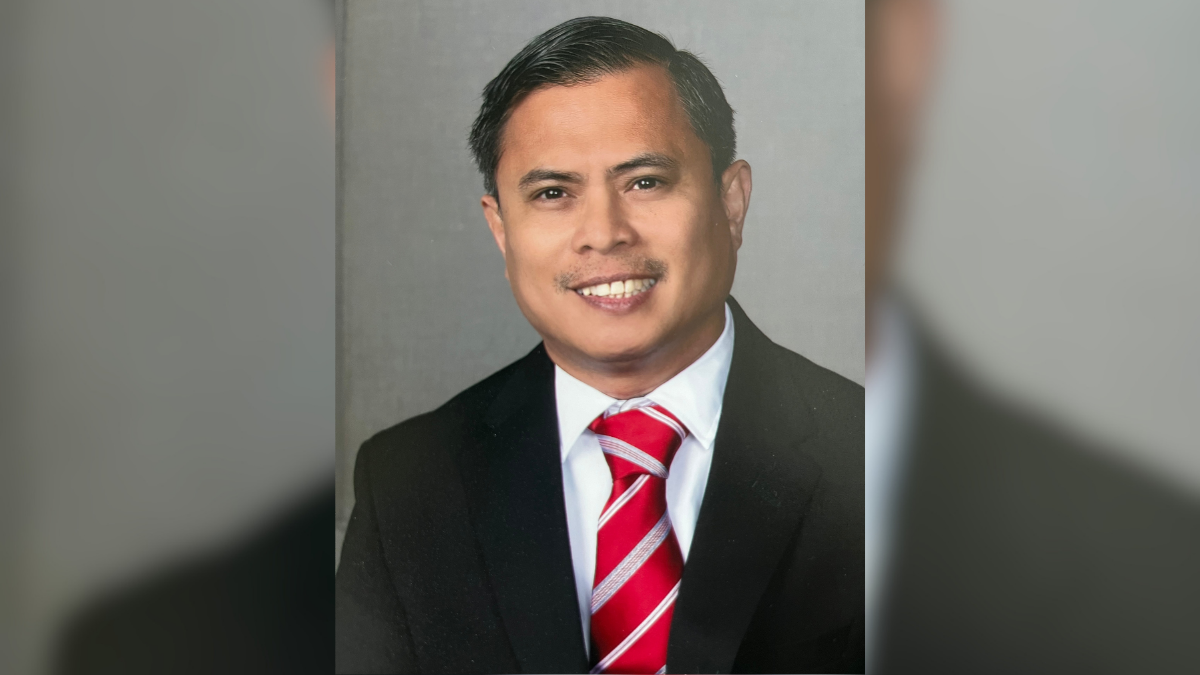

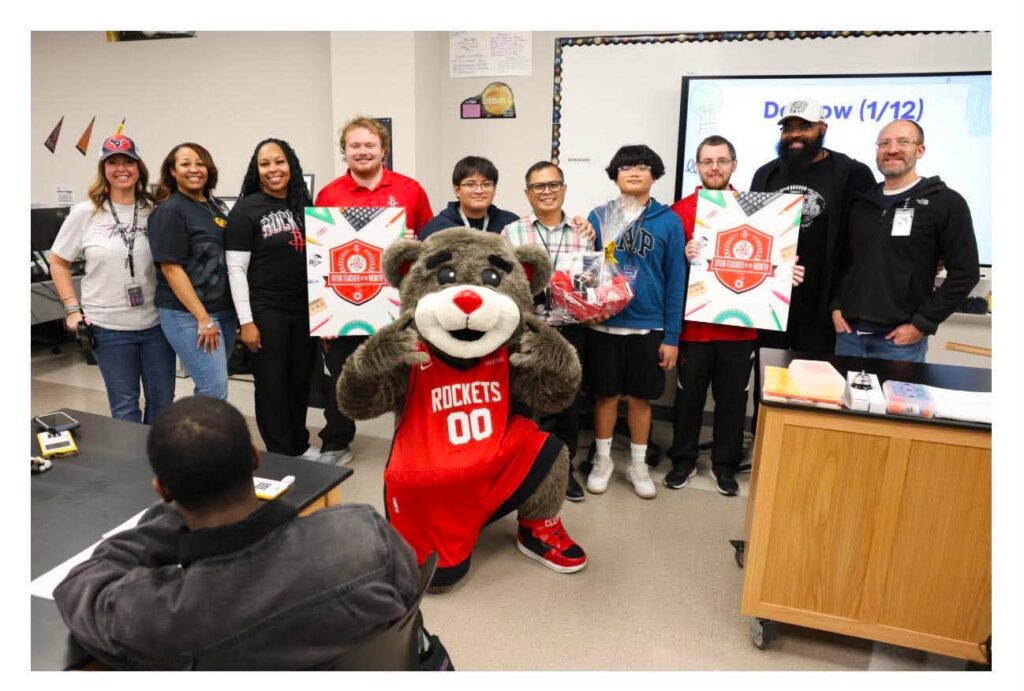
The riding lawn mower belonged to his landlord. Every week during his first year in America, a former Cebu science teacher climbed onto it and cut the grass around the property — not as a hobby, but to knock down his rent while he wired most of his paycheck home and paid off the lending agency in Manila that had bankrolled his move. That teacher was Emerzen L. Echavez, and eleven years later he would stand in a Texas classroom being named the Houston Rockets STEM Teacher of the Month.

He arrived in the United States in 2014 alone, having borrowed a substantial sum to get there, and spent nearly a year separated from his family before they could follow. The distance was the hardest part. “Although my family was thousands of miles away, they remained my greatest source of encouragement through regular calls, prayers, and constant emotional support.” The lawn mower and the frugality were just the arithmetic of survival while he waited for the rest of his life to catch up to him.

Eleven years of groundwork
By the time he boarded that plane, Emerzen was not a novice reaching for a lucky break. He had already spent eleven years teaching math and science for the Department of Education, starting in 2003 at Gen. Climaco National High School in Toledo City, Cebu, before moving to Cebu City National Science High School in 2006. He taught a wide spread of subjects, moonlighted as a college instructor at Cebu Technological University, and had even passed the National Qualifying Examination for School Heads — he was waiting for an item to open so he could become a principal. After DepEd, he spent a year as an instructor at the Integrated Laboratory School of Cebu Normal University.
In other words, he left at the moment his career at home was about to level up. That is the quiet tension underneath his story: he walked away from a near-certain principalship not because the Philippines had failed him, but because the math of a family’s future pointed somewhere else. “While I had a fulfilling teaching career in the Philippines, I recognized that working abroad would allow me to expand my knowledge, gain international teaching experience, and improve my family’s quality of life,” he says. The former math teacher does not romanticize the decision. He frames it the way most overseas Filipino professionals do — as a bet on greener pastures, made with open eyes and a lot to lose.
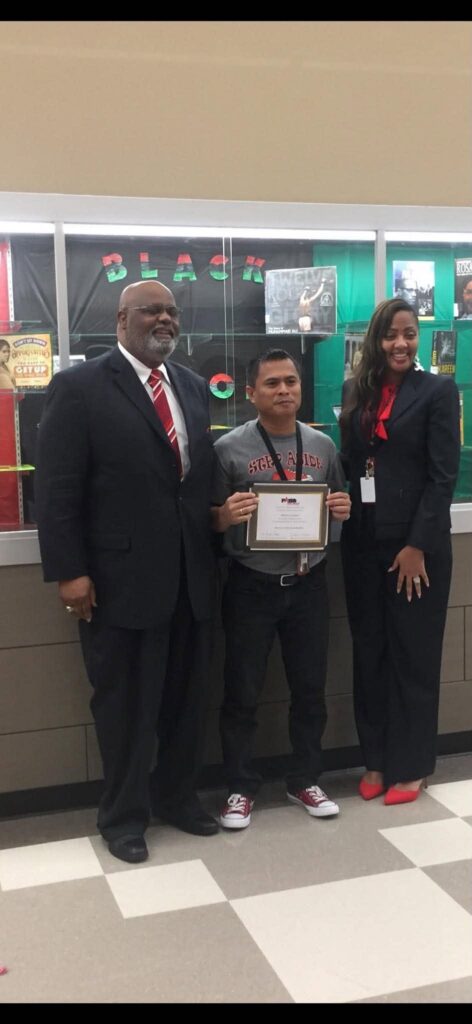
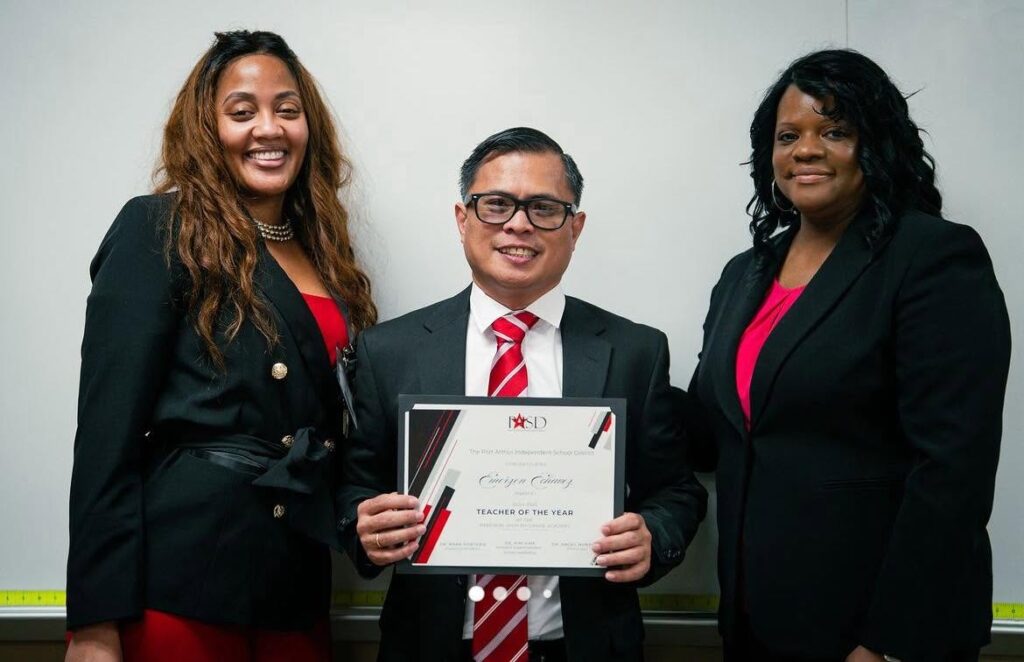
He landed first in Virginia, teaching at EW Wyatt Middle School in Emporia, then relocated to Texas in 2017. It was in Texas that the recognitions started arriving. At Memorial 9th Grade Academy he worked heavily with immigrant students learning Algebra 1 and brought kids to Texas Alliance for Minorities in Engineering workshops and competitions. He was named Rookie Teacher of the Year in 2018, then Teacher of the Year in 2024. That same year he joined Dr. Thomas E. Randle High School, where he now teaches AP Physics 1 and Astronomy — and in January 2026 came the Rockets honor.

The subjects he actually loves
What makes his current post different, in his telling, is that he finally gets to teach the things he cares about most. AP Physics 1 and Astronomy are not filler assignments handed to whoever is available; they are the courses he would choose. “I chose the field of education because I have always enjoyed sharing knowledge and inspiring young people to see the beauty and relevance of math and science in everyday life,” he says.
Ask him for the most satisfying part of the job and he does not reach for test scores or rankings. He reaches for a moment. “There is nothing more rewarding than seeing students experience those ‘aha’ moments when difficult concepts finally make sense or watching them pursue careers in STEM because of the encouragement they received in my classroom.” It is a specific kind of satisfaction, and it maps neatly onto his own history — a man who spent a year mowing a lawn to stay afloat is unlikely to underestimate what a well-timed bit of encouragement is worth.

The work abroad reshaped him professionally, too. Teaching inside a different system, alongside colleagues from a range of backgrounds, forced him to pick up methods he might never have encountered at Cebu City National Science High School. He describes it as becoming a more effective teacher by necessity — broadening his perspective, absorbing new strategies, and treating each unfamiliar classroom as a chance to sharpen the craft rather than just endure it.
Humility as a survival skill
The lawn mower is not a throwaway anecdote. It is, in a sense, the thesis of how he got through. The Filipina — the Filipino — educator will tell you plainly that the early years demanded a swallowing of pride that many professionals struggle with. He had been on the verge of a principalship; in America he was budgeting every dollar and doing physical labor to shave money off rent. “Those experiences taught me the value of perseverance, humility, and hard work,” he says, and the order of those three words feels deliberate.
He credits his parents as the people he looked up to when the loneliness got heavy — their resilience and their commitment to providing for family became the template he ran on when his own was out of reach. He also credits the strangers who turned out not to be strangers: colleagues, friends, and neighbors in a new country who helped him find his footing. It is a version of the OFW story that resists self-pity. The hardship is real and named, but it is always in service of something — never the point in itself.
That framing extends to how he now reads setbacks, his own and other people’s. He talks about faith the way he talks about budgeting: as a discipline that carries you through the stretch when results are not yet visible.


A bridge he intends to build
He is a permanent resident now, having started out on a J-1 exchange visa, and he plans to apply for dual citizenship — a small administrative act that says a great deal about where he sees himself belonging. He does not describe his future as a choice between two countries so much as a role connecting them. His stated ambition is to keep growing as an educator and leader while serving as a bridge between the Philippine and American education systems, carrying effective STEM teaching practices in both directions and mentoring other teachers along the way.
He is pursuing advanced studies in educational leadership with an eye toward advocacy: “I also aspire to advocate for equitable access to high-quality STEM education, ensuring that all students—regardless of their background—have opportunities to develop the skills needed to succeed in college, careers, and an increasingly technology-driven world.” Given who fills his own classrooms — immigrant kids grinding through Algebra 1 in a second language — the advocacy is not abstract. He is describing his current students.
His advice to kababayans abroad reads like a distillation of his own first year. Stay resilient, live within your means, avoid unnecessary debt, and be careful about whom you trust without letting caution curdle into coldness. “If you encounter difficulties in love, work, or finances, remember that setbacks are temporary and can become valuable lessons that strengthen your character,” he says. Coming from most people, it would sound like a motivational poster. Coming from a man who once mowed a lawn to make rent while his family waited an ocean away, it sounds closer to a receipt.
