



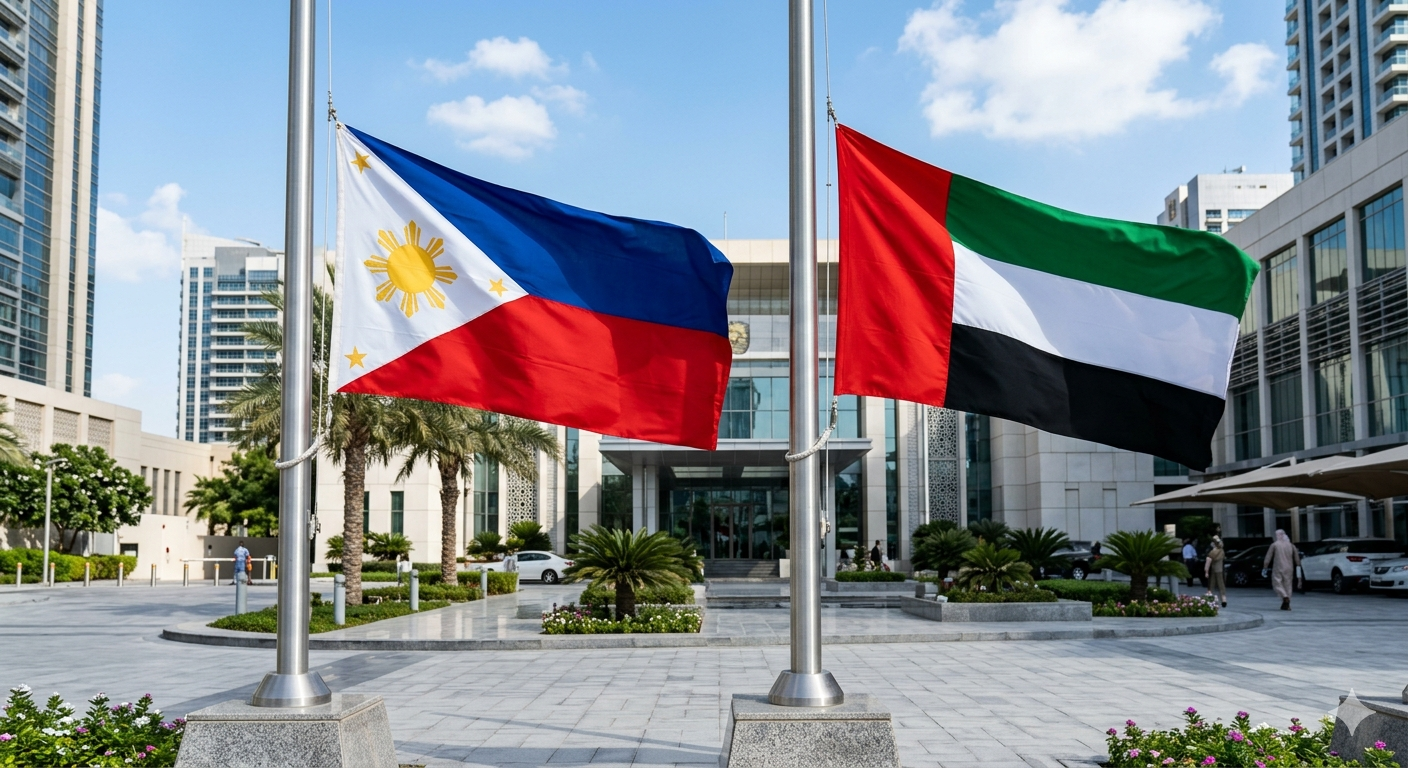

Overseas Filipino workers in the UAE could soon benefit from faster and cheaper ways to send money home after the central banks of the Philippines and the UAE formalized a cooperation agreement covering digital currencies, payment system integration, and financial technology development.

Bangko Sentral ng Pilipinas Governor Eli Remolona Jr. said the partnership directly addresses remittance efficiency for OFWs. “This partnership supports the [Philippine central bank’s] push to digitalise payments and make cross-border transactions more efficient,” he said. “For Filipinos in the UAE, especially our overseas Filipino workers, this means better remittance channels and more efficient financial services for their families back home.”
The agreement, announced Tuesday, also covers Islamic banking, financial infrastructure development, and broader economic and trade cooperation between the two countries.
Central bank digital currencies are at different stages in each country. The UAE launched its Digital Dirham under its Financial Infrastructure Transformation programme in 2023, while the Philippines remains in its CBDC pilot phase. Unlike cryptocurrencies — whose values fluctuate — CBDCs are pegged to a country’s official currency and issued by its monetary authority, offering a more stable vehicle for digital transactions.

UAE Central Bank Governor Khaled Balama framed the deal as a step toward deeper financial integration. “This agreement marks a significant step towards building a more connected and innovative financial ecosystem between the UAE and the Philippines,” he said. “By leveraging advanced payment technologies and sharing expertise, we are laying the foundation for a new era of seamless integration and sustainable, innovation-led economic growth.”
The agreement builds on an already expanding bilateral relationship. Earlier this year, the two countries enacted a Comprehensive Economic Partnership Agreement that cuts tariffs and opens market access for small and medium enterprises. UAE airlines have also been cleared to operate additional flights to Manila, and Abu Dhabi-based clean energy firm Masdar has signed agreements to develop renewable energy projects in the Philippines.
Trade figures reflect the growing economic ties. Non-oil bilateral trade reached $853.7 million in the first nine months of 2025 — a 22.4 percent year-on-year increase — putting the two countries on track to surpass the $940 million recorded in the prior full year. The UAE ranks as the Philippines’s top export destination among Arab and African nations and its 17th largest trade partner worldwide.
