



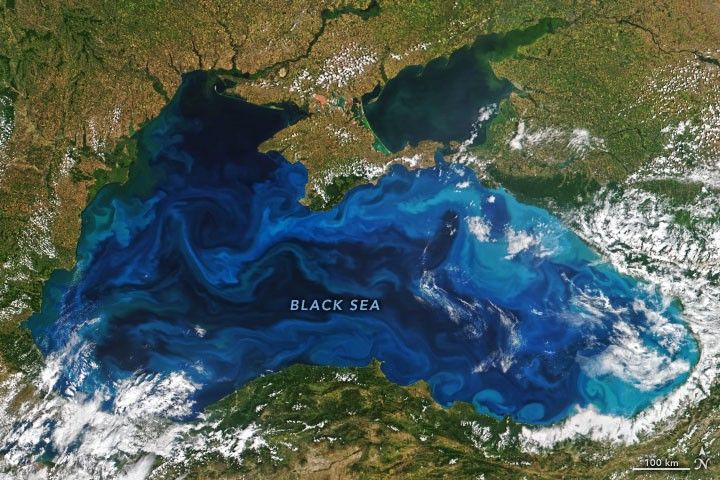

Two Filipino seafarers have been killed in a series of drone strikes on merchant vessels in the northern Black Sea, Philippine labor officials confirmed Monday, with a dozen more crew members wounded and one still unaccounted for.

The two deaths did not occur in the same incident. Migrant Workers Secretary Hans Leo Cacdac said the first seafarer was killed in a July 6 strike, while the second died on July 19. The department had already reached the family of the first victim and was arranging repatriation of his remains, he said, while contact with the second victim’s relatives was still being established. Names of both men, along with that of the missing crew member, are being withheld pending formal notification of their families.
Of the 12 seafarers wounded, four have already flown home for treatment, while the remaining eight are still under medical care abroad, according to Cacdac. Rescue coordination for the missing crew member is ongoing.
Cacdac told a Mandaluyong City briefing that nine vessels carrying a combined 139 Filipino seafarers had come under fire in recent weeks, with 124 of that number confirmed unharmed. “As of July 20, nine ships carrying Filipino seafarers have reportedly been attacked while either transiting the northern Black Sea or docking at ports in southern Ukraine,” he said, per Gulf News. Bulk carriers and vessels riding at anchor or newly departed from port have borne the brunt of the assaults.

The DMW, working alongside the Overseas Workers Welfare Administration, said it is channeling support through licensed manning agencies, shipowners, Philippine embassies and the Department of Foreign Affairs to reach affected workers and their families.
The northern Black Sea sits under a war-like classification jointly applied by the DMW and the International Bargaining Forum, a designation tied to the Russia-Ukraine conflict. Under that status, Filipino mariners may decline assignments to the zone without penalty, and those who accept deployment there qualify for supplementary pay, expanded insurance and additional safeguards written into international labor accords.
Cacdac noted that security incidents involving commercial ships in the corridor had climbed sharply over the preceding two weeks — a trend that has rattled a workforce in which Filipinos account for close to one in four merchant mariners worldwide. Acting on presidential instructions, he said, the department would keep watch on conditions in the area and weigh further protective steps for Filipino crews still sailing Black Sea routes.
