



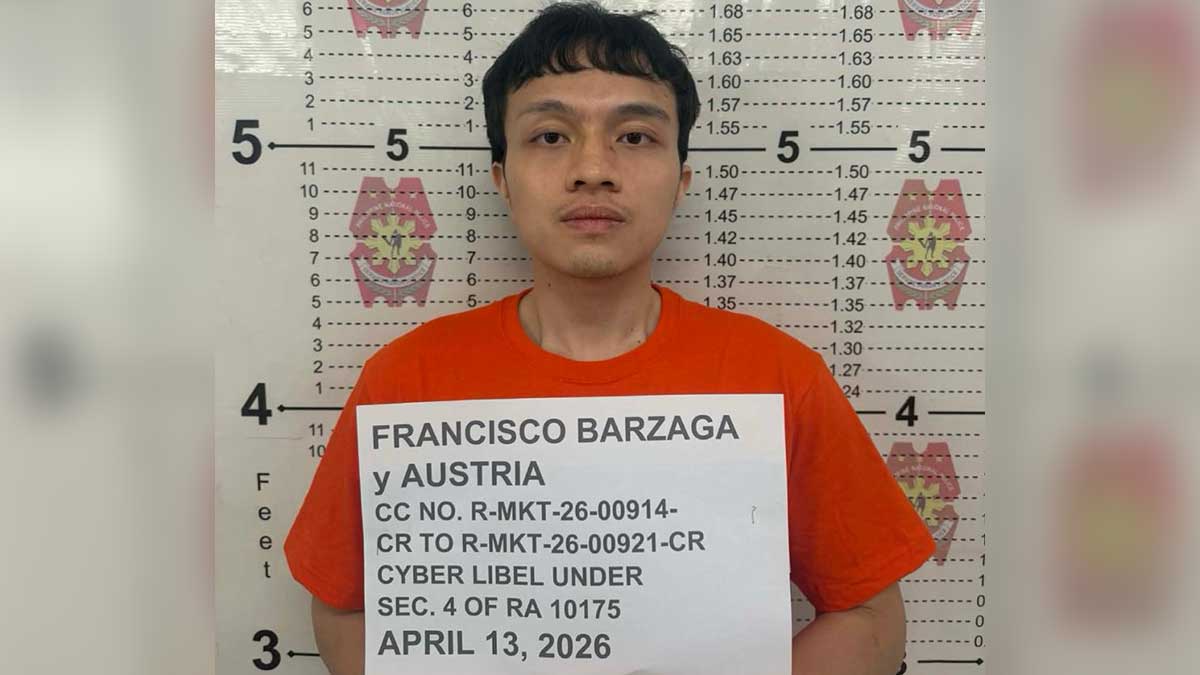

Suspended Cavite 4th District Representative Francisco “Kiko” Barzaga voluntarily surrendered to police Monday evening and was released on bail after a Makati court issued a warrant for his arrest on eight counts of cyberlibel.

Barzaga presented himself at the Dasmariñas Component City Police Station at 6:59 p.m. on April 13, accompanied by his lawyer, and surrendered to Police Lt. Col. Mac Arthur Mercader, officer-in-charge of the station. He was booked, had his mugshot taken, and posted bail at 10:25 p.m. the same night.
The arrest warrant was issued by Makati Regional Trial Court Branch 147, signed by Presiding Judge Karla Regina D. Valera-Chua, charging Barzaga with eight counts of violation of Section 4(c)(4) of Republic Act No. 10175, or the Cybercrime Prevention Act of 2012. Bail was fixed at ₱48,000 per count, totaling ₱384,000.
The charges stemmed from Facebook posts Barzaga published in January 2026, in which he accused billionaire businessman Enrique Razon Jr. of masterminding corruption in Congress and bribing members of the National Unity Party (NUP) to secure support for the speakership of Leyte Rep. Ferdinand Martin Romualdez. The posts carried the hashtag #IkulongSiRazon. Barzaga later publicly apologized, but Razon pressed ahead with the complaints.

NUP chairperson and Antipolo City Rep. Ronaldo Puno and Manila Rep. Rolando Valeriano filed separate cyberlibel complaints arising from the same posts. Razon had also sought at least ₱100 million in moral damages and ₱10 million in exemplary damages.
The cyberlibel case is the latest legal setback for the neophyte lawmaker, who has been under House suspension since December 2025. The chamber sanctioned him for 60 days over social media posts deemed offensive and unbecoming of a legislator — including remarks that joked about burning the Batasang Pambansa, which prompted inciting-to-sedition charges. A second 60-day suspension was imposed in February 2026 after he continued posting content deemed inappropriate, including attacks on the late Antipolo Rep. Romeo Acop.
Legislators enjoy immunity for speeches and debates inside Congress, but courts have consistently held that this protection does not extend to personal social media posts.
The case moves forward to trial, where both sides will present evidence.
