




Members of the Senate impeachment court are held to stricter standards than most parties when it comes to commenting publicly on the trial of Vice President Sara Duterte, according to court spokesperson Atty. Regie Tongol.

Asked directly whether the sub judice rule extends to the senator-judges themselves, Tongol said their position actually places them under heavier restrictions. “Actually, they are even more covered,” he said. Because impeachment functions as a political exercise carried out by elected officials, he explained, the rules are designed to keep any senator-judge from appearing to have reached a conclusion before the verdict is delivered.
Tongol cautioned that the credibility of the entire proceeding is at stake when members speak out. “If they are seen to have any impropriety or even the semblance of bias or prejudice, the public may lose respect and confidence in the impeachment court’s decision,” he said, describing the rules as a safeguard for the tribunal’s reputation as fair and impartial.

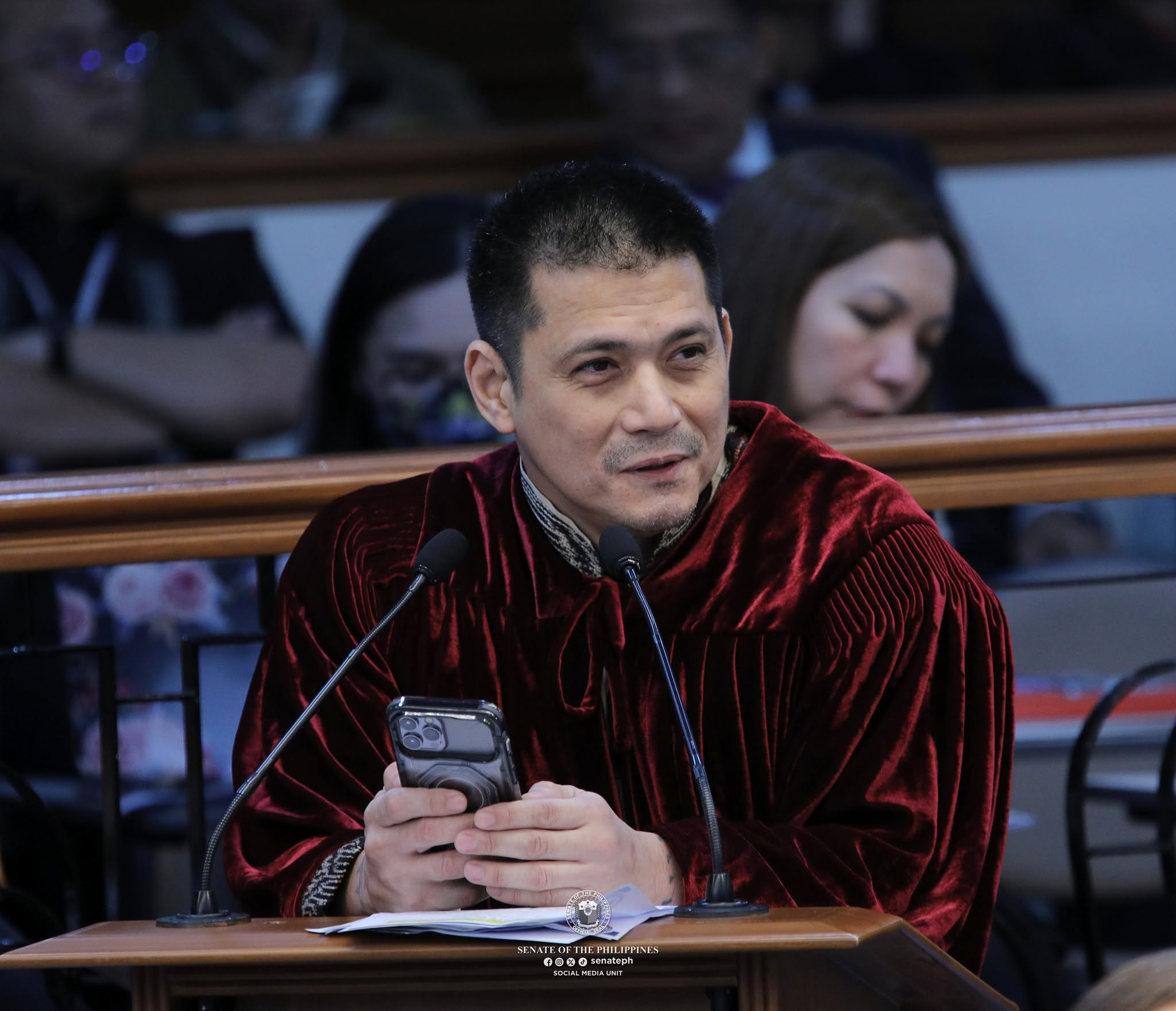
The clarification followed a Facebook post by Senator-judge Robin Padilla, who used the platform to answer critics of his questioning during the trial. Padilla argued that those attacking him were deceiving the public, and he suggested reporters direct their scrutiny toward the “new graduate” tied to the case rather than someone with a long track record in mass media.
Tongol grounded his remarks in Rule 18 of the Senate impeachment rules. “When you read Rule 18 of the Senate Impeachment Rules, it clearly states that senator-judges, House prosecutors, defense counsels, and private counsels are not allowed to speak about the merits of the case,” he said. He declined, however, to label Padilla’s conduct a breach. “I am not saying Senator Judge Robin committed a violation. I’m not a senator to make that determination,” he said, noting that any formal concern would be left to fellow senator-judges or the presiding officer to weigh. A contempt citation over the matter, he added, was not something he anticipated.
At the center of the controversy was Padilla’s challenge to how a piece of video evidence had been handled. During the trial he pressed whether investigators had secured the original recording or an affidavit from whoever produced it. A National Bureau of Investigation agent conceded that the original file was never obtained; instead, investigators kept a copy captured from footage already circulating online, recorded through OBS screen-capture software. For Padilla, locating the source file was the only way to confirm whether the material could be trusted as genuine.
