



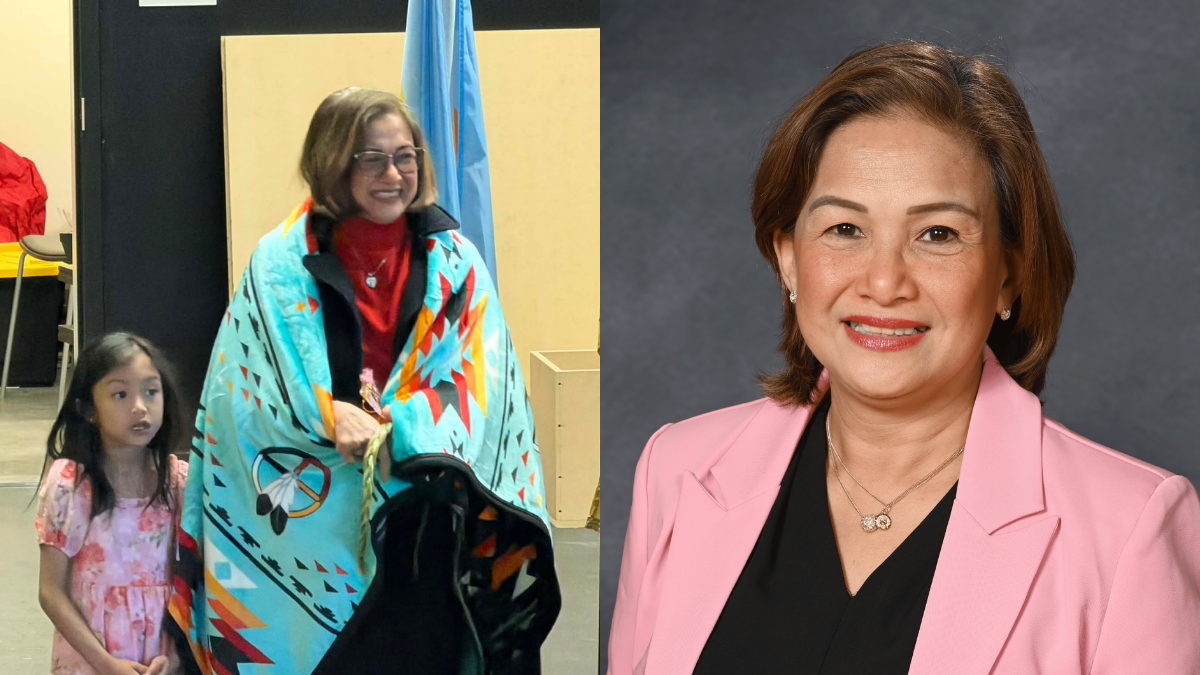

There is something quietly radical about a 52-year-old Filipino teacher packing her bags alone and flying to a state she had to Google first. Josephine Crisologo did exactly that — and what she found in the high plains of Montana has reshaped everything she thought she knew about what a classroom could be.

She grew up in Pandacan, Manila, the daughter of a welder and a housewife who sold cigarettes to help make ends meet. Eight children. A public school education. A family that scraped together enough to send one child to college — and that child chose to become a teacher, even when her parents and sisters had other ideas. Her father pushed for accountancy. Her mother wanted nursing. Her sisters, who were funding the tuition, lobbied for computer programming. “I explained to them that my future is the one at stake,” Crisologo recalls. They listened. They let her go.
Thirty years later, she is still going.
The email that came at six in the morning
The path to Rosebud, Montana didn’t follow a straight line. In 2020, Crisologo applied through a local agency in Manila and was interviewed by Hawaii’s Department of Education — a promising start that stalled when the pandemic closed every border worth crossing. Rather than wait, she said yes when another opportunity came knocking.
The interview with the Rosebud School District superintendent was scheduled for 3 a.m. Philippine time. She sat down, answered the questions, and went to bed not knowing what would come next. The confirmation email arrived at 6 a.m.
“When I received the email that I was hired in Montana, at first, I didn’t have an idea about that state because it was an unfamiliar state for me.” She and her husband pulled up a map. Then, sensibly, they Googled the crime rate.
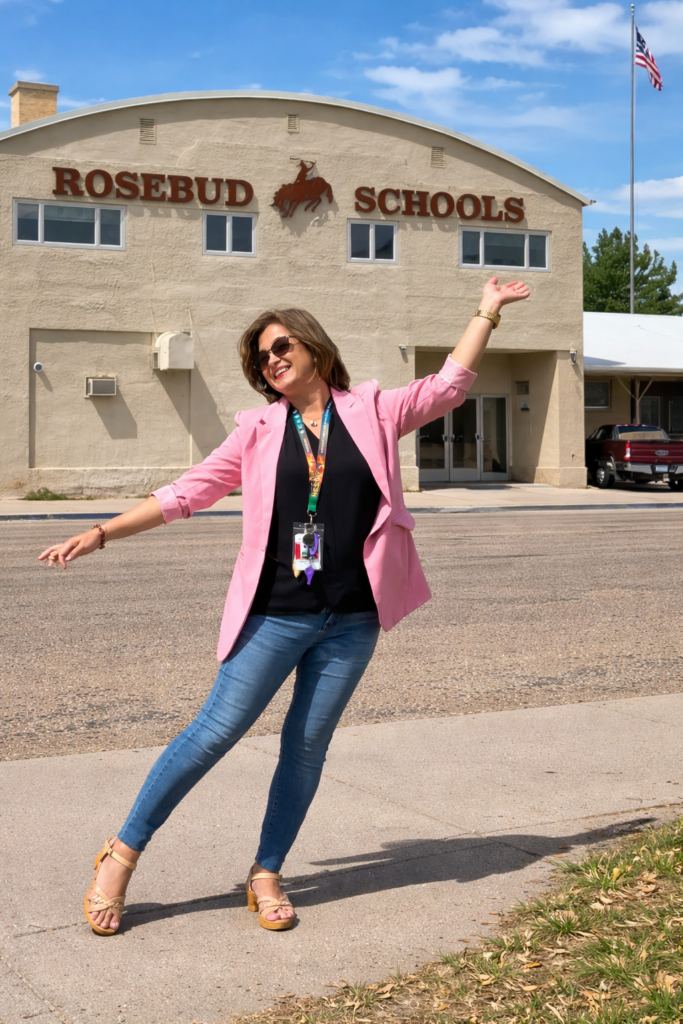
She traveled alone. The plan was to settle in first, then bring the family. Rosebud is a rural town in Treasure County, home to fewer than 150 people. The school she joined — Rosebud Public School District 12 — enrolls somewhere between 50 and 60 students, prekindergarten through 12th grade. Crisologo was handed a combo class of 4th, 5th, and 6th graders. The subjects: Math, Science, Social Studies, ELA, and Reading. All of them. Every day.
Walking to school in minus 47
The first year was hard in ways that are difficult to romanticize. She and her fellow Filipino teachers lived in an old house in Rosebud where the water quality was so poor it damaged their hair. They walked to school. In winter, when temperatures dropped to negative 47 degrees Fahrenheit, they still walked — until local colleagues began offering rides, and eventually until a used car, bought jointly with a Filipino friend from another school district, changed their circumstances entirely.
Later, after moving into an apartment, the new unit was on the third floor. Groceries, gallons of water, everything had to go up. “We just thought it was still exercise and good for our health,” she says, with the kind of dry humor that tends to develop in people who have survived real difficulty.
What kept her grounded was less philosophical and more practical: she thought about her children’s future, reversed the fear, and kept walking. “Every struggle we experienced, we always see the silver lining in it to motivate us to go on.”
Eventually, her husband and children joined her. That, she says, was the real highlight — not the awards or the accomplishments, but the fact that she made it possible for her family to experience what she had experienced.

The Teresa Veltkamp Advocacy Award and what it means
In a school where most students are white Americans and some come from Native American families, Crisologo built something she hadn’t entirely expected: genuine belonging.
She learned quickly that her students’ world was shaped by values that felt familiar. The Native American families she encountered placed weight on ancestry, on family bonds, on the kind of solid intergenerational relationships that Filipinos would recognize immediately. “They value everything that they can benefit from nature. They value their culture so much.” That recognition — the sense that people on opposite sides of the world could share something essential — changed the way she thought about her role in the classroom.
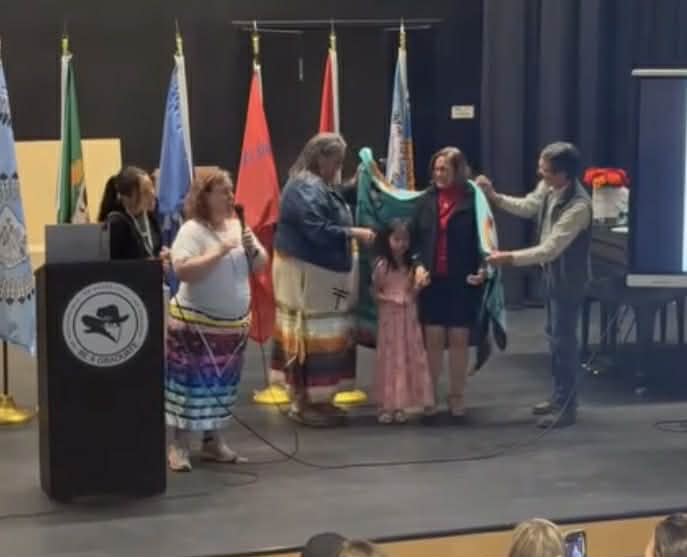
Her commitment to culturally responsive teaching, specifically through the Indian Education for All initiative, earned her the Teresa Veltkamp Advocacy Award, a recognition established in honor of an educator whose life’s work was defined by her dedication to IEFA implementation across Montana. For Crisologo, the weight of the award is inseparable from what it represents. “It means so much to me because of how the Native Americans value the bravery and commitment of those persons who fought for their right to sustain their place and identity in this country.”
A Filipino teacher, in a tiny rural school on the Northern Plains, receiving an award named for a Montana educator — and understanding exactly why it matters. There’s a kind of symmetry in that.
The classroom she built
Ask Crisologo how she manages five subjects across three grade levels every single day, and she’ll tell you she doesn’t think of herself as the one running the show. “I am just a facilitator.” From the first week of school, her students know their roles: one leads morning stretching, another updates the attendance board, another checks the temperature. A planner board maps where each student needs to be during each period. The structure isn’t rigid — it’s liberating. It frees her to sit beside the students who are struggling.
She rewards helpfulness not with prizes but with privileges: a library book, a quiet game of Lego, a moment of chosen independence. “Students are so proud of themselves once they can help their classmates.”
This philosophy didn’t arrive fully formed. It grew from 22 years at St. Peter the Apostle School in Manila, where she coached MTAP math competitions, and from her time at Southville 3A Elementary in Laguna, where she taught science and choreographed school performances. Three decades of teaching have produced a simple conviction: a school should be “a place of creating future leaders and managers of their own lives.”
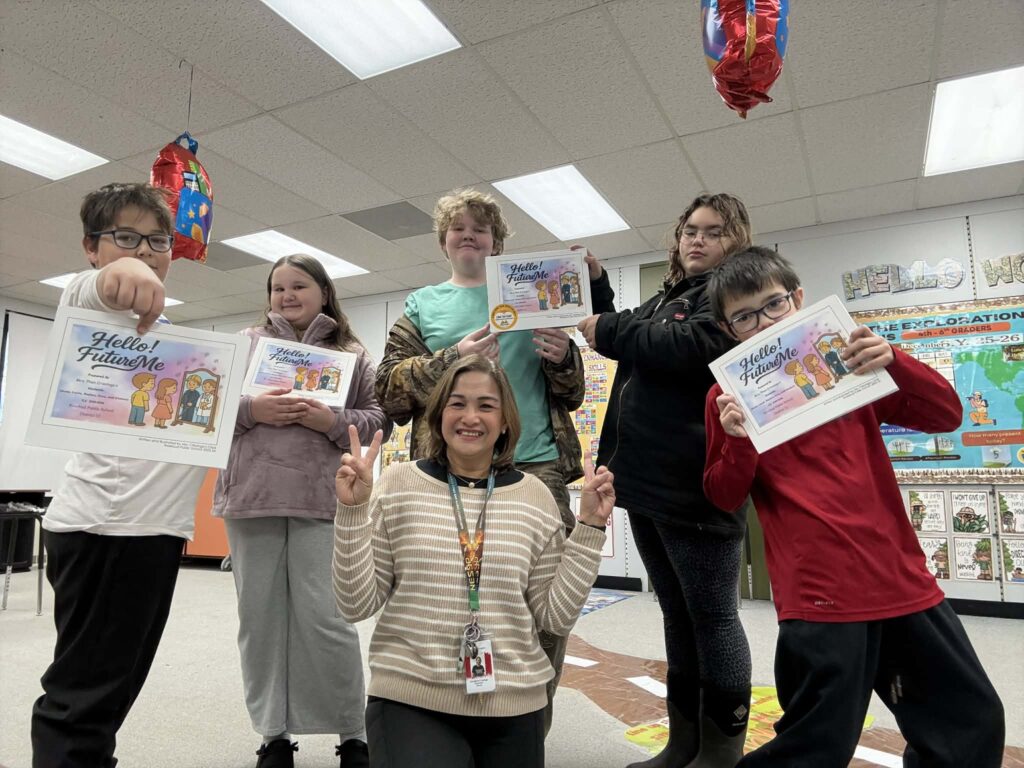
Her students have entered NASA’s Artemis Roads Challenge. They’ve become published authors through a student publishing company. They’ve participated in AI education demonstration classes. For a school of 50 to 60 students in a town most people couldn’t place on a map, that’s not a small thing.
Crisologo’s mantra — “Just keep going in life, God is your fortress and your guide” — sounds like something stitched on a pillow until you understand what it has actually carried her through: a 3 a.m. job interview, a winter walk in subzero cold, years away from her children, and the daily challenge of teaching everything to everyone in a classroom at the edge of the American frontier.
She kept going. That turns out to have been enough — and then some.
