



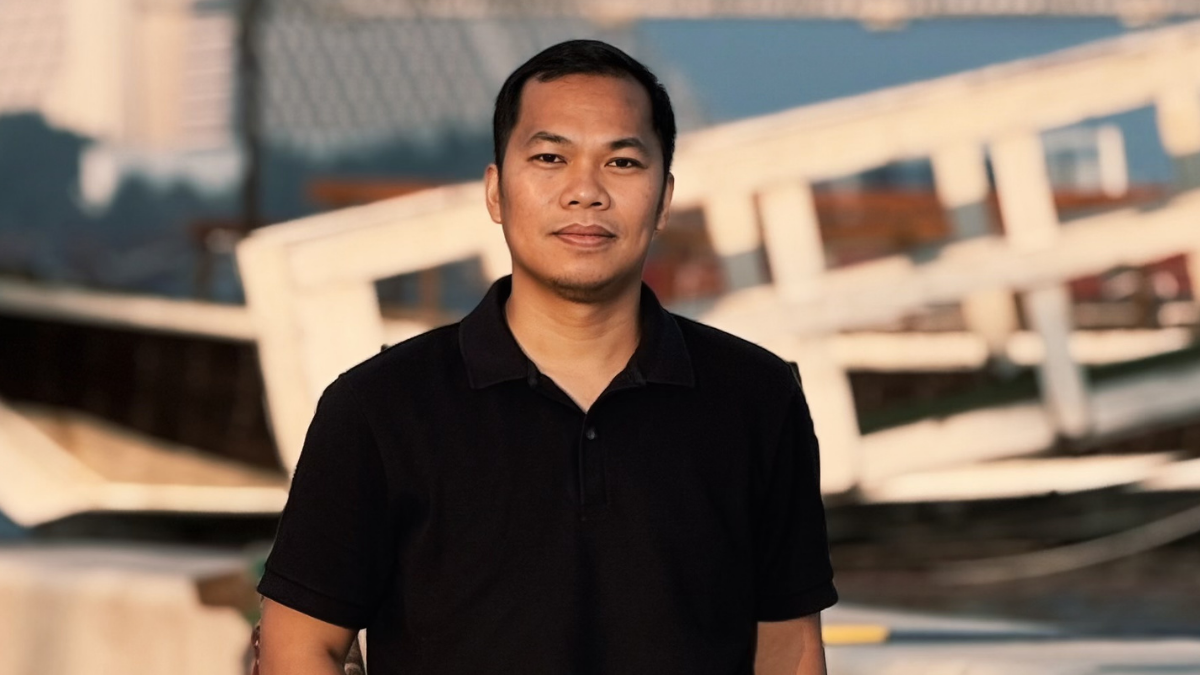

Thirty days. That was the entire margin—one tourist visa, one expiry date, and a bank account emptied to almost nothing to get there. So he worked the only lever he had: fifty applications a day, sent online and pressed across counters in person, refusing to let a single morning pass without knocking on another door. When the offer finally came—just five days in—it was for an IT Officer role at a small computer and hardware trading firm, the salary modest enough to be almost insulting. James Bryan T. Jose took it without a second’s hesitation.

More than a decade later, the 37-year-old business executive leads Ascentiq, a Qatar-based company pioneering a new approach to smart scent technology. But the distance between that anxious first job and the company he runs today was not a straight climb. It ran directly through the worst year of his professional life—and he is refreshingly unwilling to pretend otherwise.
A leap with no net
Jose landed in Doha in November 2014 with his wife and very little else. “We moved to Doha in November 2014 with my wife, an empty bank account, and nothing but hope, courage, and a strong determination to build a better future,” he shares with TGFM. They had left steady jobs in the Philippines with a single, unsentimental purpose: to earn enough to build the life they wanted, which the salaries back home simply could not fund.
That decision was less a bold gamble than an inheritance. Jose is the son of an OFW father who had worked in Qatar before him, and he grew up doing the quiet arithmetic of sacrifice that sends so many Filipinos overseas. When he graduated with a degree in Information Systems Management, leaving was the last thing on his mind. “I wanted to build my career and live there, but my salary was not enough, so we decided to follow the path my father had taken in Qatar.” There was no grand vision at the start—just the plain recognition that the future they imagined cost more than they were being paid.
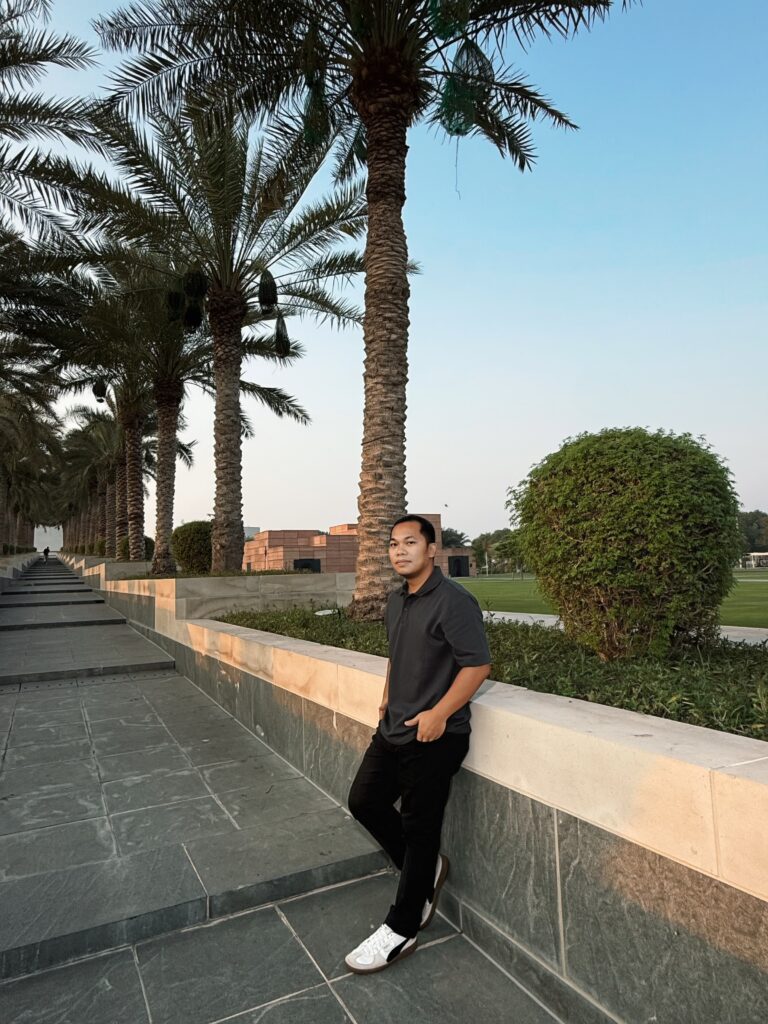
His background was solidly technical. He had started out in Tarlac, working his way from IT support and asset management to MIS Officer, handling LAN/WAN infrastructure, Active Directory environments, POS systems, and SQL databases. Those early roles, he says, “gave me a strong foundation in both technical skills and problem-solving”—a foundation that would matter far more than he could have known.
In Qatar, the work grew bigger. He moved through senior IT and specialist positions, taking on cloud systems, cybersecurity, servers, networks, and disaster recovery. One assignment still stands out: contributing to IT infrastructure upgrades for the FIFA World Cup 2022. For nearly a decade, the plan was working exactly as designed.
The year everything cracked
Then came 2023, and the design fell apart.
The former MIS Officer had spent his entire career optimizing for one thing: staying safe. Keep the job, prove your worth, make sure you’re never the one shown the door. It was a sound instinct—right up until the ground shifted. His salary went unpaid for nearly four months. Economic uncertainty crept in. And then the fear he had spent a decade guarding against arrived anyway: he and his wife both lost their jobs.
In Qatar, that kind of loss carries a weight beyond the missing paycheck. “When you lose your job, you also face uncertainty about your residency, sponsorship, and what comes next,” he explains. Under the sponsorship system, unemployment isn’t just a financial problem—it’s a question mark hanging over your family’s right to stay. For a man whose whole strategy had been security, it was the precise nightmare he’d worked so hard to avoid.
Something in his thinking shifted. “It became clear to me that I could not remain trapped in that cycle of uncertainty,” he says. “I told myself: I need to create something of my own.”

He is candid about what that decade of caution had cost him. “For many years, I was focused on being safe, keeping my job, proving my worth, and making sure I would not be the one who could be terminated. In doing so, I sometimes missed opportunities and possibilities that were right in front of me.” The crisis, painful as it was, forced his eyes open.
Building Ascentiq from the wreckage
What he built was not another IT contract. It was a product—a smart technology diffuser that, in his vision, would do far more than scent a room. He wanted something that elevated a space through technology, design, and engineering, and he poured everything he had learned into it. Today Ascentiq pairs sophisticated technology with an aerospace-grade alloy build and a premium design philosophy, positioning itself as a pioneer in smart scent technology in Qatar.
The through-line from his old career to his new one turned out to be everything. “My IT career gave me more than technical knowledge,” he says. “It taught me how to adapt, solve problems, take responsibility, and find practical ways to make things work—skills that eventually became very important when I started building Ascentiq.”
He is quick to say he did not do it alone. Behind the courage to start again stood his wife, whom he describes without hesitation as a problem solver. “We face problems together, one at a time. We do not dwell on what went wrong. We focus on what we can do, figure it out, and keep moving.” That partnership, along with a deep faith he returns to often, carried them through the stretch when neither of them knew what the next month would hold.
Now he sits at the head of the company, overseeing strategy, operations, product development, partnerships, and growth. His job, as he frames it, is not merely to run a business but to build the systems, team, and vision that could carry Ascentiq from a Qatar-based innovation into a recognized brand. And the work has rearranged how he sees success itself. “There is more to life and work than simply protecting what you already have,” he reflects—a striking admission from someone who once organized his entire career around exactly that.
What the journey left him
Ask what he most values about the life abroad, and the answer isn’t the income. It’s the stability Qatar gave his family—a healthcare system he trusts, an organized and well-run environment, a safe place to raise his eight-year-old daughter, whose “funny and silly acts,” he says, brighten even the longest days. Working overseas, he adds, taught him independence and resilience in a way staying home never could.
His ambitions now stretch beyond his own family. He wants Ascentiq to create proper, meaningful jobs for fellow Filipinos across the GCC—workplaces where people feel “safe, respected, valued, and given the opportunity to grow.” Having started with so little himself, he wants to help others believe they can build something too. “I know how it feels to start with very little,” he says, “so if given the opportunity, I want to help others create better opportunities for themselves and their families.”
For the kababayan still in the thick of the struggle, his advice is shaped entirely by his own hard year. “Do not be afraid to start again,” he urges. “There will be moments when you feel tired, uncertain, or even alone, but every difficult season can teach you something.” Guard your finances, choose the people you trust carefully, and don’t let a job become the whole of your identity.
He is living proof of his own counsel. A little over a decade ago, he was a man with an empty bank account and 30 days to prove the leap had been worth it. The plan he arrived with never included building a company—and that, he has come to believe, was rather the point. “You don’t always need certainty to start,” he says. “Sometimes, you just need the courage to take the first step.”
