A Filipino nurse arriving in another country often carries more than a suitcase.
There is the training, the clinical experience, the qualifications, and the quiet confidence that comes from knowing how much it took to get there. But there are other things, too: the habits formed at home, the instinct to care for others, the importance placed on relationships, and the hope that the move will eventually lead to something more.
For many Filipino nurses, working overseas has long been associated with opportunity and sacrifice. Yet as the global Filipino nursing diaspora matures, another story is emerging. It is the story of nurses who are no longer content to remain only at the bedside. They are becoming managers, directors, educators, governance leaders, mentors, service-improvement champions, and advocates. They are taking what they learned as clinicians and using it to shape departments, organizations, colleagues, and, in some cases, the profession itself.
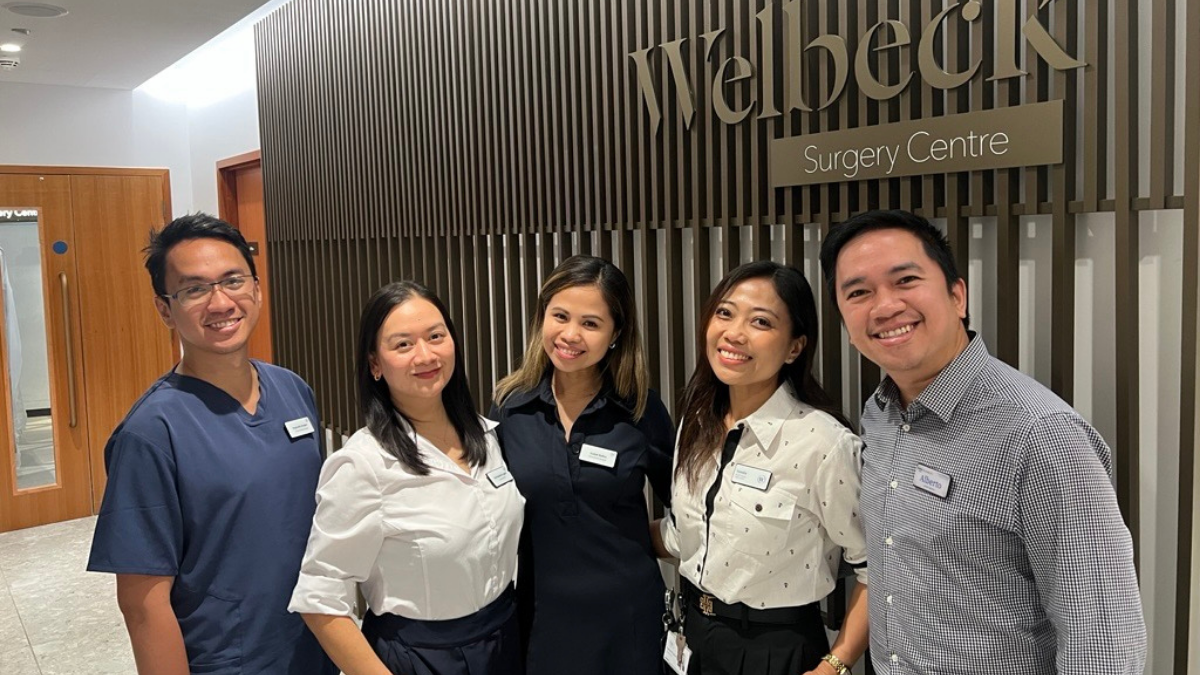
Five Filipino nurse leaders working in London and the wider international healthcare landscape offer a glimpse of that evolution. Their stories are different, but the thread running through them is remarkably consistent: getting a nursing career started abroad is one achievement. Building something that outlasts your own role is another.
The First Leap: From Theatre Nurse to Centre Director
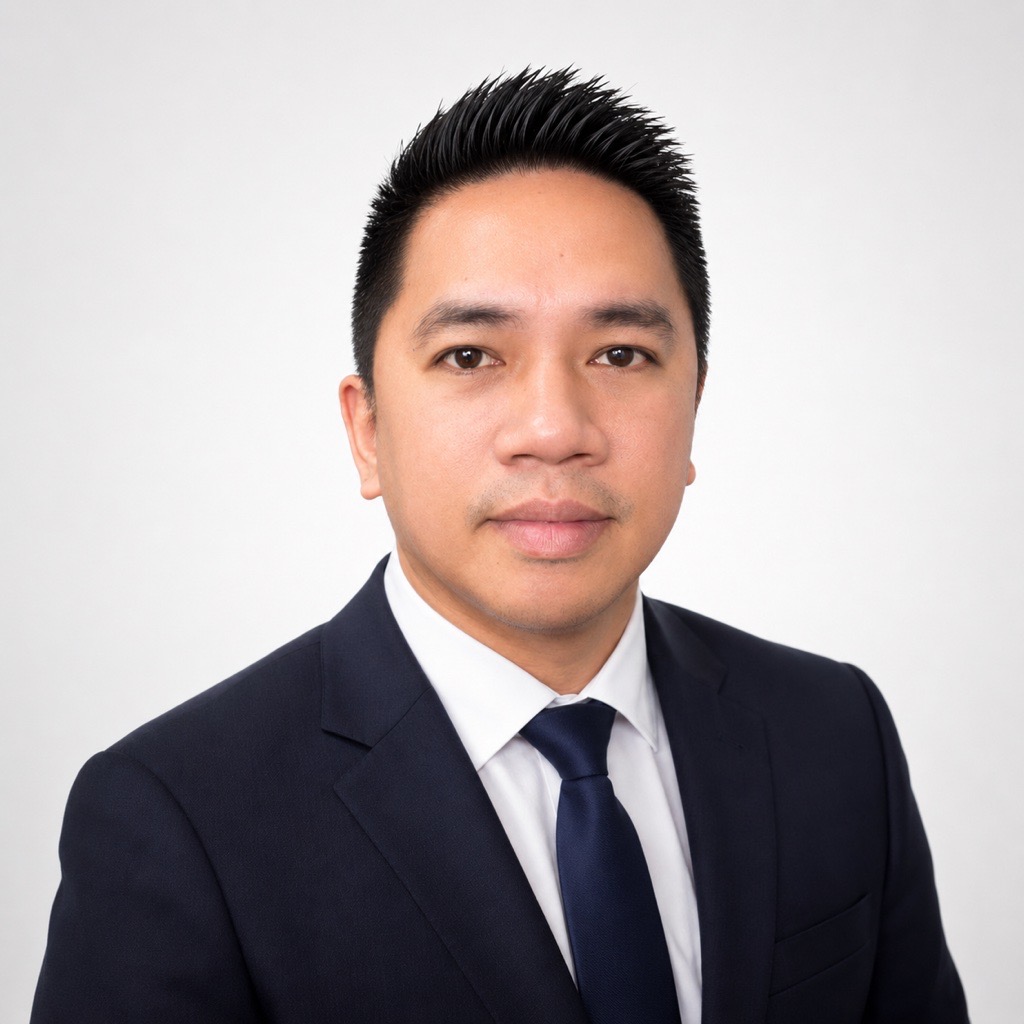
For Alberto Jr. Anajao, RN, CMgr MCMI, that journey began in the operating theatre.
Alberto Jr. Anajao, RN, CMgr MCMI
He started his nursing career in the Philippines as an Operating Theatre Nurse at St. Luke’s Medical Center Global City in Taguig. Those early years gave him the foundations that would remain with him throughout his career: patient-centred care, discipline under pressure, teamwork, and the understanding that safe surgery depends on people working together.
Then, in March 2011, he made what he describes as a “massive leap” and moved to the United Kingdom to begin his NHS career as a Theatre Practitioner at Norfolk and Norwich University Hospitals. The move was exciting, but it was also unsettling. He had to learn an unfamiliar healthcare system, adapt to another culture, and establish his professional credibility all over again. In retrospect, he sees that period as formative, teaching him humility, resilience, and the importance of continuing to learn.
Since then, his career has moved steadily through roles including Clinical Nurse Specialist, Theatre Coordinator, Theatre Manager, Clinical Services Manager, and Head of Nursing and Clinical Services. He is now Centre Director for Welbeck London Skin Health and Allergy Centre. The titles tell part of the story. The challenges tell the rest. He has worked through CQC inspections, JAG accreditation, the disruption of COVID-19, and the difficult task of turning around struggling services and departments. Yet when asked what he values most, he does not point first to the titles or the inspection reports.
He points to people. For Anajao, leadership means service.
“It isn’t about giving orders from the top,” he says. Instead, it means clearing obstacles, creating a clear vision, and making sure that both patients and staff have what they need to succeed.
That philosophy is deeply connected to his Filipino upbringing. He speaks of humility, compassion, respect, and, especially, bayanihan, the spirit of communal effort for the good of others. Healthcare, he argues, works the same way. No matter how skilled an individual nurse may be, excellent patient care depends on a team pulling in the same direction. That belief has also shaped one of the most meaningful parts of his career: mentoring international nurses, particularly fellow Filipinos, and helping them discover leadership potential they may not initially have recognized in themselves. Going from a young theatre nurse in Manila to a Centre Director in London is, for Anajao, more than a personal success story.
It is evidence of what can happen when a nurse keeps moving beyond the boundaries of the role they started in.
The Part Nobody Sees: Proving Yourself All Over Again
For nurses such as Judee Katherine Fowles, the challenge of building a career overseas is not simply mastering clinical practice in another country.
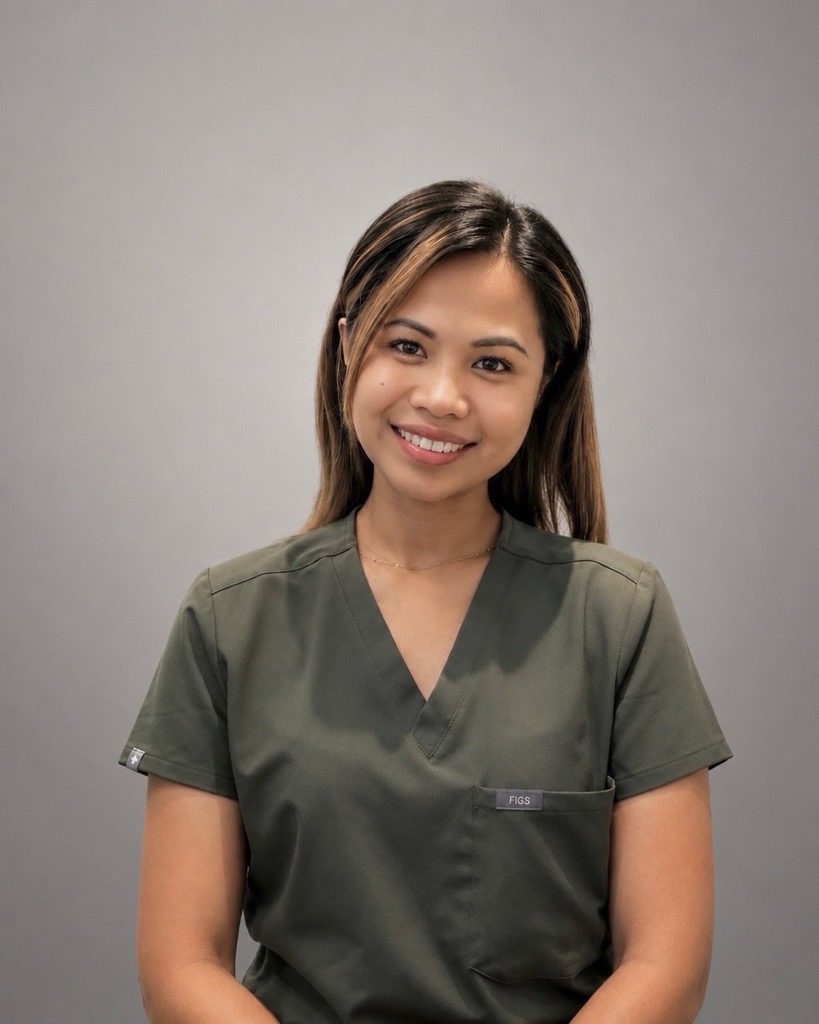
Judee Katherine Fowles
It is learning an entirely different professional language. Fowles, a Clinical Services Manager and Laser Protection Supervisor with extensive leadership experience in London’s private healthcare sector, has worked across operational management, clinical governance, infection control, laser safety, and service development. Her perspective captures a reality that can be easy to underestimate: Filipino nurses may arrive overseas with strong clinical skills, yet they still have to learn the culture and mechanics of the new workplace. Policies may differ. Documentation standards may differ. Communication styles may differ. Expectations around autonomy, professional boundaries, and decision-making may be different.
And then there is the less visible challenge of having to prove yourself. Again.
Fowles notes that Filipino nurses are often recognized for being hardworking, compassionate, and clinically competent. But there can be a danger in being known primarily for reliability rather than leadership potential. Some nurses may also become comfortable within their clinical roles without actively seeking opportunities to move further. The solution, in her experience, is not to abandon the qualities that brought Filipino nurses this far. It is to build on them.
Mentorship, supportive colleagues, professional networks, continuing professional development, and the willingness to take on leadership responsibilities all matter. So does learning to understand the wider organization rather than viewing one’s role only through a clinical lens. Technical competence, she argues, is a foundation. It is not the whole building.
Being Seen as More Than a Good Nurse
That idea becomes even more explicit in the perspective of Teresilia Pagulayan, an experienced healthcare leader who serves as Theatre Manager at OneWelbeck Surgery Centre. Her work spans surgical services, clinical governance, healthcare operations, service improvement, patient safety, workforce development, and regulatory compliance. Pagulayan’s message to Filipino nurses is particularly relevant to a diaspora that has already demonstrated its clinical value across the world.
The definition of an “excellent nurse” has to become broader.
Clinical excellence remains essential, but Filipino nurses can also become educators, researchers, innovators, advocates, and leaders who influence how healthcare is delivered. That visibility does not necessarily begin with a promotion. It can begin with volunteering for a project, joining a committee, contributing to an audit, participating in quality improvement, presenting at a conference, mentoring a colleague, or simply offering an idea instead of waiting to be asked.
There is also a collective dimension to this.
Filipino nurses form one of the world’s largest international nursing communities. Yet workforce size does not automatically translate into professional influence. Pagulayan argues that there is an opportunity to move from being a strong workforce to becoming a stronger professional voice. That means supporting one another, developing networks, celebrating achievements, and creating more pathways into senior and influential positions.
Perhaps her most striking point is also one of the simplest: “Being humble does not mean being invisible.”
For a profession whose Filipino identity is so often associated with warmth and humility, that distinction matters. There is no contradiction between being compassionate and being visible. A nurse can say, “I can lead this,” while remaining the kind of colleague who is willing to help when someone else is struggling.
The Power of Community
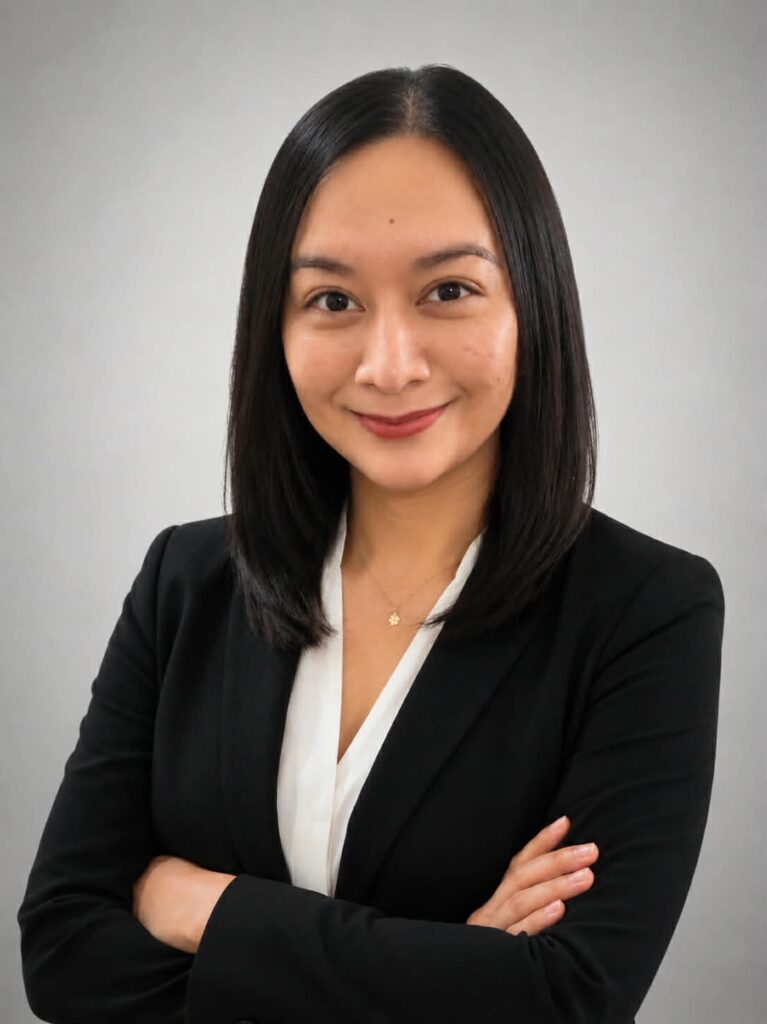
Christallene Ligpit
That balance between individual ambition and collective responsibility appears again in the experience of Christallene Ligpit, a nurse and Centre Director with more than 15 years of healthcare leadership experience.
Her work encompasses operational management, clinical governance, quality and process improvement, project management, and team development. But professional growth does not happen in isolation.For Ligpit, professional organizations, Filipino nursing networks, mentors, and trusted colleagues can make an enormous difference, especially for nurses navigating a new country and unfamiliar workplace expectations. These relationships offer practical support, from continuing education and knowledge-sharing to leadership development and career opportunities.
They also provide something less tangible but equally important: belonging.
For an internationally educated nurse, there can be a particular comfort in finding people who understand not only the technical demands of the profession but also the emotional experience of starting again somewhere unfamiliar. Such connections can strengthen confidence, resilience, and job satisfaction. But community does not have to stop at the borders of the country where one now works.
Ligpit also sees an opportunity for Filipino nurses abroad to remain connected to the Philippines through mentorship, professional training, research collaborations, academic engagement, conferences, and partnerships between institutions. The knowledge gained overseas does not have to remain overseas. International experience can travel home through people. It can become a teaching session, a research partnership, a new professional standard, a collaborative project, or a conversation with the next generation of Filipino nurses. In that sense, the diaspora is not simply a population dispersed across countries. It can also be a network through which knowledge moves in both directions.
A Career Is Not Only What You Build for Yourself
That idea of passing something forward also sits at the heart of Reginald Anajao’s message.
As Clinical Services Manager at Welbeck London, Reginald brings more than 14 years of experience in perioperative care, surgical practice, clinical leadership, and governance. His background includes advanced surgical care, robotic and minimally invasive surgery, clinical education, governance, quality improvement, and operational leadership. His advice to younger nurses is strikingly practical: do not limit yourself to clinical competence.
Keep learning.
Take on challenges.
Build skills in leadership, education, research, governance, and service improvement.
And think beyond the next promotion.
Working overseas can provide opportunities, but a meaningful career is not measured only by qualifications, job titles, or the name of the organization on a badge.
It is also measured by impact.
What happened to the patients because you were there?
What changed in the service because you contributed?
Who became more capable because you mentored them?
What did you leave behind when you moved on?
Reginald encourages nurses to share their knowledge, mentor others, speak up for better standards, and offer ideas for improving healthcare. He also emphasizes the importance of carrying Filipino values into international practice while building careers that create opportunities not only for oneself, but for others and for the profession. That may be the deeper story emerging from all five perspectives.
The goal is not simply to “make it” abroad. It is to make the journey mean something beyond yourself.
The Filipino Nurse, Reimagined
There is an old image of the Filipino nurse overseas that remains powerful because it contains some truth: compassionate, hardworking, dependable, clinically capable, and willing to go wherever healthcare professionals are needed. But the nurses featured here suggest that the image is no longer enough. Filipino nurses can be all those things and still occupy a much larger professional space.
They can run specialist centres.
They can lead surgical services.
They can influence governance and quality.
They can mentor future leaders.
They can shape organizational strategy.
They can conduct research, teach, innovate, and advocate.
And perhaps most importantly, they can help other Filipino nurses see possibilities beyond the role they originally came to another country to perform.
For Anajao, it means turning experience into mentorship.
For Fowles, it means understanding that competence must eventually be paired with confidence, communication, and a willingness to step beyond the familiar.
For Pagulayan, it means becoming more visible and using collective strength to build a stronger professional voice.
For Ligpit, it means nurturing the networks and relationships that help nurses thrive, while keeping those connections linked to the Philippines.
For Reginald Anajao, it means building careers that create opportunities for others rather than ending with personal achievement.
Their journeys are not identical. Nor should they be. But together they point toward a broader understanding of what the Filipino nursing diaspora can become. The next chapter of Filipino nursing overseas may not be defined simply by how many nurses leave the Philippines, or how many patients they care for abroad. It may be defined by how many services they improve, how many leaders they develop, how much knowledge they bring home, and how confidently they use their collective voice.
The bedside will always matter. For many nurses, it will always be where the profession feels most real: in the moment a patient is frightened, in the long shift that seems to stretch forever, in the small act of reassurance that nobody writes into a performance report.
But there is a world beyond the bedside, too. A world where Filipino nurses can shape systems, influence standards, develop people, and help determine what comes next. And perhaps that is the most compelling evolution of the Filipino nurse abroad: not leaving behind the heart of nursing, but carrying that heart into places where it can shape something much bigger.