



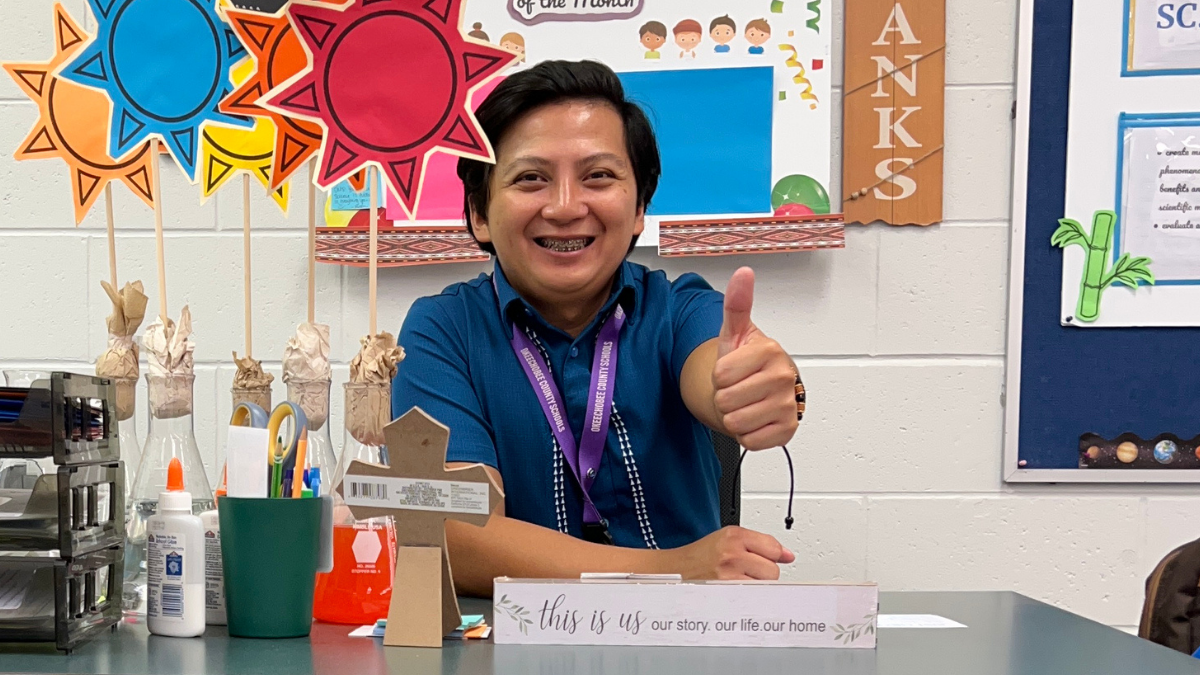

The path to a foreign teaching career rarely begins where the story is told. For one Filipino educator now shaping young scientists in Florida, it started before dawn in a Manila wet market, hauling goods and hawking produce to pay for the education that would carry him thousands of miles from home. Dharyl Del Mundo, 37, is a science teacher at Osceola Middle School and soon to be the first Filipino at his school to lead the 7th grade science team — a milestone that traces back to a boyhood spent balancing a market stall against a classroom seat.

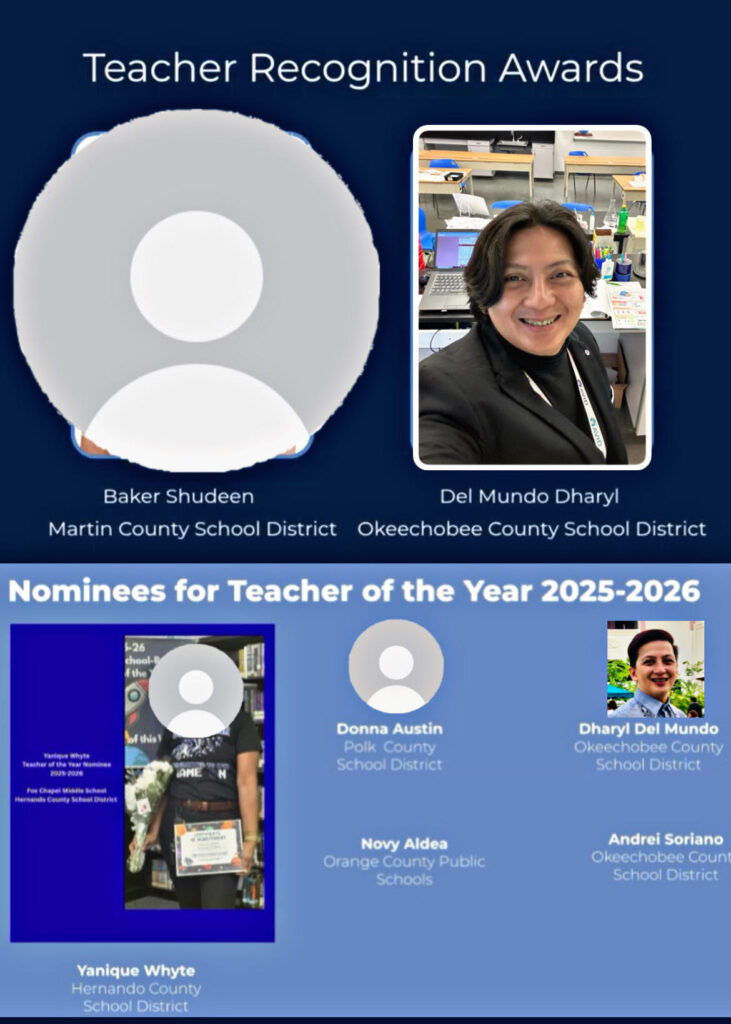
The distance between those two worlds is not lost on him. He spent his high school and college years working as a helper and vendor in Blumentritt, Manila, funding his own studies while dreaming of something larger. “That experience taught me the value of hard work and fueled my desire for a better life,” he says. Two decades later, that same drive has made him a Teacher of the Year nominee, a published researcher, and a mentor to fellow educators in a school district far from where he began.
Building a classroom that moves
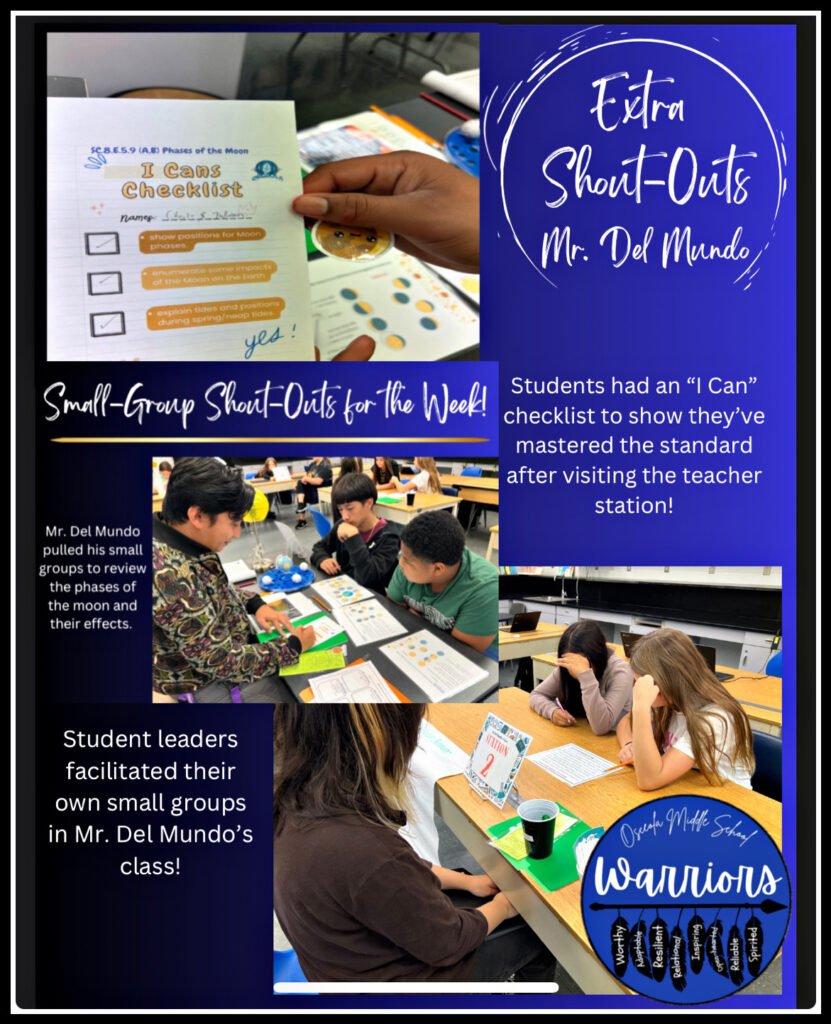
Ask the former public school teacher what a science lesson should feel like, and he will not describe rows of desks and a chalkboard. His classrooms hum with movement. Dharyl teaches through a STEAM-integrated approach built around small group activities and station-based learning, a method he developed himself to keep middle schoolers engaged with their hands as much as their heads.
He calls it “Facili-Station” — a facilitated station model for small group instruction — and it grew directly out of the friction of teaching abroad, where he faced a new curriculum, a new student population, and the challenge of holding the attention of adolescents still figuring themselves out. The strategy worked. It was recognized and featured schoolwide, and it is now the basis of a research study he is preparing to publish. Two others are already in print: one on activity-based learning material, another on measuring cognitive load in multimedia learning.
His students have carried that energy into competition, taking first place in the countywide science fair and second at the regional level. He credits the environment as much as the method. What he values most about the job, he says, is the sense of family among his colleagues — “a group of professionals who genuinely support and help each other grow into more effective educators.”
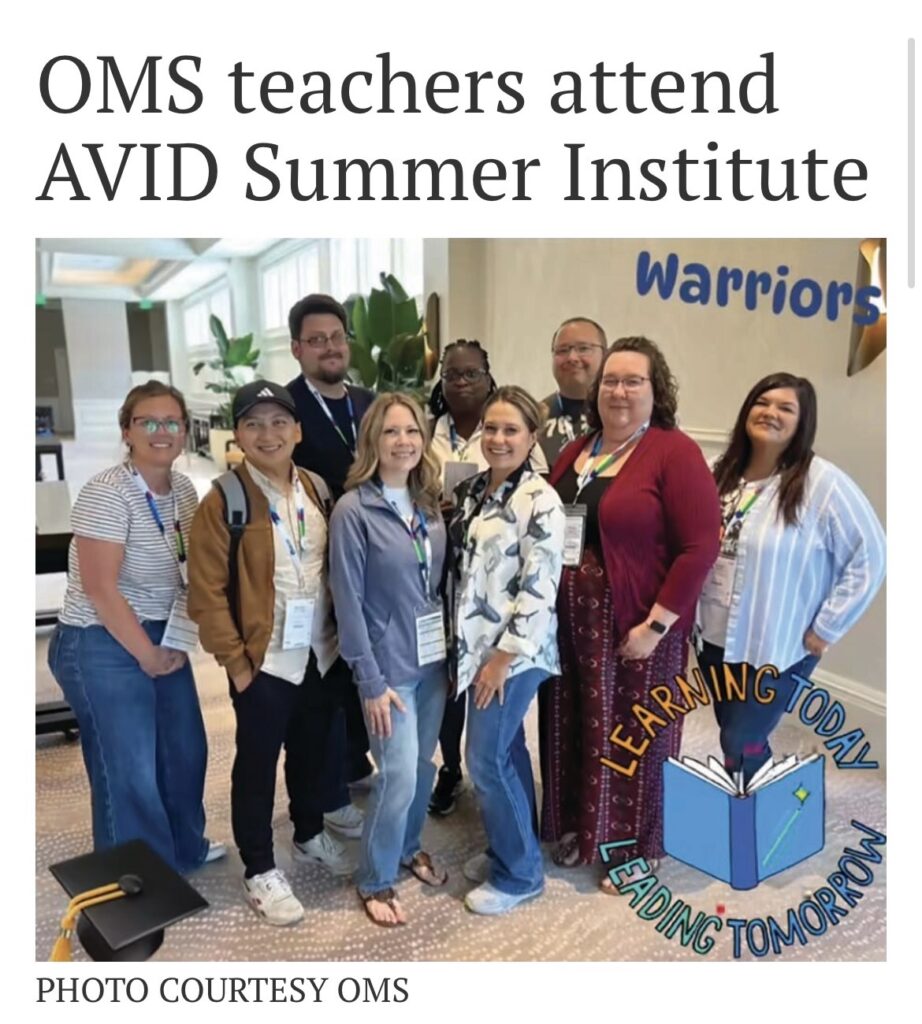
That collaborative instinct shows up in his wider role. He serves as an AVID Advocate and Resource Educator, training fellow teachers at his school, and has represented the middle school at the district level. For a man who once had no one to lean on but himself, the pull toward lifting others is unmistakable.
The cost of the crossing
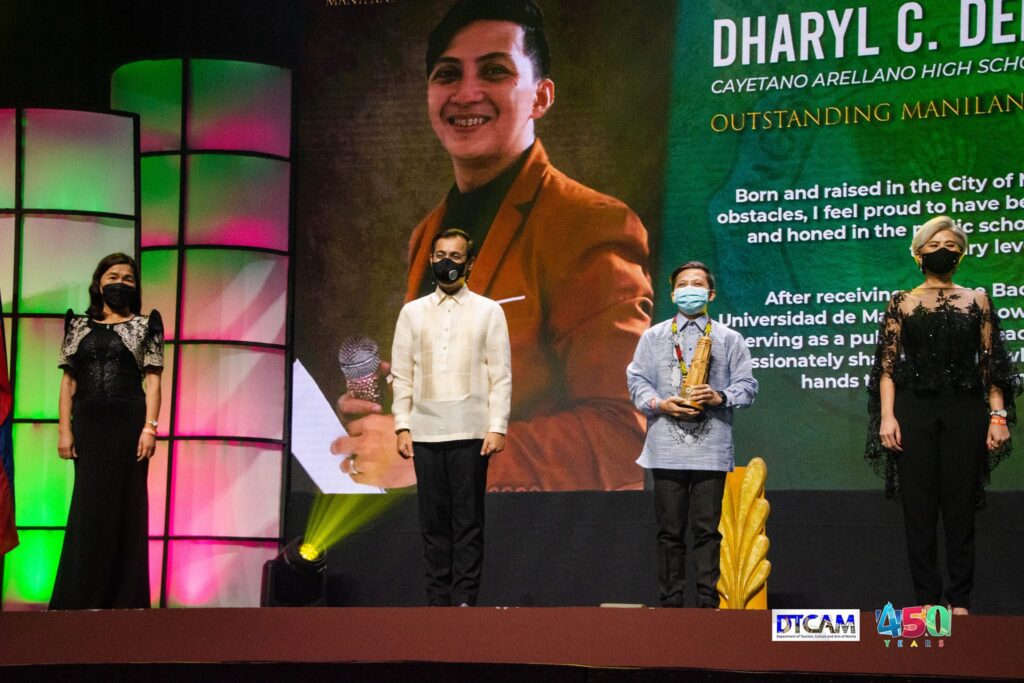
He started teaching abroad in July 2022 — his first job overseas — after six years as a science teacher at C. Arellano High School, a public school in Manila. There, he was named an Outstanding Manilan in the Field of Education in 2021 and earned a Gold Class Faculty Achievement Award, while pushing for ICT integration in science teaching. Outside the classroom, he traveled the country with United Hands, a non-government organization, distributing relief goods to thousands of families displaced by Typhoon Ulysses in the depths of the Covid pandemic.

Leaving all of that behind was, in his words, a leap of faith. The first weight to settle on him was homesickness. “It was my first time ever being away from my family, and that emotional weight was real,” he recalls. Culture shock, language barriers, and an unfamiliar teaching environment stacked on top of it.
Then came the loss that reshaped everything. Just months ago, his father passed away, and he could not go home. He carried the burden of arranging financial support for the hospital and funeral bills from thousands of miles away — grieving in private while standing in front of his students every single day. It is the kind of ordeal that can hollow out a person. For the Filipino teacher, it deepened his sense of purpose instead.
He points to the people who steadied him: his principal, assistant principal, team leaders, coaches, and his Namitaba, all of whom believed in him when the ground felt unsteady. “They became my driving force to do better and to become a teacher who truly empowers and uplifts students,” he says. “Every struggle I faced only deepened my commitment to the work I do and the people I serve.”
What the sacrifice builds
For all the hardship, he speaks about working abroad as a slow, deliberate act of building — dreams turning solid one at a time. He bought land and built a house from the ground up for his family, and renovated a second property that now earns rental income. “These are milestones I am truly proud of,” he says. But the money, he insists, was never the whole point. He has continued his advocacy from afar, backing outreach programs, gift-giving drives, and support for families and children back home.
When his time in the United States ends, he plans to return to the Philippines, enjoy the fruits of his labor with his family, and pursue a post-graduate degree before looking at new opportunities abroad. The giving-back, he says, will come with him wherever he goes — feeding programs and outreach for underprivileged children remain close to his heart.
His advice to kababayans chasing opportunity overseas fits into a single word: S.A.F.E. Stay focused on your why. Attitude over altitude — “keep your heart above your head.” Faith, in God and in the work. And enthusiasm, because openness invites new blessings. “Stay S.A.F.E., kababayan,” he says, “and trust that every sacrifice you make abroad is worth it.”
It is counsel earned the hard way, by a man who has been measuring the worth of his sacrifices since he was a boy behind a market stall — and who has, at last, found the answer holding steady in a Florida classroom.
