



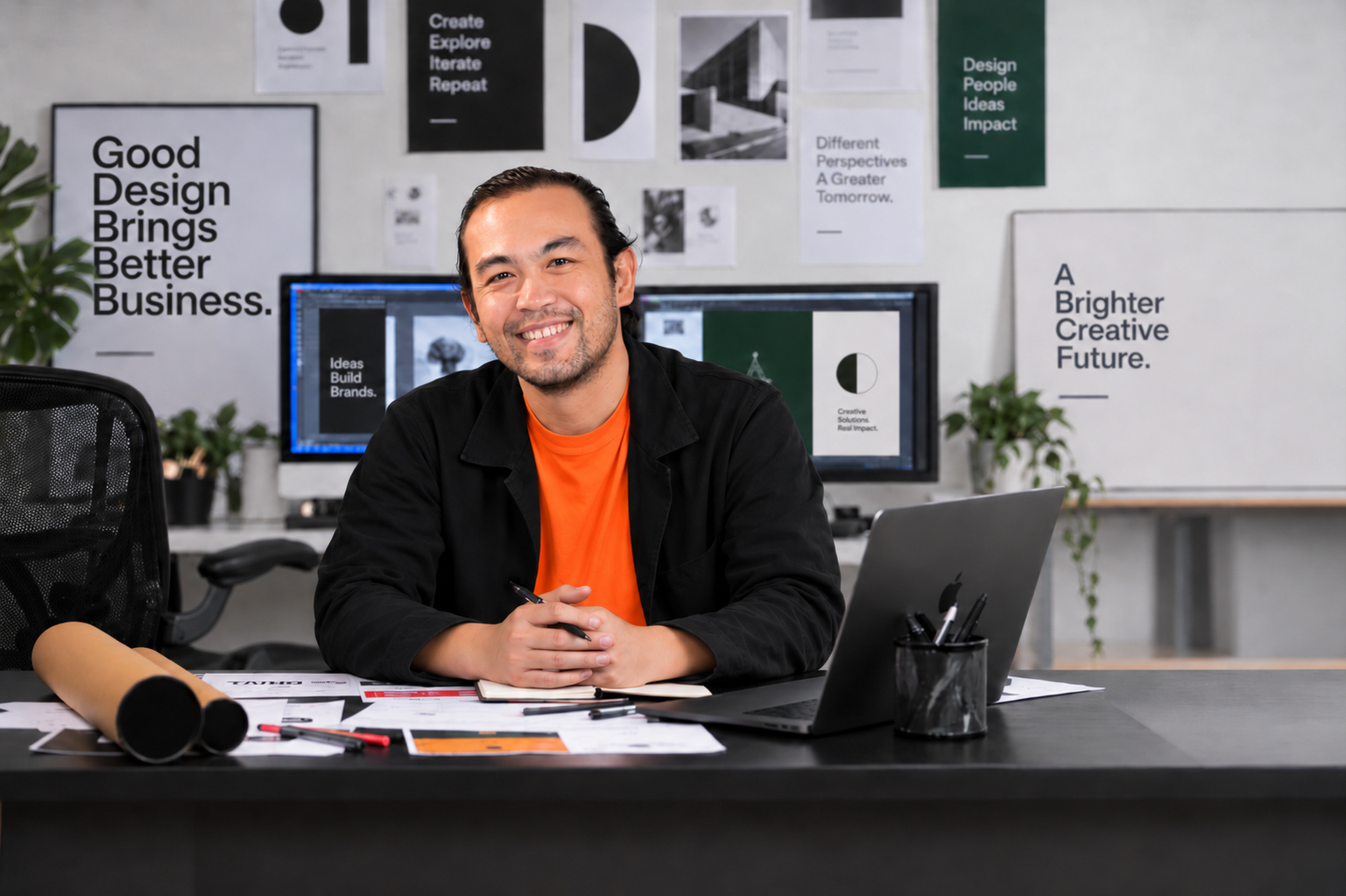

A designer’s portfolio is supposed to open doors. When it’s thin, it does the opposite—and the person on the other side of the rejection email learns that lesson faster than anyone.

Cilmar Bolilawa Bacus learned it in 2017, fresh off a plane in Dubai with a skill he loved and almost nothing to prove he could do it. Today, at 38, he is Head of Creative at a marketing consultancy in Business Bay, steering branding, art direction, digital campaigns, UI/UX, and packaging for brands across the region. The distance between those two points is not a straight line. It is a story about what happens when you refuse to stop learning long enough to catch up with your own ambition.
The long way into design
Cilmar did not set out to become a designer. He studied computer programming, and his early working life in the Philippines had little to do with logos or brand identities. He spent time as a technical crew member for an event sound and lights company, then as a computer attendant at an internet café—jobs that, on paper, look like detours.

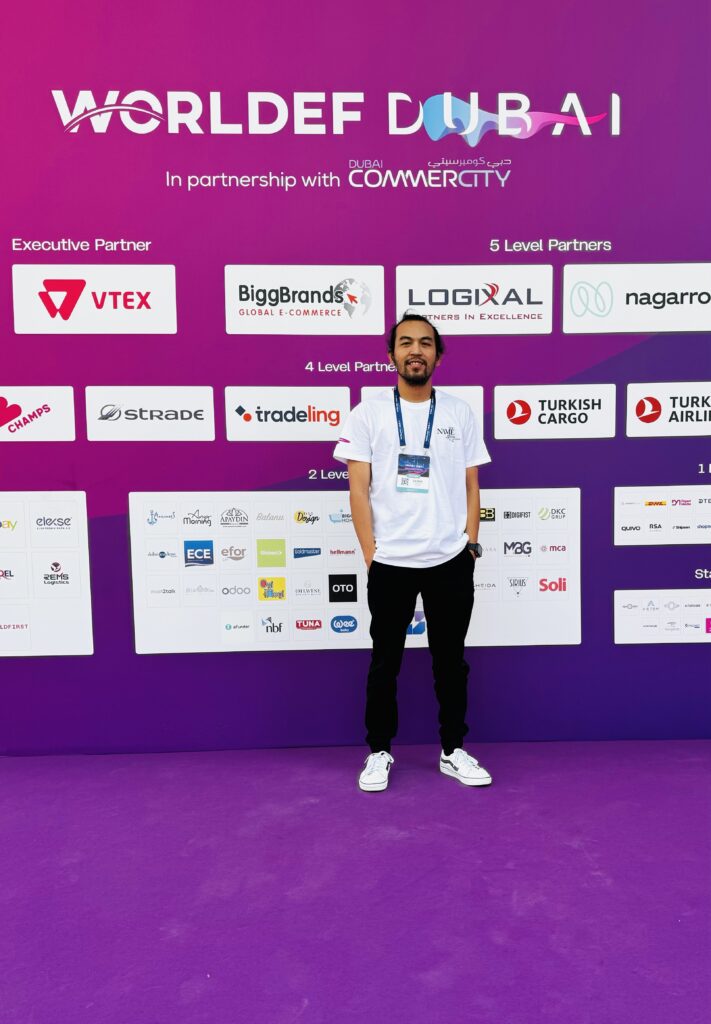
He does not see them that way. “These early jobs helped develop my technical knowledge, patience, discipline, and interest in digital technology,” he shares with TGFM. Coordinating equipment under the pressure of a live event and troubleshooting machines for café customers gave him something a design degree might not have: comfort with technology and the temperament to work through problems without panicking.
The pull toward the creative industry came later, and it came strong enough to redirect a career. When he moved to Dubai in 2017—drawn by the promise of a bigger future and the desire to be with his wife—he arrived with passion intact and portfolio lacking. It was a difficult combination in a city that draws talented people from everywhere.
Learning after hours
The rejections came, and they came often. “I experienced a lot of rejection because I did not have a strong enough portfolio to show employers,” he recalls. He was competing against seasoned professionals from around the world, and he had limited work to put in front of them. There were stretches when the obvious question surfaced: was he actually good enough?
His answer was not to wait for confidence to arrive. It was to build the missing portfolio himself, one tutorial at a time. He spent countless hours on YouTube and online lessons, practicing after work, studying other designers, and reworking his own material late into the night. Every rejection got reframed as a diagnostic rather than a verdict.
“I understood that every rejection was also an opportunity to identify what I needed to improve,” he says. That reframing matters more than it sounds. It is the difference between reading a “no” as a closed door and reading it as a punch list.
The work slowly compounded. His first Dubai job was as a graphic designer for a corporate gifts company. From there he moved into printing and production, spending roughly two years learning how a design actually becomes a physical object—a phase many designers skip and later regret skipping. He returned to design proper with a café and restaurant company in Dubai Design District, then joined a marketing agency as a creative graphic designer before climbing into senior creative and leadership roles.
Each stop added a layer. “These different experiences helped me understand not only how to create something visually attractive but also how to think about branding, production, marketing, digital experiences, and business objectives,” he explains. The designer who once couldn’t get a callback was becoming the person who understood the whole machine.

The name in the search results
There is a particular kind of vindication that arrives quietly. For Cilmar, it came through a search bar. One day he typed “top Filipino graphic designer in Dubai” into Google and found his own name looking back at him.
“For some people, it may seem like a small achievement, but for me it represents years of learning, sacrifice, rejection, and continuously improving my craft,” he says. Coming from someone who once had nothing to show employers, the moment carried weight far beyond its size.
What he enjoys now is the same thing that pulled him into the field in the first place—watching an idea cross from imagination into something real. “Seeing something that initially existed only in my imagination become a finished project is one of the most satisfying parts of being a designer,” he says. Every project, he adds, is a different problem to solve, starting sometimes with nothing more than an idea and ending as a logo, a package, a campaign, or a full brand identity.
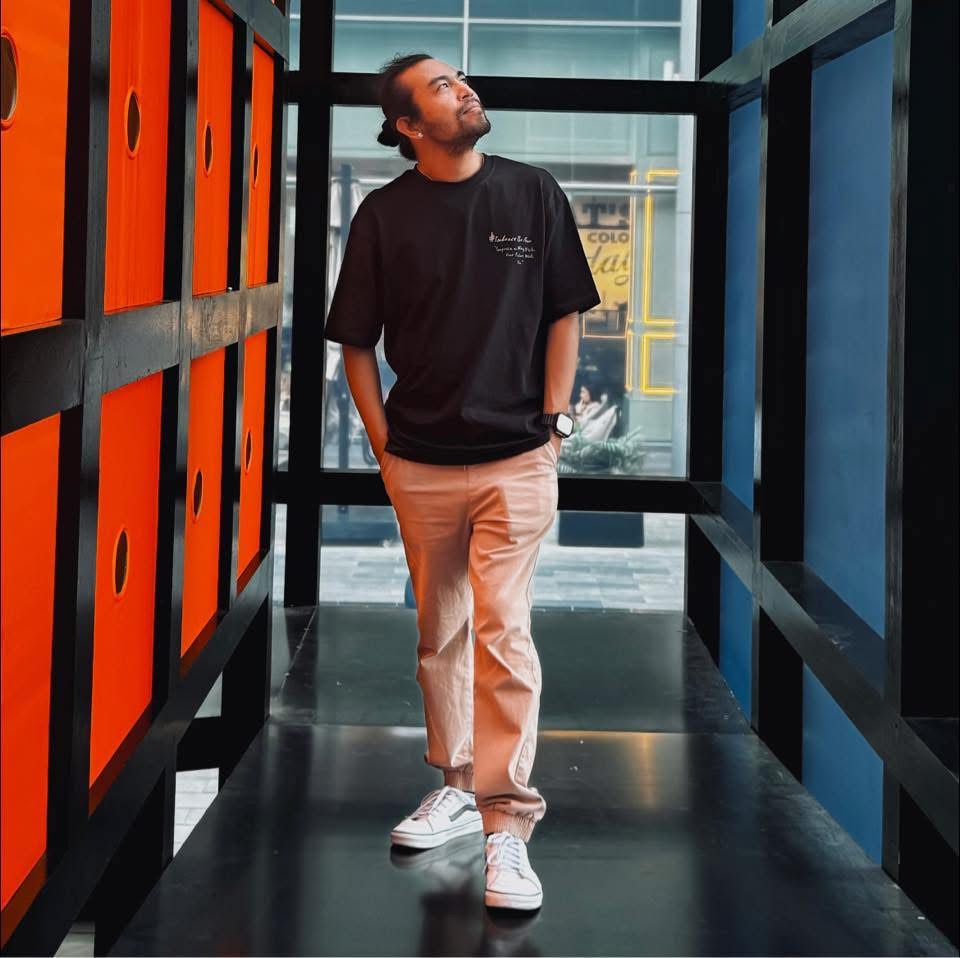
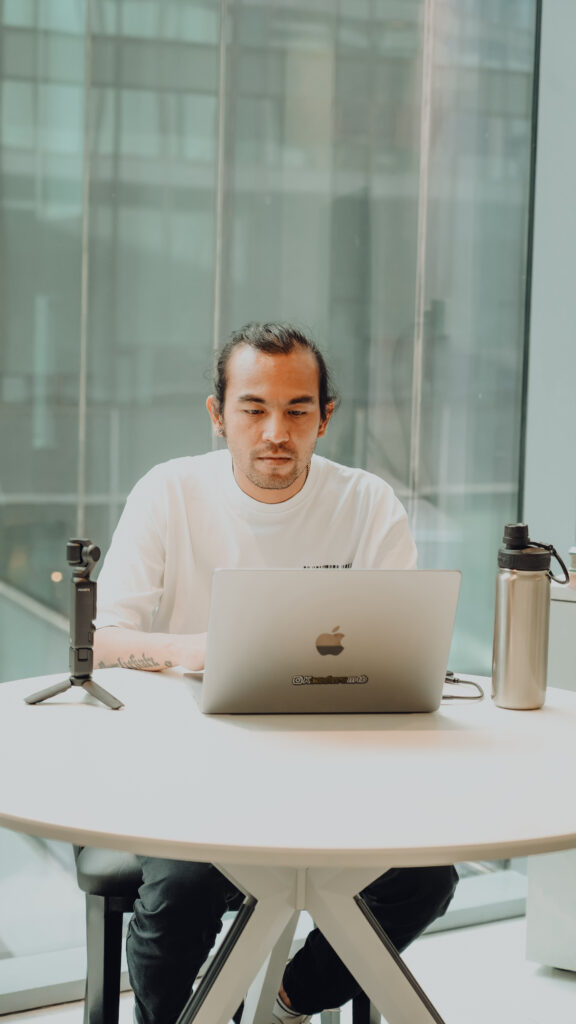
He has no intention of coasting on any of it. The creative industry moves fast, especially with AI and automation reshaping how work gets made, and he treats continuous learning as job security rather than a chore. Outside his regular work, he keeps studying new techniques, AI tools, UI/UX, and emerging platforms—wary, in his words, of becoming too comfortable with what he already knows.
What he wants the next one to hear
Ask him about the future and the answer bends quickly toward other people. He wants to keep growing his career and personal brand, yes, and to build something that outlasts his own employment. But he also talks about the Filipino creatives coming up behind him, the ones staring at rejection emails and wondering if they belong.
His advice to them is practical and hard-won. Save when you can. Don’t spend to impress people. Choose whom you trust carefully. And never stop building skill, “because your knowledge is something nobody can take away from you.” On rejection specifically, he wants aspiring designers to hear what he eventually understood himself—that a “no” often means a gap in preparation, not a ceiling on talent.
Underneath the tactics runs a steadier belief, the one he returns to whenever the work gets heavy: “Hindi mahalaga kung saan ka nagsimula. Ang mahalaga ay hindi ka tumitigil matuto, mangarap, at magsikap.”
He is careful not to call this a finish line. Success, for him, isn’t a declaration that he has made it. “It is being able to look back at where I started, appreciate how far I’ve come, and still have the hunger to become better.” He wants his son to someday be proud of the work and the story both.
Nine years in, the man who couldn’t fill a portfolio now defines the creative direction for brands across a global city. He still believes he has a long way to go. Given how he closed the last gap, that hunger reads less like modesty and more like a warning to anyone betting against him.
