



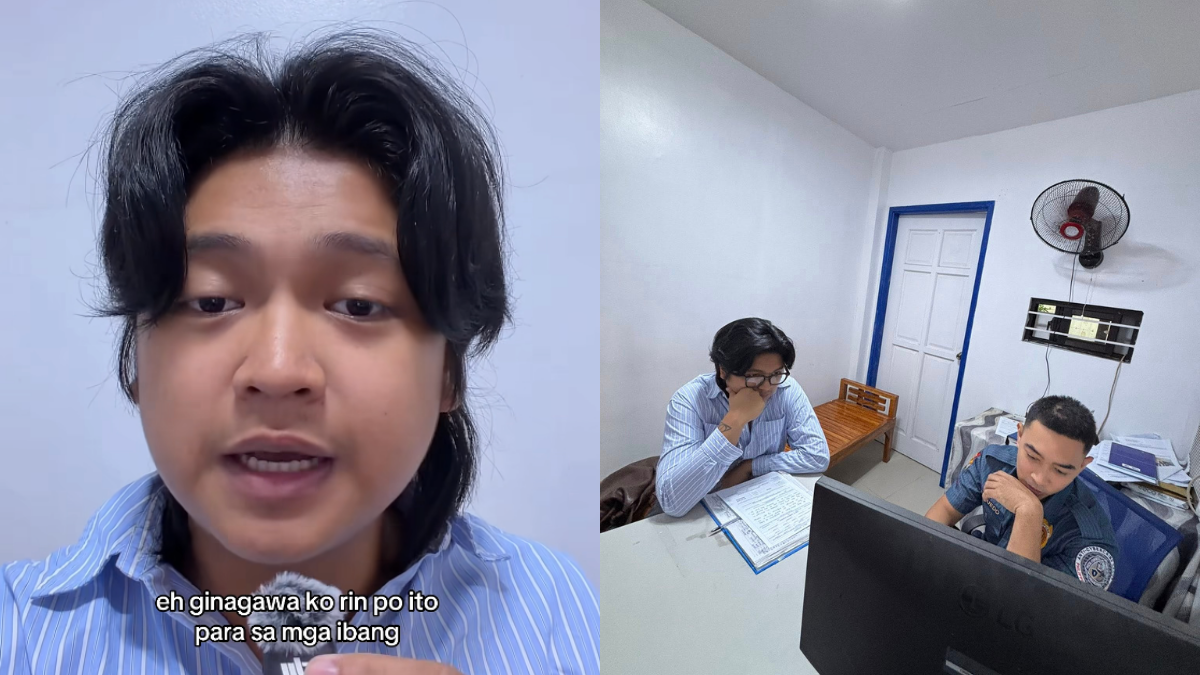

Filipino content creator and social media commentator Gabe Pineda filed a complaint Friday morning at the Regional Office of the Philippine National Police’s Cybercrime Unit against a person who sent him messages threatening to kill him and his family.

Pineda, who has built a following of nearly 400,000 on TikTok for his commentary on Philippine political and social issues, announced the filing in a Facebook post on March 21, accompanied by photos of him at the PNP office filling out documents before a uniformed officer.
“Ngayong umaga, pumunta tayo sa Regional Office ng Cybercrime Unit ng PNP para mag sampa ng kaso laban sa isa sa mga nag padala ng mensahe na may pag babanta sa buhay ko at buhay ng aking pamilya,” he wrote.
The case stems from a direct message Pineda had previously shared publicly, in which an unnamed sender wrote: “Ang dami mong alam putangina mo.. magiingat ka.. kapag nagkita tayo papatayin kita at ang pamilya mo, kahit makulong pa ko.. tarantado kang KUPAL ka..” — an explicit threat to kill both Pineda and his family, with the sender expressing willingness to face imprisonment.

In his post, Pineda framed the filing not only as a personal matter but as a statement on behalf of fellow content creators who face similar harassment. “Hindi lamang ito para sakin at para sa pamilya ko kundi pati para sa mga kagaya kong content creator na sinusubukang gawin ang tungkulin nila bilang mamamayan,” he said.
He ended his statement with a clear position: “Hindi kailanman sagot ang dahas. Hindi kailanman sagot ang pag babanta. Lagi’t lagi para sa bayan.”
Pineda has been a frequent target of online harassment, particularly from supporters of former President Rodrigo Duterte — commonly referred to as DDS, or Duterte Die-Hard Supporters — due to his outspoken criticism of what he describes as a culture of violence and political fanaticism. He had previously posted the threatening message publicly, noting that such harassment is a pattern directed at voices critical of the Duterte camp.
Under Republic Act 10175, or the Cybercrime Prevention Act of 2012, online threats carry enhanced penalties compared to those made through conventional means, given the use of information and communications technology.
