



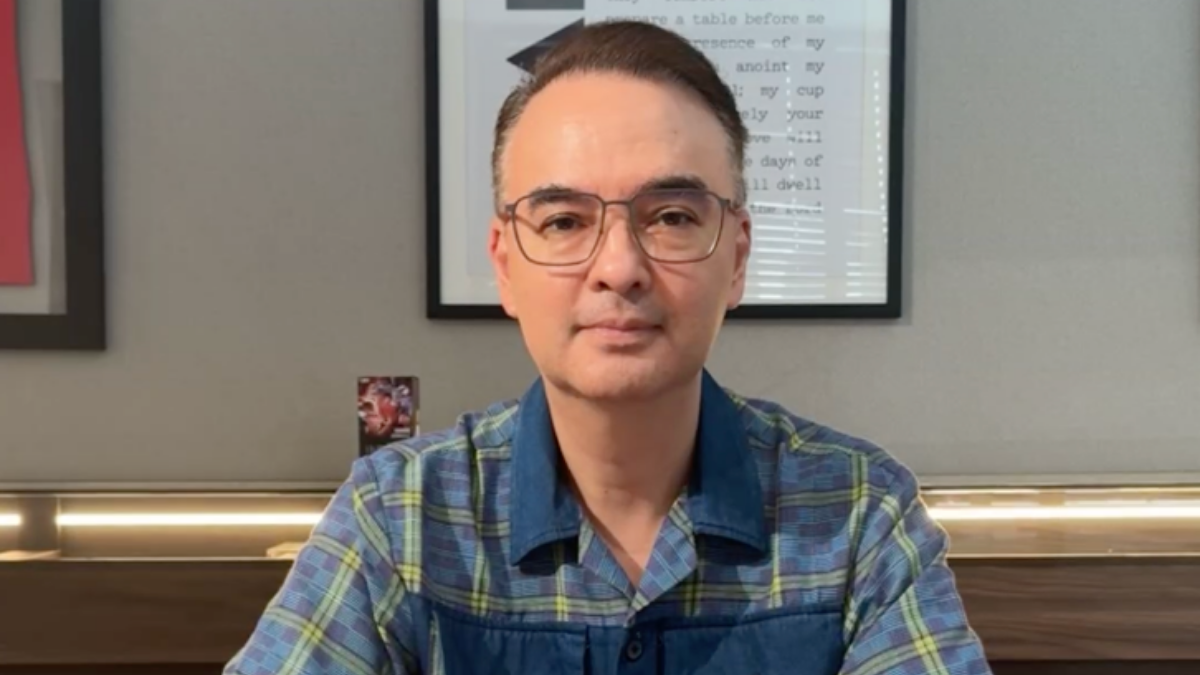

Is there anything wrong with simply discussing whether to change the chamber’s rules? That was the question Senate President Alan Peter Cayetano put to the public during a Facebook livestream on Friday, as backlash mounted over a proposal to let senators take part and cast votes remotely.

“Let me clarify. We have not voted on the amendments to the rule that will allow teleconferencing or online voting. We were not there yet. What we were voting on was whether or not this should be discussed. So again, to the heart of democracy, is there anything wrong with talking about changing the rules?” Cayetano said in Filipino.
His central point was that no decision on the substance had been made. What the chamber weighed last Tuesday, he insisted, was only whether the matter merited discussion at all — not the rule change itself.
He drew a sharp distinction between airing an idea and pursuing something the Constitution bars. “We’re not proposing murder. We’re not proposing abortion, which is inherently wrong, or things that we should not even be discussing because the Constitution says it’s wrong,” he added.
The proposal at the center of the controversy came from Sen. Rodante Marcoleta and would permit lawmakers to join sessions and vote on plenary matters from a distance. Cayetano cast it as a reaction to what he called mounting threats against the institution and its members.
“What we were talking about is that, if we will allow this rule change because of recent times, given the threat to the Senate, given the different attacks on the Senate, given the different attacks on individual members of the Senate, our experience when we were in the minority, when we were being stopped from building a majority, the threats that we received,” he said.
The Senate chief turned his criticism toward the opposition, suggesting that backers of senators including Risa Hontiveros, Francis Pangilinan, Panfilo Lacson, and Erwin Tulfo had been deceived — “na-onse,” as he put it — by a bloc that now counts 11 members.

“If only they [minority] listened, if they stopped the drama even after the session, and instead tried to listen to each other, the motion was to take up the amendment. This means there will be a sponsorship, and then everyone can raise a question, make amendments, if they think it is wrong,” Cayetano said.
He pushed back against the idea that the majority was steamrolling the proposal. “The problem is that if you’re on their side, on the side of the 11, they may have duped you because they are claiming there is no chance to ask questions or explain. But we are not even there yet. So there’s a chance. They say it’s a tyranny of the majority. No, it’s an attack from Tulfo, from Lacson, from Pangilinan, from Hontiveros. Because they resorted to louder voices, instead of listening,” he added.
The livestream came days after a turbulent Tuesday session that ended with opposition senators walking out of the plenary hall. The exit followed a move by Cayetano and Sen. Joel Villanueva to have Marcoleta’s remote-voting measure taken up on the floor.
Opposition members objected on procedural grounds. Pangilinan asked why a rule change was being handled on the floor rather than through a formal resolution. Hontiveros maintained that the proposal was new, pointing out that a May 11 motion had already been sent to the committee on rules — a body she said could not bring it back while its composition stayed unfinished.
Tempers flared when Marcoleta noted that some of his colleagues opposing the measure lacked legal backgrounds. Tulfo branded the remark an ad hominem attack and questioned why the majority appeared to be moving in haste, after which the opposition senators left the hall as a group.
The standoff adds to a run of confrontations under Cayetano’s leadership. His rise to the post hinged on a narrow 13-vote margin that unseated former Senate President Vicente Sotto III, made possible by the surprise return of Sen. Ronald dela Rosa following a six-month absence — a reappearance clouded by reports of an ICC arrest order linked to crimes against humanity allegations. Two days later, warning shots rang out inside the Senate building, fired by acting Sergeant-at-Arms Ma. O Aplasca toward NBI agents at the adjacent GSIS building, an act police called excessive and one that drew a defense from Cayetano and several majority allies before the Ombudsman suspended her.
