



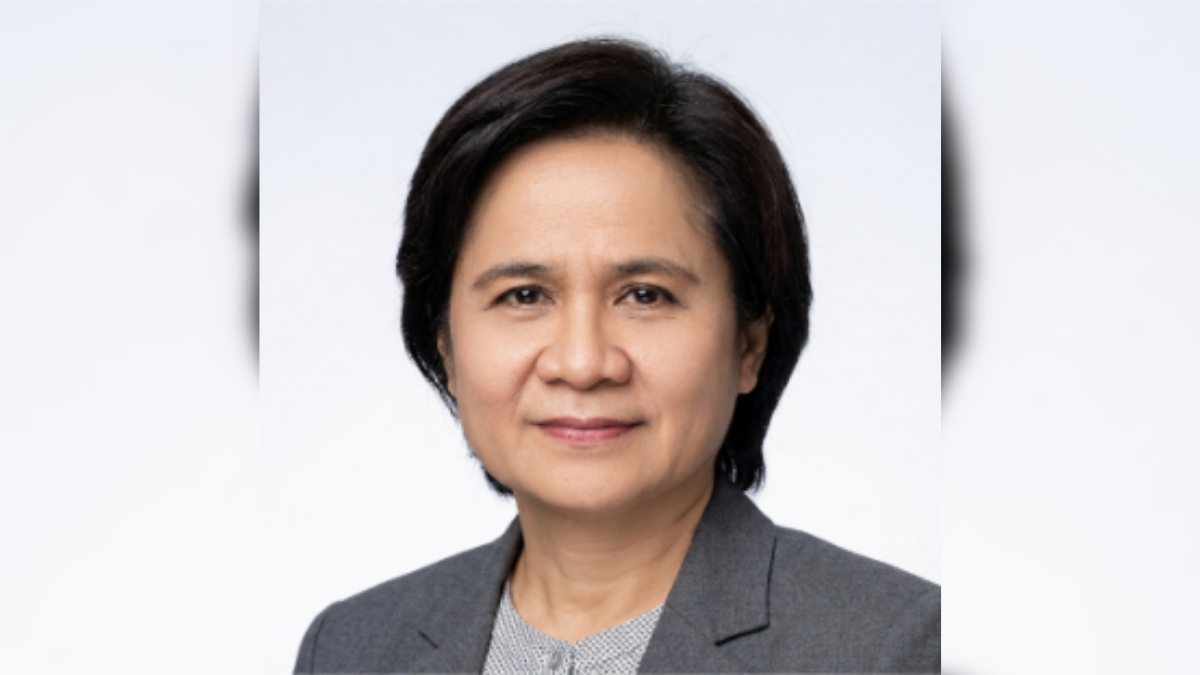

When the story of Filipino nurse migration is told, the destinations are often familiar: the United States, United Kingdom, Australia, Canada, or the Middle East. Salome Rahim, MPH, RN, followed a different map.

Her journey took her to Bangladesh, not primarily in pursuit of a conventional migration pathway, but because of family. What she initially imagined would be temporary evolved into an extraordinary professional life spanning clinical leadership, nursing education, public health, bioethics, and research—and a 37-year nursing career increasingly devoted to strengthening the professional voice of nurses.
Today, Rahim is a full-time nursing faculty member (lecturer) within the Grand Health Sector of TMSS in Bogura, Bangladesh. A graduate of West Visayas State University, she holds a Master of Public Health and is pursuing doctoral studies in Bioethics and Global Public Health. She has served for nearly a decade as Head of Nursing Services, taught in a Master of Public Health program, and moved into nursing development and faculty roles. She is also an executive committee member of a national bioethics society and lead author of nationally funded research addressing nurses’ dignity and professional voice.
Yet this was never the career she originally planned.
Rahim once expected to follow the familiar route to the United States. Her husband, a Bangladeshi physician, supported her preparation for the NCLEX. But when her mother-in-law died, her father-in-law deeply missed his son. With their daughter only four, the couple made a family decision: they would move to Bangladesh.
“What started as a personal choice for our family unexpectedly turned into a meaningful career path for me in a destination where very few Filipino nurses go,” she recalls.
Unlike Filipino nurses arriving in destinations with established kabayan communities, Rahim found herself working in a provincial setting, distant even from the small number of Filipinos in the capital. There was no substantial Filipino nursing network to provide professional or social support. Language was challenging, and she encountered a rigid healthcare hierarchy in which nursing could be regarded as subordinate.
She responded by drawing on what she already possessed: her Philippine nursing education, professional discipline, and identity.
Slowly, credibility followed. She worked clinically, pursued public health education, became Head of Nursing Services, taught as an adjunct faculty member, coordinated nursing development and eventually entered full-time nursing education. A chance opportunity to present an abstract while accompanying her husband to the Asian Bioethics Conference in Thailand introduced another dimension to her career: research as professional advocacy.
That evolution is important because Rahim’s leadership has never been solely about occupying senior positions. It has been about challenging assumptions concerning what nurses are—and what they should be permitted to contribute.
During her years leading nursing services, she became concerned that nurses could be blamed first when incidents occurred. Her response was not to remove accountability, but to make accountability fair. Nursing supervisors documented incidents systematically; nurses involved were asked to provide written explanations; and decisions were expected to be based on what actually happened rather than hearsay.
“A nurse should be responsible for her actions, but she should not be judged simply because she happened to be the easiest person to blame,” she explains.
She similarly encouraged nurses to speak when their clinical observations mattered. For Rahim, professional hierarchy could never justify silence when patient safety was involved. Nursing possessed its own knowledge, judgment and responsibilities, and therefore deserved a legitimate place in clinical decision-making.
Her leadership extended into multidisciplinary arenas. At a hospital serving as an official training centre for the Smile Train USA Project, she delivered the nursing component of training alongside surgeons and anaesthesiologists, emphasizing safety standards in high-risk surgical environments. She introduced medical interns to nursing services and ensured nurses prepared evidence for participation in mortality reviews and infection-control meetings.
Today, that philosophy carries directly into her teaching.
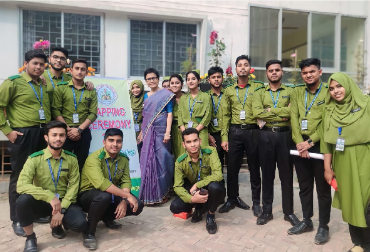
Rahim has been deeply involved in nursing education in Bangladesh for approximately 16 years. She teaches students that nursing is not a collection of tasks performed on instruction. It is an independent, knowledge-based profession requiring critical thinking, judgment and ethical responsibility.

Above all, she describes nursing as “a profession of conscience.” Professional identity, she argues, begins while someone is still a student—not after graduation.
Research is equally central to this formation.
“Research is not just about numbers and statistics—it is about the lens you look through,” she tells her students.
When nurses investigate problems through a nursing lens, she argues, research becomes capable of changing what happens at the bedside while strengthening nursing’s voice within healthcare.
Perhaps one of the most compelling aspects of Rahim’s story is that professional conviction has coexisted with genuine cultural adaptation.
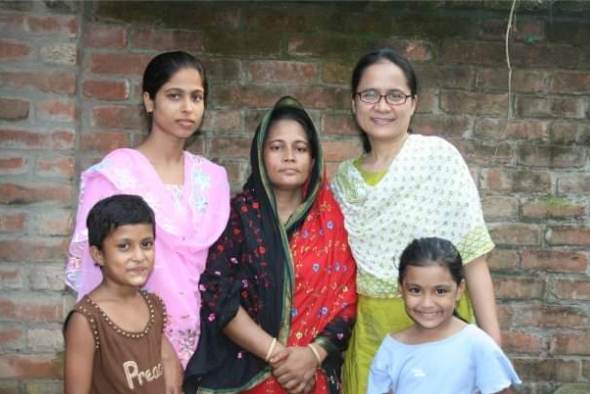
She learned to cook Bangladeshi food, wear traditional clothing and participate in village and family celebrations. She learned to fast during Ramadan—not simply as personal sacrifice, she says, but as an expression of solidarity and respect for the community around her. She remembers everyday gestures of acceptance: a shopkeeper trusting her to pay later, someone inviting her to stay for milk tea, and former patients greeting her years after she had cared for them.
Her experience challenges the idea that adapting to another culture requires surrendering professional values. For Rahim, adaptation means understanding people and history while remaining clear about the boundaries imposed by ethics, patient safety and professional responsibility.
She believes Filipino nurses bring something particularly valuable to low-resource environments: what she calls being “safely resourceful.” Philippine training, in her experience, equips nurses to work creatively within constraints without treating safety standards as optional. Alongside this comes malasakit—not as an abstract Filipino virtue, but as the practice of remaining genuinely present with patients and families when they are vulnerable.
Her story also offers a provocative message for the Filipino nursing diaspora.
Rahim encourages nurses to consider South-to-South migration and professional opportunities in low- and middle-income countries. Global nursing success, she argues, should not be measured exclusively through Western destinations, salaries or prestige. There can be profound fulfilment in serving where nursing knowledge and leadership are urgently needed and where one individual can influence an emerging profession or health system.
After 37 years, Rahim measures her own contribution differently.
She hopes to leave behind stronger nurses, better questions, stronger evidence and a profession increasingly able to speak for itself. Her years as Head of Nursing taught her that leadership means using authority to protect people fairly, develop their capabilities and help them discover their professional voice.
Her journey from the Philippines to Bangladesh therefore expands our understanding of the Filipino nursing diaspora itself.
“Our impact is not determined by how traditional or prestigious our destination is,” Rahim reflects, “but by what we are able to contribute where we are.”
In Bogura, far from the destinations usually associated with Filipino nurse migration, Salome Rahim has spent decades demonstrating precisely that.
