



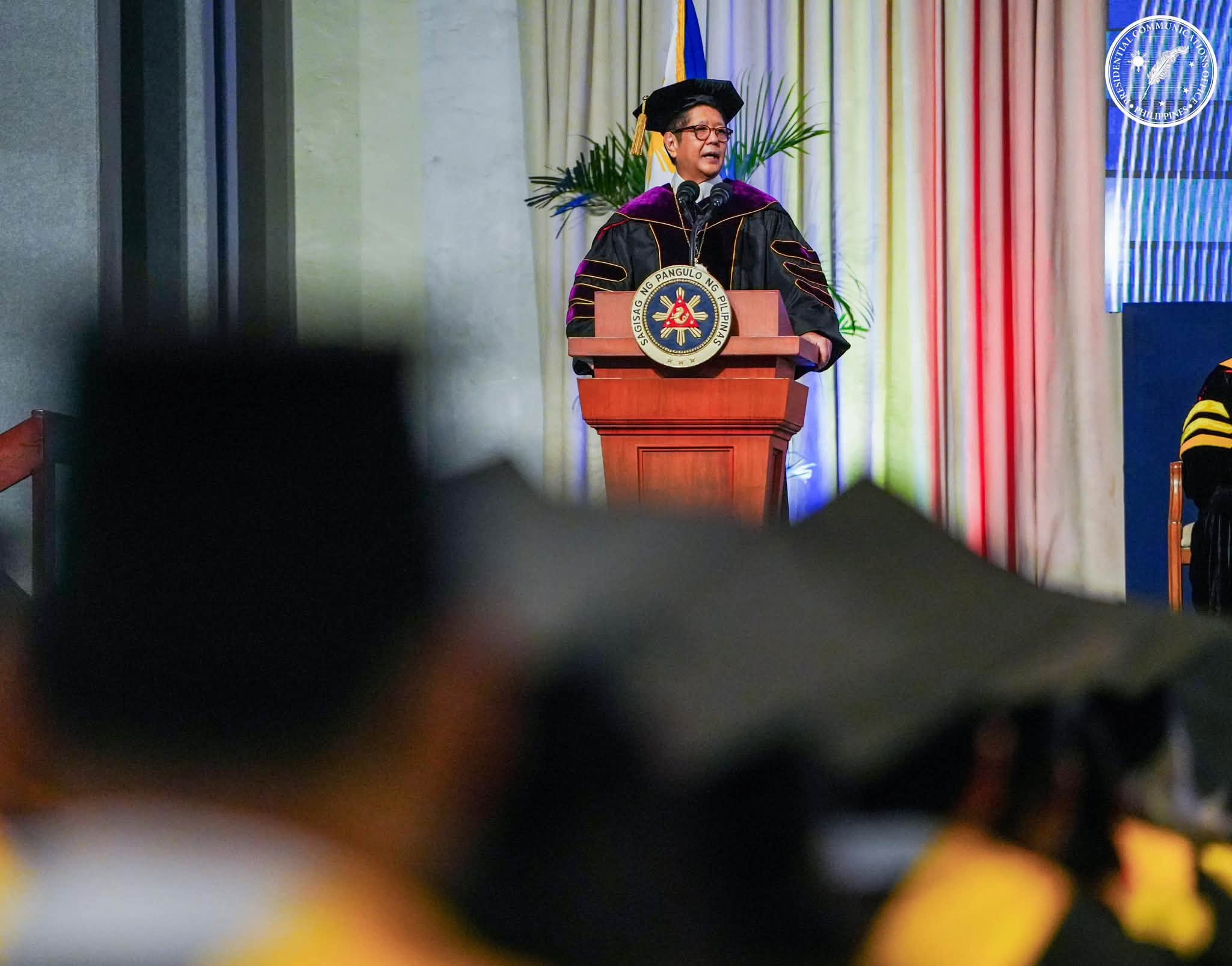

Malacañang came to President Marcos’ defense on Monday over the honorary Doctor of Laws degree he received from the Pamantasan ng Lungsod ng Maynila, arguing that his record of national service justified the recognition.

Palace press officer Claire Castro explained that a degree of this nature honors people whose work has benefited society, and is not tied to finishing coursework or academic requirements. She suggested that much of the backlash stemmed from a failure to grasp what the distinction actually means.
“Many perhaps don’t understand the term honoris causa. Those who criticize the President are either arrogant or those who oppose him – the usual obstructionists and destabilizers – or those who simply just ride on what they see on social media but don’t understand the real issue,” Castro said.
To make her case, Castro pointed to a series of the President’s actions abroad and at home. She noted his push to defend Philippine claims in the West Philippine Sea, singling out his September 2023 directive to take down the 300-meter floating barrier that the China Coast Guard had placed at Panatag, also known as Scarborough Shoal.

She also listed consular and humanitarian wins under his watch: sparing a Filipino from execution, securing the release of Filipinos in Qatar who faced illegal assembly charges, and freeing 24 citizens who had been held in Eastern Siberia, Russia. On the domestic front, Castro said Marcos kept the country’s fuel supply stable through the turmoil in the Middle East, and she described him as a leader who values human life, honors due process, opposes the misuse of authority, and has launched probes into graft.
The controversy traces back to the university’s 58th commencement on August 27, when the degree was conferred. Kabataan party-list Rep. Renee Co had assailed the PLM’s decision, pointing to what she described as the Marcos family’s long history of corruption, among other objections.
The PLM Board of Regents, in its resolution, credited Marcos with having “demonstrated exemplary leadership in advancing national development, upholding the rule of law, promoting social equity and fostering education opportunities for the youth.”
