



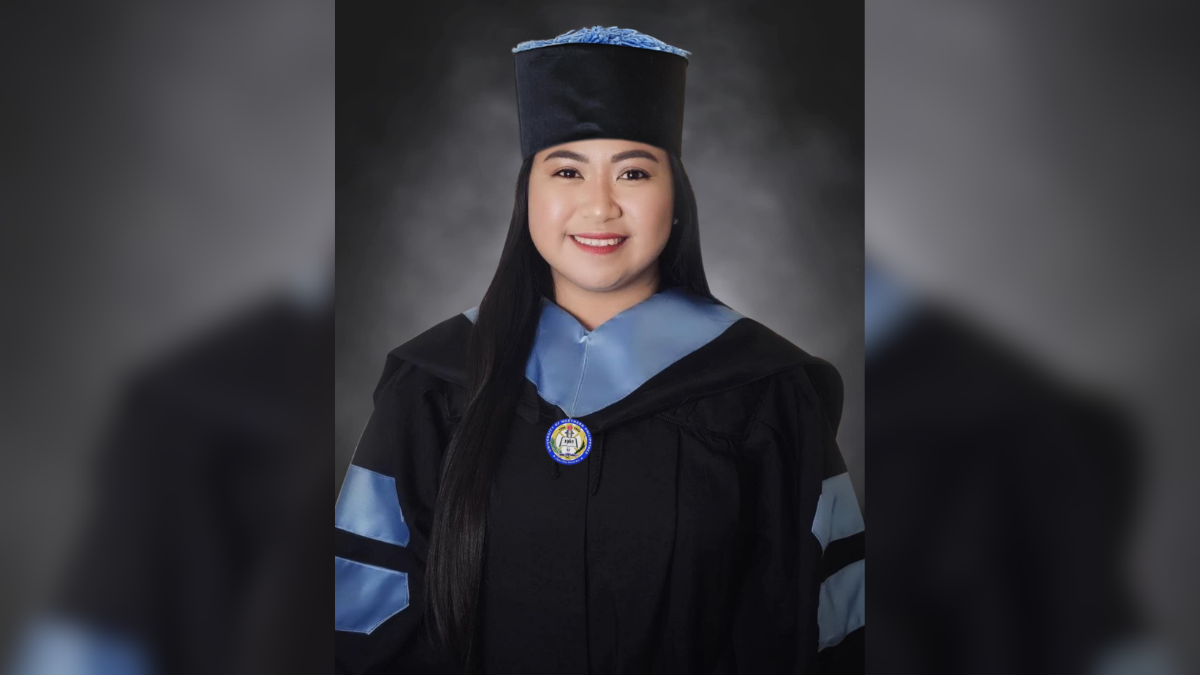

Her bags were nearly packed. Alone in North Carolina, thousands of miles from three children she’d left in the Philippines — the youngest barely a year old — Leslie Ann Mariano stood at the edge of quitting, ready to fly home and call the whole experiment a mistake.

She didn’t. Seven years later, she holds a Master of Arts in Education, a scholarly research article published in 2025, teaching credentials across five states, and a title that reads like a mouthful — High School Math Interventionist at North Carolina Cyber Academy. Strip away the résumé, though, and what remains is a conviction so simple it sounds almost naive until you watch it work: every student can learn when someone believes in them.
That belief did not come from a textbook. It came from a classroom seat, years earlier, where a girl who was convinced she had no talent for numbers sat waiting to be proven right.
The student who couldn’t
Leslie was never the math prodigy her career might suggest. As a student, she struggled with the subject and quietly assumed she simply wasn’t built for it — the kind of verdict children hand themselves early and rarely revisit. What changed the trajectory wasn’t a sudden gift for algebra. It was a single teacher who refused to accept her self-diagnosis.
“When I was a student, I was actually not very good at math, and I did not see myself as someone who could excel in it,” she shares with TGFM. “But I had a math teacher who saw something in me that I did not see in myself. My teacher encouraged me, pushed me to work harder, and made me realize that I had potential in mathematics.”
That intervention — long before “intervention” became her job title — reshaped how she understood the subject and, eventually, herself. She didn’t just learn math. She learned that ability is often a matter of belief arriving at the right moment. Years later, she would build an entire career on returning that favor.
The math itself, in her hands, became a kind of proof. If she could cross the gap from “I can’t do this” to competence, then the students slumped in the back of her own classroom weren’t lost causes either. They were her, a few years back, waiting for someone to notice.
Building a career on service
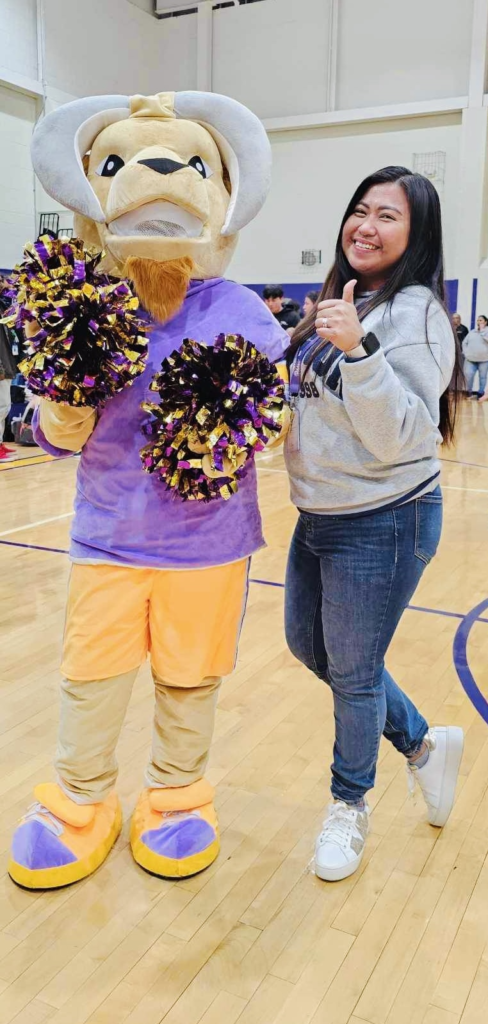
Her teaching began in 2013 at San Lorenzo Ruiz de Manila School, where she taught mathematics to grades 4, 5, and 7. From the start, she treated the classroom as only part of the assignment. She served as a class adviser and threw herself into the work around the edges of the school day — Drum and Lyre Corps dance instructor, dance club moderator, taekwondo coach. The subjects varied wildly; the aim never did.
“These experiences allowed me to support students not only academically but also in developing discipline, teamwork, confidence, and leadership,” she says.
The pattern held as she moved through The Seed Montessori School and then Bagong Silangan High School from 2017 to 2019, where she taught mathematics, advised a class, and coached the Mathematics Club. There, she became one of the teacher-completers of the School-Based Instructional and Administrative Academy, a program built around designing research-backed materials to lift student performance — an early sign of the data-minded educator she would become. By this point she had also stepped into a Grade-Level Coordinator role overseeing roughly thirty teachers, though she has never described leadership as a matter of rank.
For Leslie, the ladder was never the point. Adviser, moderator, coach, coordinator — each title was just another way to be useful. Leadership, in her telling, is service wearing different clothes.
Culture shock, an accent, and an empty apartment
In August 2019, she joined Chatham Middle School in North Carolina as a mathematics teacher, taking on 7th and 8th grade math along with Math 1. The move abroad was deliberate — she wanted to test herself inside a different educational system — but wanting a challenge and surviving one are different things.
The classroom itself felt foreign. American students communicated differently, interacted with teachers differently, responded to lessons in ways that scrambled her expectations. Then there was her voice.
“Even though I could speak English, there were times when my students had difficulty understanding my accent, and I also had to adjust to the different accents and expressions they used,” she says. The workaround was patience with herself: slow down, speak clearly, keep going until confidence caught up.
Harder still was the pressure of state assessments, where her students’ scores doubled as a public verdict on her competence. Rather than let that rattle her, she turned it into method — studying performance data, mapping each student’s weak points, pouring extra support into the ones falling behind.

But the deepest wound had nothing to do with pedagogy. She had left her three children in the Philippines, the youngest only a year old, and the solitude nearly ended everything.
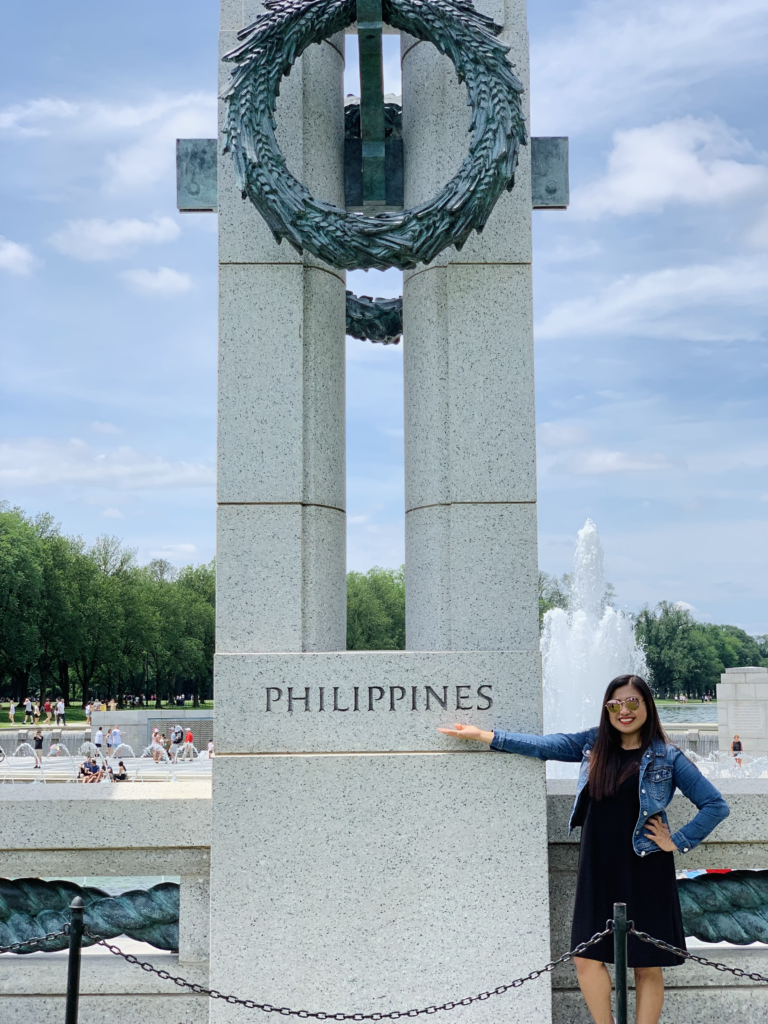
“Going through all those teaching challenges completely by myself was so overwhelming that I almost packed my bags and went home,” she admits.
What kept her from the airport was a combination of faith and community. She leaned on prayer during the moments she questioned whether she could carry it all, and she found footing among fellow Filipinos who understood the disorientation of starting over in a foreign country, alongside local colleagues who helped her decode American schools. In time, her family joined her in the United States — the loneliness that almost sent her home replaced by the very reason to stay.
The proof in the numbers
Once she stopped surviving and started teaching, the results were hard to argue with. For four consecutive years, from 2021 through 2025, she ranked in the top 25 percent of educators in North Carolina and Chatham County Schools for student growth. Her students posted 100 percent proficiency on the Math 1 End-of-Course assessment — a clean sweep on one of the state’s higher-stakes exams.
She didn’t stop at teaching her own classes. She mentored beginning teachers, ran free after-school tutoring for struggling students, and coached cheerleading for three years. She also designed her own solution to a stubborn problem: a system built on interleaved practice — mixing problem types rather than drilling them in isolated blocks — which she studied, tested, and watched improve proficiency and growth on end-of-grade tests. Other teachers adopted it, including some at the school where she now works.
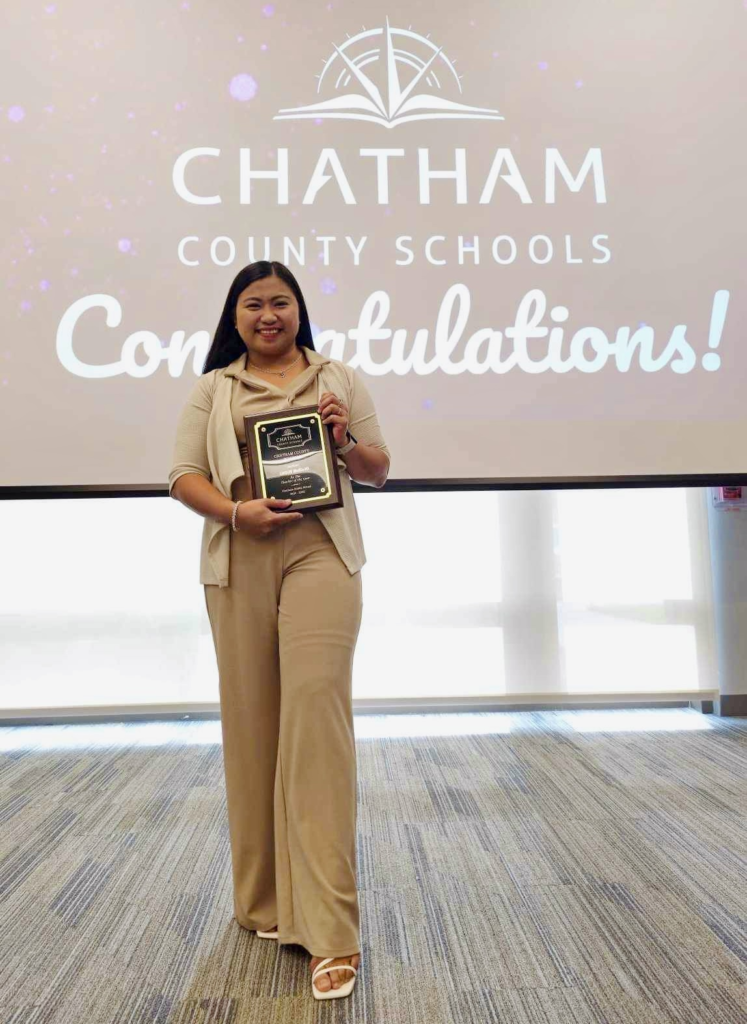
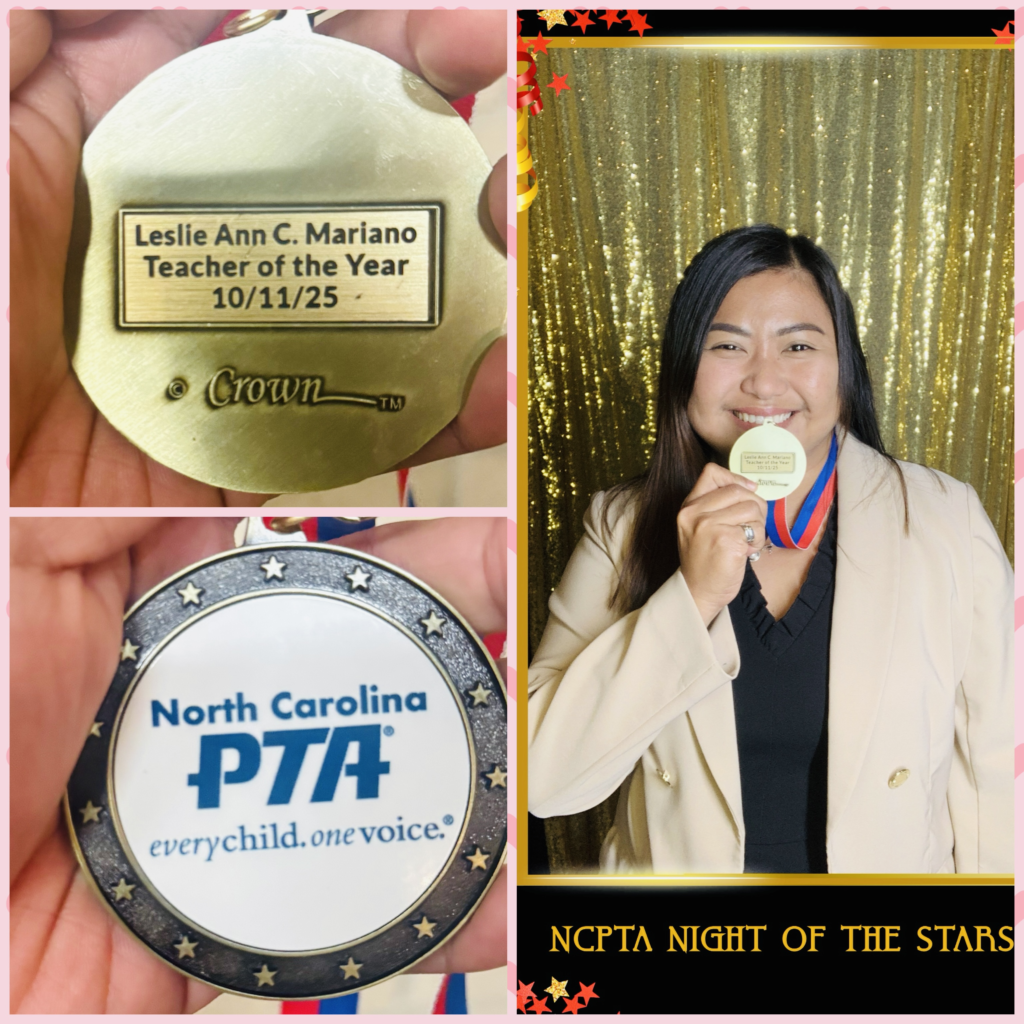
The recognition followed. Chatham Middle School named her Teacher of the Year for 2023–2024. She was honored as North Carolina PTA Teacher of the Year in 2025 and, that same stretch, as Asia’s Educator of the Year in 2024. She lists the awards readily enough, but never lets them stand as the headline.
“These accomplishments are meaningful to me because they represent not only personal recognition, but more importantly, the progress and success of the students I have had the privilege to teach,” she says.
Where the real reward lives
In January 2026, she made a deliberate pivot, transitioning to North Carolina Cyber Academy as its first full-time math interventionist — and, as she notes, the only J-visa holder in the institution. The role narrowed her focus to exactly the students she understands best: those who need Tier 2 and Tier 3 support, the ones who have decided math isn’t for them.
Her days now run on data and small groups — analyzing performance, spotting learning gaps, drafting individualized intervention plans, tracking progress, and working with teachers and families to close the distance. It is quieter work than a full classroom, and for her, more pointed.
“I really enjoy seeing the small improvements that eventually turn into bigger successes,” she says. The most rewarding moment, she adds, “is when a student who used to say, ‘I can’t do this,’ finally understands the concept and realizes that they actually can.” Some of them came back after passing their Math 1 exam just to thank her — proof, she says, that patience and encouragement move more than test scores. “Sometimes the biggest change is not only in their grades or test scores but also in their confidence.”
The symmetry is not lost on her. She is now the teacher she once needed, standing in front of students who have written themselves off exactly as she once did.
Bringing it home
Her ambitions don’t end at the U.S. border. Once she and her husband complete their J-1 program, they plan to return to the Philippines and put what they’ve learned to work — helping Filipino students become more globally competitive without shedding their culture or identity. She has a specific target in mind: partnering with the Department of Education to build an intervention program anchored in the Multi-Tiered System of Supports, the same framework she uses daily in the States, as one possible lever to lift the country’s standing in the Programme for International Student Assessment.
Her guidance for kababayans navigating life abroad is grounded in the same values that kept her from the airport. Remember why you started. Be wise with money and save for the future. Surround yourself with people you can trust. Don’t fear mistakes, ask for help, stay humble — and hold on to your faith. “Living abroad is not always easy, but the challenges can make you stronger,” she says. “Never forget your values and where you came from.”
Everything she does traces back to that classroom seat and the teacher who wouldn’t let her quit on herself. “Just as my teacher once saw potential in me, I want to be that kind of teacher for my students,” she says. “Sometimes they just need someone who believes in them and helps them discover what they are capable of.”
The girl who thought she couldn’t do math now spends her days convincing others they can. She is, in the end, her own best lesson.
