



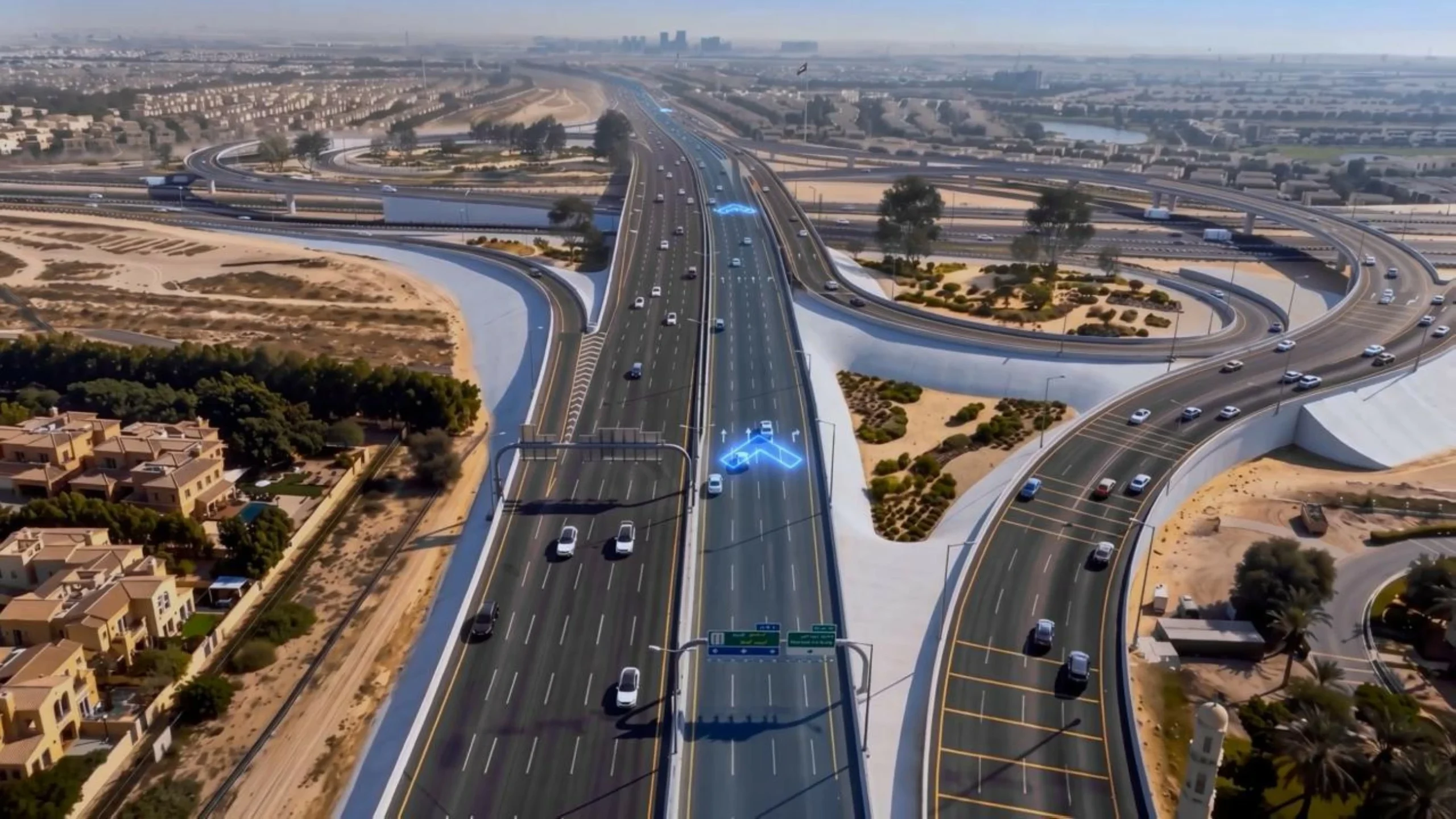

Motorists heading toward Al Qudra City now have a new four-lane crossing after Dubai’s Roads and Transport Authority (RTA) put a 700-metre bridge into service on Sunday. Built on the southern, right-hand side of where Al Qudra Road meets Sheikh Zayed Bin Hamdan Al Nahyan Street, the structure carries up to 6,000 vehicles an hour and forms one piece of a broader effort to rework the intersection.

Once the full upgrade is finished, the junction’s capacity is set to climb from 7,800 to 19,400 vehicles per hour. Drivers who currently idle at the crossing for close to seven minutes should see that wait shrink by 85 percent, to roughly one minute.
Sunday’s opening pairs with a bridge inaugurated in February on the opposite side, which handles vehicles moving from Al Qudra City toward Umm Suqeim. With both structures now running, RTA says the main traffic layout at the intersection is complete, tightening links between the corridors that feed the area.
The authority has more work slated for the fourth quarter of this year. Two side-ramp bridges are due to open then, engineered to keep vehicles flowing in every direction without cutting into the main carriageways. One, stretching 500 metres, will route drivers from Al Qudra Road onto Sheikh Zayed Bin Hamdan Al Nahyan Street toward Jebel Ali. A longer 900-metre span will send traffic toward Downtown Dubai and Dubai International Airport. Crews will also lay three kilometres of service roads flanking Sheikh Zayed Bin Hamdan Al Nahyan Street to tie the network into nearby developments.
Mattar Al Tayer, Director General and Chairman of the Board of Executive Directors of RTA, framed the crossing as part of a wider push to keep the road network ahead of Dubai’s expansion. “Al Qudra Road Development Project is being implemented in line with the directives of the wise leadership to continue advancing the infrastructure of the road network, keeping pace with Dubai’s rapid urban and population growth, improving mobility efficiency, supporting quality of life, and reinforcing Dubai’s standing as a leading city in providing world-class infrastructure,” he said.

He said the wider program touches several intersections and involves 4,000 metres of new bridges, alongside the widening and rebuilding of an 11.6-kilometre section of Al Qudra Road. “The works will increase the road’s capacity and reduce journey time by 70%, from 9.4 minutes to 2.8 minutes. The project serves residential and development areas with more than 400,000 residents and visitors,” Al Tayer said.
Running from the Al Qudra Road interchange with Sheikh Mohammed bin Zayed Road out to Emirates Road, the project threads past communities including Arabian Ranches 1 and 2, Dubai Motor City, Dubai Studio City, Akoya, Mudon, DAMAC Hills and The Sustainable City. Al Tayer described the route as one of the emirate’s principal east-west corridors, tying together residential zones while knitting Dubai’s major roads more closely together.
Work elsewhere along the corridor has already come online this year. In an earlier phase, RTA opened a 1,200-metre bridge carrying four lanes in each direction where Al Qudra Road meets the link road between Arabian Ranches and Dubai Studio City. That crossing lifted capacity from 6,600 to 19,200 vehicles per hour and trimmed the wait at the junction by 55 percent, from 113 seconds to 52.
At the Emirates Road interchange with Al Qudra Road, improvements opened in May added a service road toward Jebel Ali and a free-flow loop ramp for drivers coming from the city center toward Al Qudra City. A matching set of works on the far side of that intersection is due this month, including a free-flow ramp for traffic arriving from Jebel Ali and heading toward Umm Suqeim.
Beyond the intersection upgrades, the project reaches communities such as Town Square, Mira and DAMAC Hills 2. It calls for additional lanes along a 3.4-kilometre stretch running through the development zone, plus a new 4.8-kilometre road cutting through the zone’s southern edge and connecting to Emirates Road. RTA is also widening both sides of Emirates Road across a combined 4.8 kilometres to improve access to the surrounding projects.
