



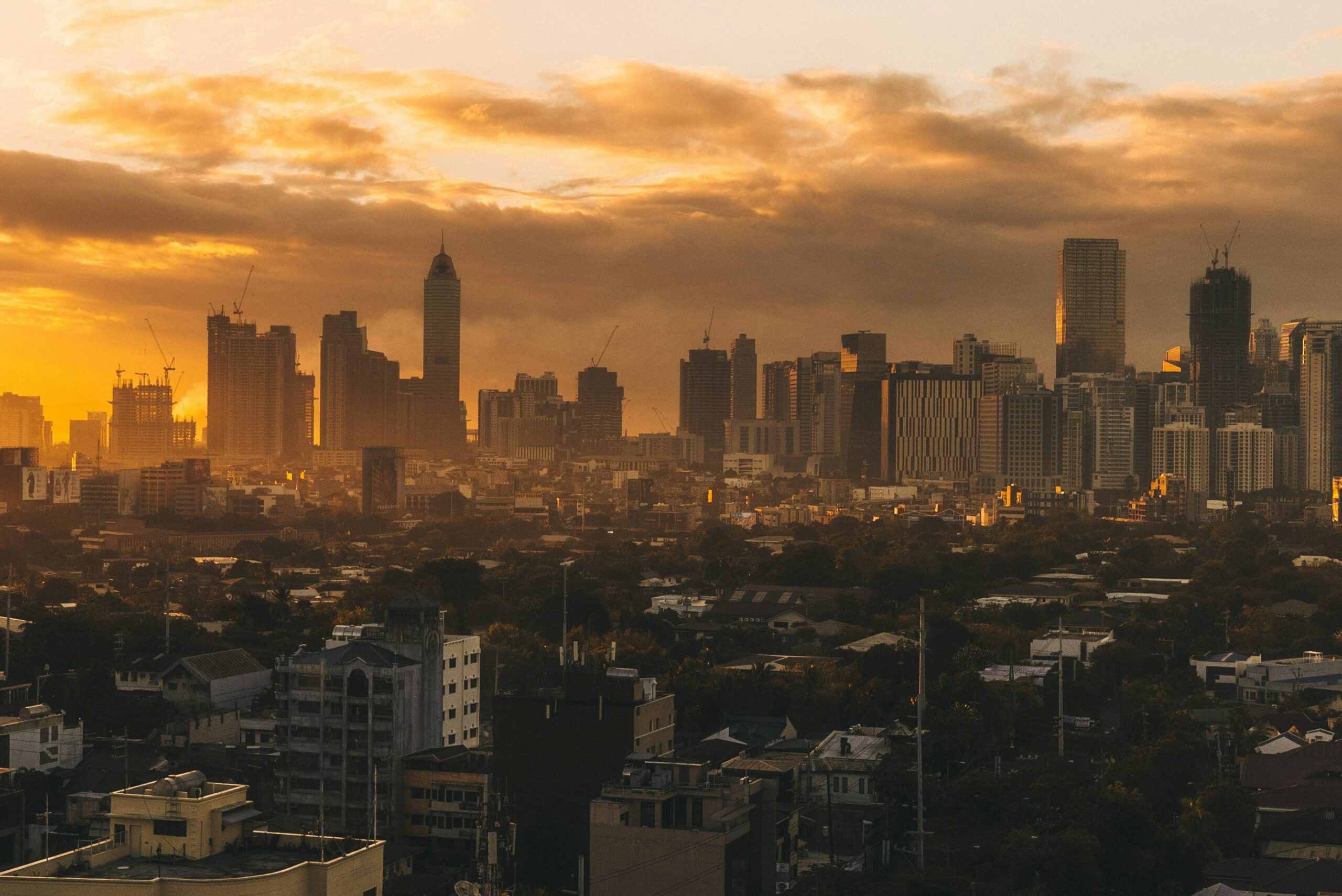

A thermal inversion has locked toxic air over Metro Manila, trapping pollutants close to the ground and pushing air quality in several cities to dangerous levels, the Environmental Management Bureau warned Saturday.

The EMB said the phenomenon — in which warm air settles above cooler air and effectively seals pollution beneath it — is an occasional occurrence, but its effects have been compounded by smoke still billowing from the Navotas Sanitary Landfill Facility, which caught fire roughly two weeks ago and has been emitting smoke since April 10.
By 3 p.m. Saturday, EMB monitoring under the Department of Environment and Natural Resources placed Marikina and Valenzuela at the “acutely unhealthy” level for PM 2.5 — fine particulate matter measuring 2.5 micrometers or smaller that can penetrate deep into the lungs and enter the bloodstream. Caloocan, Malabon, and Quezon City recorded “very unhealthy” readings, while Navotas City and San Juan City fell under “unhealthy for sensitive groups.” Manila registered poor air quality at 2 p.m.

Quezon City’s local government reported that seven monitoring sites — including the Batasan Hills Barangay Hall, Payatas Controlled Disposal Facility, and St. Peter Church Footbridge — had been logging “very unhealthy” readings since 8 a.m. Friday. Another 28 sites in the city registered “unhealthy” levels during the same period. Only three locations — Valencia Barangay Hall, Sto. Domingo Church, and La Loma Police Station — returned “fair” readings.
Beyond the landfill fire, the EMB identified motor vehicle emissions, industrial discharges, and agricultural burning as contributing pollution sources.
Health authorities are urging residents in affected areas to remain indoors and use N95 masks when venturing outside.
