



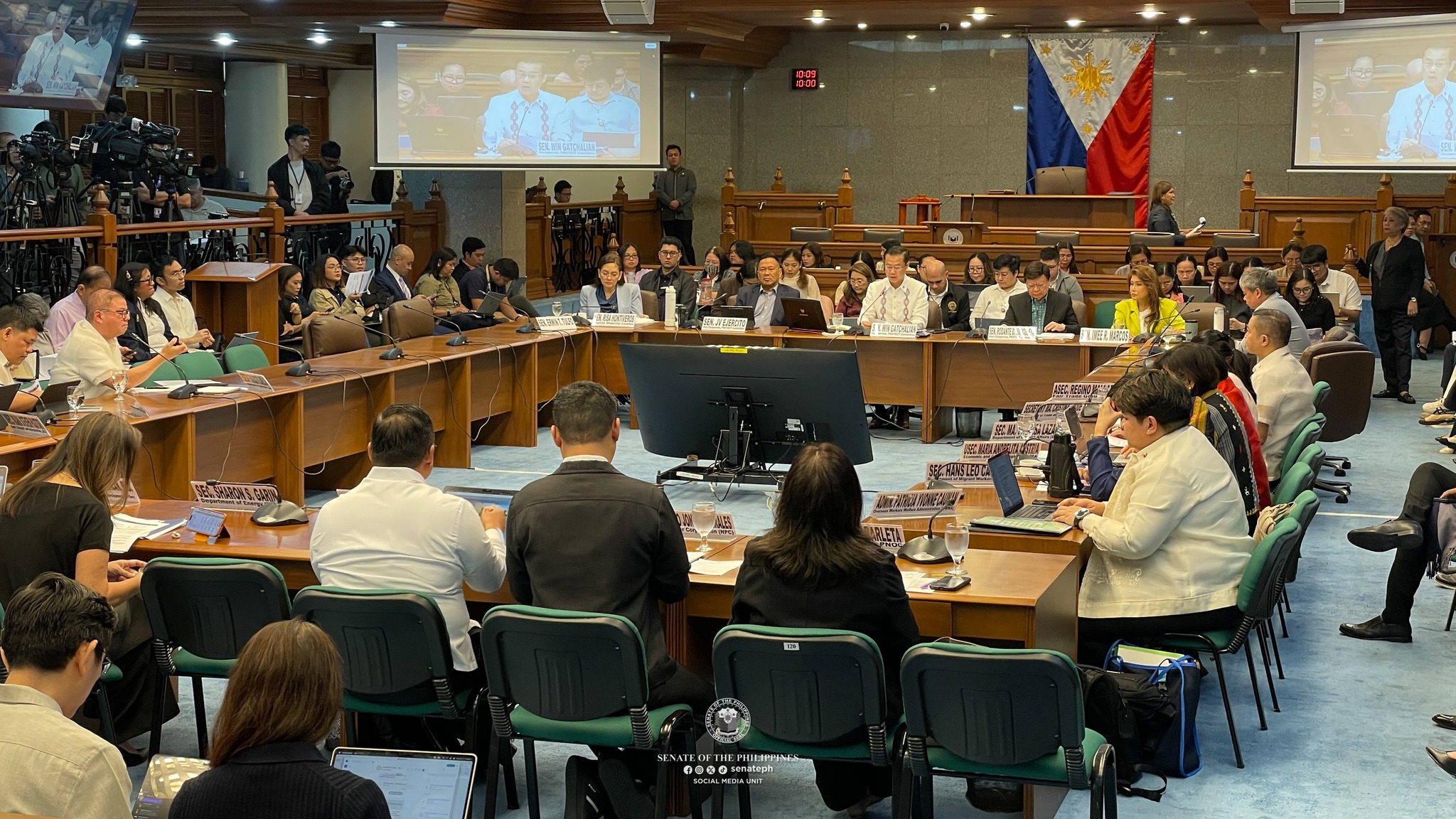

With the transmittal of impeachment articles from the House now treated as a foregone conclusion, the Senate has begun mapping out how to absorb a full-blown impeachment trial without paralyzing its legislative calendar.

Senate President Pro Tempore Panfilo Lacson, speaking on dwIZ Saturday, said Senate President Vicente Sotto III had already convened the majority bloc ahead of the expected transmittal. “In fact, the Senate President called a meeting because he had already anticipated that. He said he has information that it’s almost – no, not almost – it’s a certainty that the articles of impeachment will be transmitted to the Senate,” Lacson said in Filipino.
Sotto had initially floated the idea of holding afternoon trial sessions following morning plenary sittings. Lacson countered with a more structured arrangement — dedicating Mondays, Wednesdays, and Fridays from 3 p.m. onward to the trial, while reserving Tuesdays and Thursdays for regular plenary work. Mornings across all days would remain open for committee hearings and senators’ consultations with legal staff and retired justices. Most of those present at the meeting sided with Lacson’s proposal.
Lacson flagged Sen. Rodante Marcoleta by name as one figure expected to challenge the legal basis of the articles before proceedings formally begin, and he urged Sotto — who will preside despite not being a lawyer — to prepare accordingly. On whether senators closely aligned with Vice President Sara Duterte should recuse themselves, Lacson left it to individual conscience. “That depends on a sense of propriety. If there’s no sense of propriety, then they won’t inhibit themselves,” he said.
Asked whether the trial would divert the Senate’s attention from economic pressures stemming from the Middle East crisis, Lacson was unequivocal: “What will we do when it arrives? We have no choice.” He framed the trial not as a political choice but as a constitutional obligation. He also dismissed speculation about a leadership shakeup in the Senate during the break, saying the majority bloc remains behind Sotto.
Separately, Bicol Saro party-list Rep. Terry Ridon, who chairs the House committee on public accounts, laid out how the impeachment case fits within a broader web of legal exposure facing Duterte — and why none of the tracks can substitute for another.

Ridon explained that proceedings before the Commission on Audit, the Office of the Ombudsman, and the House operate under distinct legal frameworks and will reach their own conclusions independently. “We cannot allow the proceedings in the Commission on Audit, Office of the Ombudsman, and House of Representatives to collide because the consequence with each other is different even though the basis of the facts and defenses that they have are the same,” he said in a statement.
The COA’s final ruling on a notice of disallowance found that the Office of the Vice President failed to produce sufficient documentation to justify P73 million in confidential fund expenditures — including evidence of the nature, success, or necessity of the alleged intelligence activities. Once that decision becomes final and executory, Ridon said civil remedies become available. “In my understanding, the P73 million can be run after through legal remedies like garnishment of bank accounts and other properties,” he said.
A malversation complaint before the Ombudsman, if it results in criminal charges elevated to the Sandiganbayan, could carry imprisonment and asset forfeiture. Impeachment, if successful, carries removal from office and a ban on holding any public post.
Ridon was direct on one point: settling the money question does not close the other cases. “Even if the P73 million is returned, it cannot outlaw the proceedings in the Ombudsman and it will not also affect the impeachment proceedings,” he said. “The issue is about misuse of confidential funds that will give way to the finding of betrayal of public trust which is an impeachable offense. The impeachment proceedings against the vice president will continue whatever happened to the issue of restitution.”
Duterte retains the option of bringing the COA ruling before the Supreme Court for review.
