



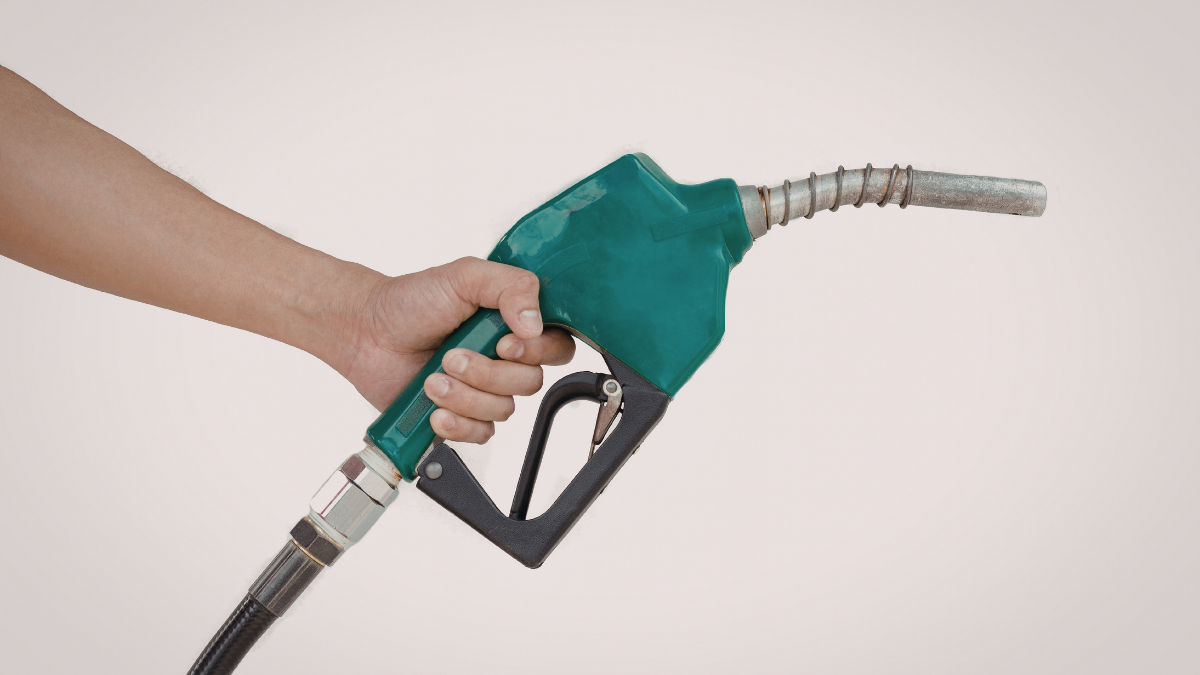

Motorists across the Philippines are set for significant relief at the pump, with diesel prices expected to fall by P24.94 per liter, gasoline by P3.41, and kerosene by P2 in what would be the largest rollback since the Middle East conflict began winding down.

President Ferdinand Marcos Jr. disclosed the upcoming adjustments in a YouTube vlog, framing them as a direct consequence of easing geopolitical pressures — including a ceasefire between Israel and Lebanon — that have steadily brought down global crude prices throughout the week.
“Next week, there will be more major cuts in oil prices,” Marcos said, adding: “This is bigger than last week’s rollback. And the message is clear for all of us: Relief is coming.”
No specific date was announced by the President, but an industry source cited by The Philippine Star said the adjustments are expected to take effect Tuesday, April 22. Oil companies are anticipated to formally announce the domestic price changes a day earlier.
An industry insider explained why diesel is seeing the steeper cut: “Since diesel prices are very high to begin with, the big decline is due to the significant unwinding of the risk premium that has built up on the price because of the war in the Middle East.”
Dubai crude, the Asia-Pacific pricing benchmark, closed at $104.93 per barrel on April 16, down 0.55 percent. Michael Ricafort, chief economist at Rizal Commercial Banking Corp., attributed the broader price decline to Iran’s announcement that the Strait of Hormuz — through which roughly 20 percent of global oil and gas supplies pass — was “completely open” to commercial shipping. “Global crude oil prices and European natural gas prices declined after the promised reopening of the Strait of Hormuz bolstered optimism that the US-Iran conflict will reach an end and ease disruptions to global energy markets,” Ricafort said.
US President Donald Trump acknowledged Iran’s move but said Washington’s naval blockade of Iranian ports would remain until a formal agreement is reached with Tehran. A local energy official noted the blockade appears not to be factoring into global market pricing.
This week alone, diesel, gasoline, and kerosene already dropped by at least P20.89, P4.43, and P8.50 per liter, respectively.

Marcos directed oil companies to pass on the reductions without delay. “Give the people what they deserve,” he said. “Every centavo reduction should be felt by every Filipino.” He also used the announcement to address traffic and licensing burdens, saying the Land Transportation Office has extended by three months the validity of driver’s licenses, motor vehicle registrations, student permits, and conductor’s licenses.
“For example, if your license or registration expires this month, it will still be valid until July, and you will not pay any fines or any surcharges,” the President said.
The P10 fuel discount for public utility vehicles and the Service Contracting Program for PUV drivers will continue regardless of how market conditions evolve.
On that front, the Department of Transportation said over 19,000 PUVs — covering modern and traditional jeepneys, UV Express units, and EDSA busway buses — are set to begin operating under the net service contracting scheme. DOTr Secretary Giovanni Lopez said initial rollout was slow due to onboarding bottlenecks, particularly among elderly drivers unfamiliar with online registration. He said he directed the Land Transportation Franchising and Regulatory Board to conduct on-site processing at terminals and complete onboarding within 24 hours.
“We are expecting by Monday that we will have over 19,000 modern and traditional jeepneys, UV Express, as well as buses in the EDSA busway, will participate in the program, and commuters will feel its impact,” Lopez said.
The DOTr has set aside P1 billion for the program’s first two weeks, with P800 million earmarked for land transport service contracting. Lopez said an additional P5 billion request has been “approved in principle” by the budget department, which would allow for expansion to an estimated 50,000 PUVs across more routes.
Separately, over 103,848 delivery riders in Metro Manila have each received P5,000 in cash assistance, totaling P519.24 million, through a joint effort by the Department of Social Welfare and Development and the Department of Information and Communications Technology. DICT Secretary Henry Aguda said the program fulfills a presidential directive to support logistics workers hit hardest by high fuel costs. The DICT also extended an amnesty program for unlicensed delivery service operators until June 30, allowing them to regularize their status and qualify for government support.
“By extending this amnesty, we are not just enforcing regulation, we are opening doors for more operators and riders alike to be recipients of government support initiatives and financial assistance,” Aguda said.
