





The email that changed everything arrived while he was already a department chairperson—tenured, respected, running the Teacher Education Department at Cavite State University with faculty reporting to him. Most people spend their careers climbing toward a seat like that. Jake Raymund F. Fabregar walked away from it to become, of all things, a beginner again. Two years later, at 35, the Filipino educator teaches middle school math in Palmdale, California, and leads seventh-grade mathematics instruction across the entire school district—coaching the very teachers he could easily have been mistaken for outranking.

The move made no obvious sense on paper. Understanding why he made it means going back to where the work started.

Fourteen years, four kinds of classroom
Before California, before the district title, there was a young teacher in Laguna learning how to hold a room. Jake began at Green Fields Integrated School of Laguna as a high school mathematics teacher, and he still points to those years as bedrock. “This was where I developed my foundation in classroom instruction, student engagement, assessment, and creating a learning environment where students felt supported and motivated to succeed,” he says.
What followed was less a straight line than a deliberate collection of different rooms. At Alliance Mansols, Inc., he became a senior learning facilitator, trading teenagers for factory-floor professionals and designing training on manufacturing standards, workplace ethics, and safety systems. The audience changed; the underlying craft—reading a learner and adjusting in real time—did not.
Higher education came next. As an associate professor at Saint Michael’s College of Laguna, he taught mathematics, professional education, and research courses, and built instructional materials aligned to DepEd and CHED standards. Then came the chapter that most clearly pointed to his future: from 2018 to 2024, he served at Cavite State University as an assistant professor and, eventually, chairperson of the Teacher Education Department. He was no longer just teaching. He was managing academic programs, leading faculty, coordinating a department, and shaping the people who would run classrooms of their own.
By the time he considered leaving the country, he had been a classroom teacher, a corporate trainer, a college professor, and a department head. He was not an educator looking for a break. He was one looking for a bigger question.


Trading the corner office for a fresh start
Here is where the usual overseas-worker story stops fitting. Jake did not leave the Philippines because he was stuck. He left because he wasn’t—and decided that was the problem.
“I decided to work abroad because I wanted to step outside my comfort zone, broaden my professional experience, and gain a deeper understanding of education from a global perspective,” he says. “After more than a decade of teaching and leadership experience in the Philippines, I felt that it was the right time to embrace a new challenge and continue growing as an educator.”
In 2024 he accepted a post as a middle school mathematics teacher at Shadow Hills Engineering and Design Magnet Academy under the Palmdale School District. The familiar motivations were there—a stronger future, more doors open for his family. But underneath ran something he treats as non-negotiable: a sense that a Filipino educator belonged in that room. “As a Filipino educator, I also wanted to represent the dedication, resilience, and excellence of Filipino teachers,” he says. “I believe that our experiences, skills, and passion for education can make a meaningful contribution to the global teaching community.”
He arrived with a résumé most educators would envy—and immediately had to prove he could still learn.
Becoming a learner again

Experience did not exempt him from starting over. “Although I brought years of experience as an educator, I quickly realized that working abroad required me to adjust, adapt, and become a learner again,” he says. A new system, unfamiliar expectations, different cultural rhythms in the classroom—all of it demanded what he calls patience, humility, and perseverance.
The hardest part was the teaching itself. Methods honed over more than a decade did not automatically transfer to students from a different cultural and educational background. So the former department chair did the thing that is easy to preach and hard to practice for someone used to being in charge: he listened. “I overcame these challenges by remaining open to feedback, learning from my colleagues, studying new practices, and continuously improving myself,” he says. “I reminded myself that growth often happens when we are willing to embrace change.”
He leaned on family, faith, colleagues, and the mentors he had gathered over the years. And the humility paid off in a way that caught even him off guard. Rather than settling into the role of the outsider, he rose—quickly. He was appointed District 7th Grade Math Lead and named a Teacher Mentor, roles that pushed his reach far beyond his own class list.
“Instead of impacting only the students in my classroom, I now have the privilege of supporting fellow educators, mentoring teachers, and contributing to the improvement of mathematics instruction across the district,” he says. He runs curriculum conversations, coaches teachers, drives improvements in seventh-grade math instruction, and leads professional development sessions. For a man who had spent years building others up, it was familiar work in an unfamiliar place—leadership, rediscovered.
The multiplier
Ask him what he loves most and the answer is never the title. It’s the moment a stuck student turns the corner. “The most rewarding part of teaching is seeing students who struggle eventually develop confidence, believe in themselves, and experience success,” he says. Math, for him, was always a vehicle rather than a destination: “I believe mathematics develops critical thinking, perseverance, and confidence.”
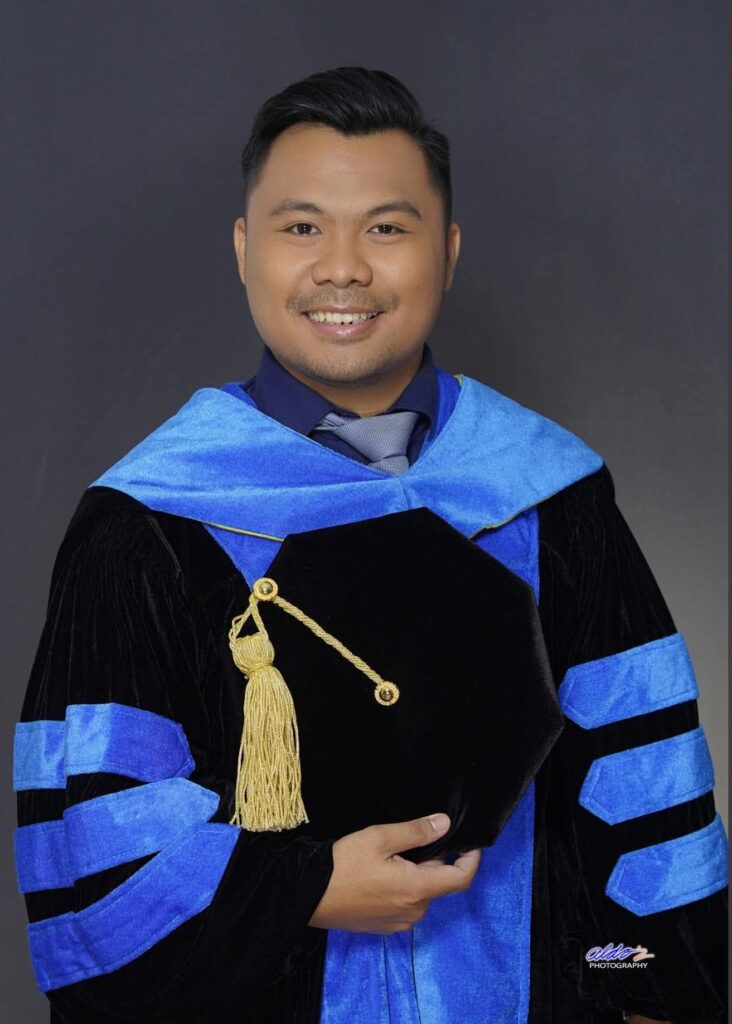
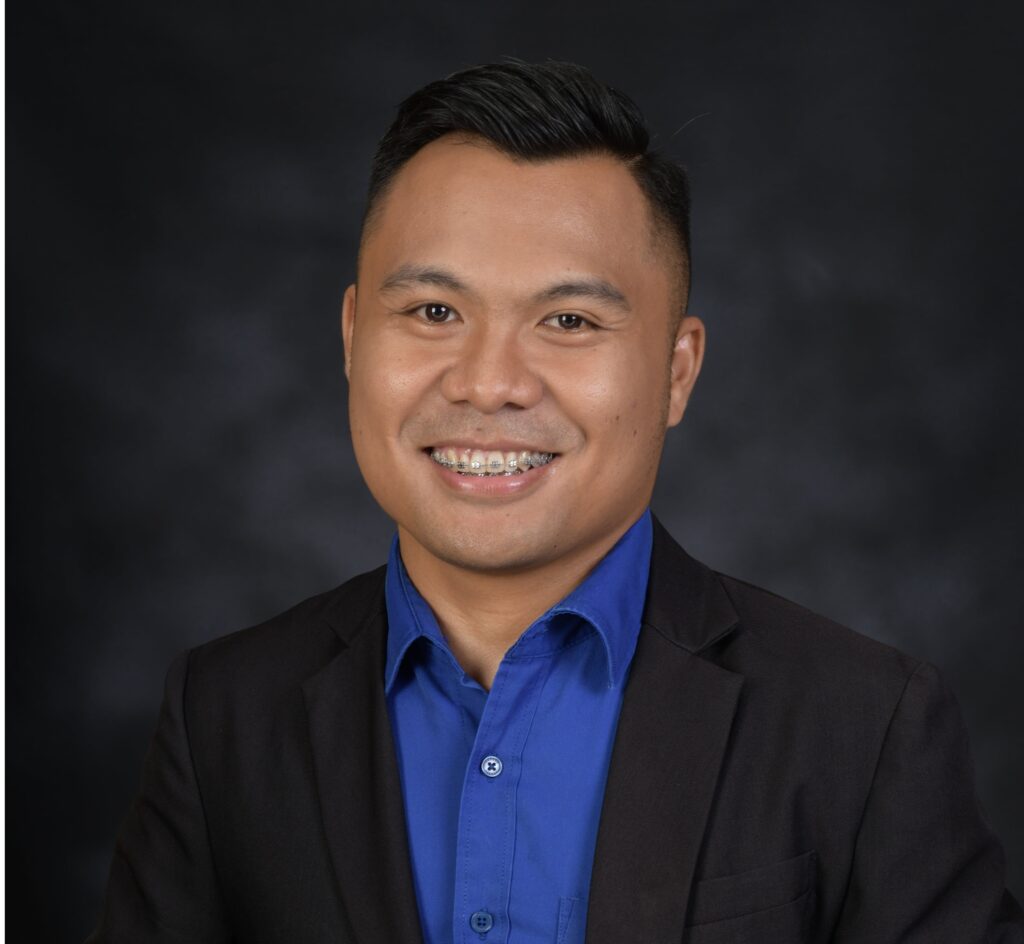
That conviction gets bigger when he talks about teachers instead of students. Having trained future educators back home and now mentoring them across a California district, Jake sees the arithmetic plainly. Support one teacher well, and you reach every student that teacher will ever have. “My journey has shown me that the impact of a teacher extends far beyond the classroom,” he says—less a slogan than a thesis he has spent his career testing.
Four words hold the whole philosophy together: “Learn deeply. Serve faithfully.” He comes back to them often, and the logic tracks. The first half explains why he keeps making himself a beginner. The second explains why he keeps choosing the harder, quieter work of lifting other people up.
What he tells the ones still finding their footing
For Filipinos abroad, his counsel is grounded rather than sentimental. He refuses to pretend the road is smooth. “Life overseas is not always easy. There will be moments of homesickness, uncertainty, and challenges, but these experiences can help shape you into a stronger and more resilient person.” Be wise with money, he urges, careful about who earns your trust, and deliberate about the people you keep close.
Above all, carry home with you. “No matter how far you go or how successful you become, never forget the importance of humility, gratitude, and service.” Success abroad, in his reckoning, is measured less by what lands in the bank than by the person you become and the lives you touch getting there.
He is already thinking about what he sends back. After his time in the United States, he wants to bring his international perspective home to Philippine education—strengthening math instruction, teacher development, and educational leadership, and pushing fellow Filipino teachers to keep growing. His broader advocacy, he says, is for “meaningful education—one that develops not only academic excellence but also character, resilience, and lifelong learning.”
It fits a man who never really saw his job as teaching a subject. For the district math lead who once risked everything to be the outsider, the point was never the position. “Leadership is not defined by position or title,” he says. “It is defined by the lives we influence.” Fourteen years and one ocean later, that remains the only equation he cares about.
