



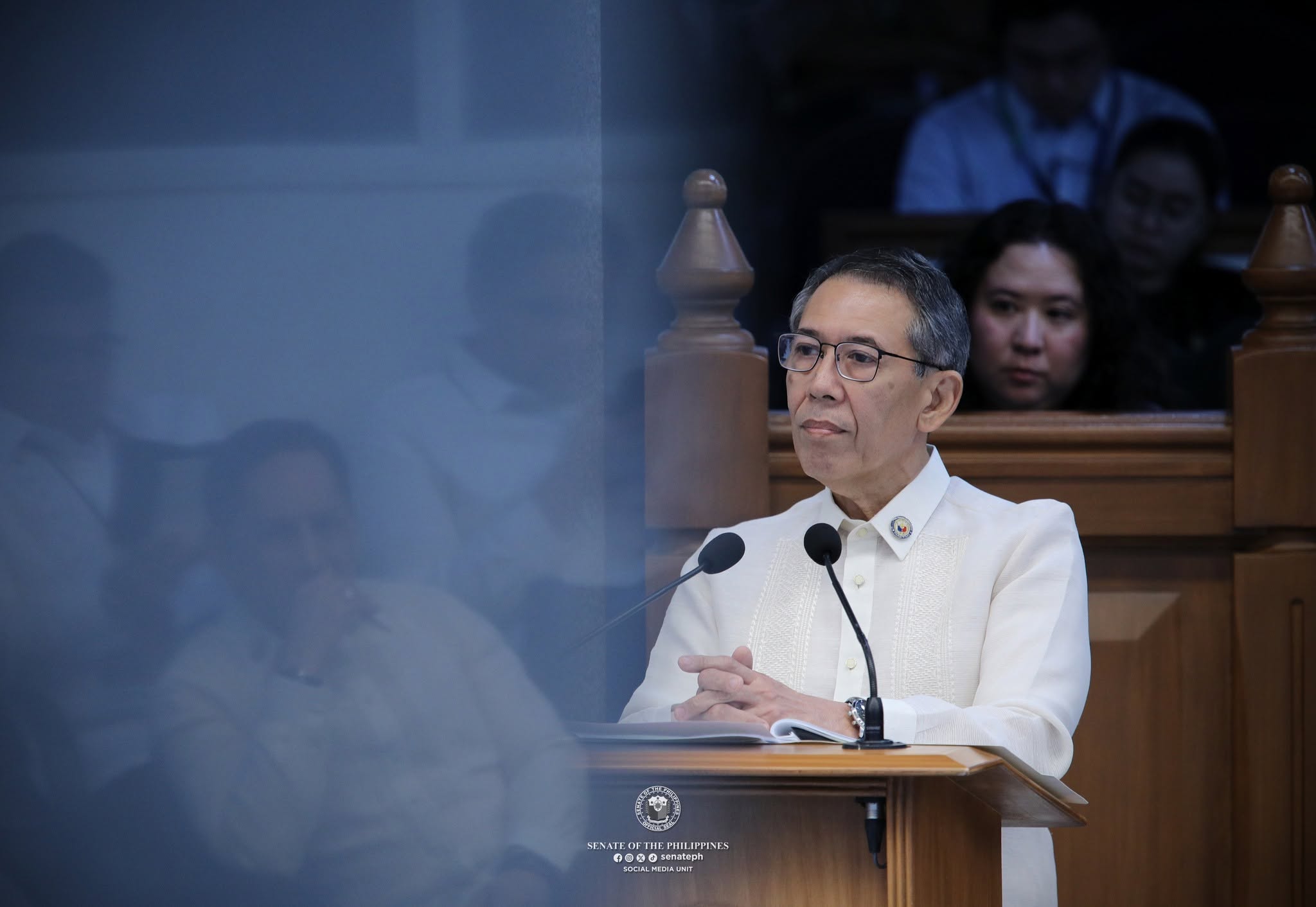

Fresh caution greeted the Marcos administration’s technology agenda within minutes of the President stepping away from the rostrum. Akbayan Party-list Rep. Chel Diokno, posting on X shortly after Ferdinand Marcos Jr. closed his fifth State of the Nation Address on Monday, argued that the government should not pour resources into generative artificial intelligence and the Pax Silica project without first doing the groundwork to understand what each entails.

Diokno’s central worry with Pax Silica was the pace of the rollout. He questioned whether officials were moving too quickly and laid out three conditions he said should be met before the project advances. “Kailangan muna ng tunay na konsultasyon sa mga lokal na komunidad, masusing pagsusuri sa epekto sa kalikasan, at kasiguruhang hindi tataas ang presyo ng ating tubig at kuryente,” he said, per Rappler — pressing for genuine consultation with affected communities, a close look at environmental consequences, and assurances that household water and power costs would not climb as a result.
The lawmaker’s intervention lands on a project the President has staked considerable political capital on. In his SONA, Marcos framed the Pax Silica Industrial Hub as the country’s foothold in the worldwide technology supply chain, promising it would generate skilled employment and lift the Philippines’ competitiveness. “A product of the 23-member strong and US-led Pax Silica Initiative, the Pax Silica Industrial Hub will create an ecosystem that will have AI at its core. It will bring quality jobs to our people, accelerate our industrial competitiveness and revitalize our economy,” Marcos said, according to the Daily Tribune, adding that the facility would operate as an advanced manufacturing and logistics node within the Luzon Economic Corridor.
The initiative itself is a Washington-led effort binding more than 20 partner economies. Its stated aim is to shore up supply chains for the technologies underpinning the AI era — semiconductors, rare earth minerals, and AI systems — and analysts have described it as a counterweight to China’s grip on those sectors. The Philippines formally signed on in April 2026.

Geographically, the plan centers on a 1,620-hectare tract inside New Clark City in Capas, Tarlac, designated as an economic security zone meant to draw industries in artificial intelligence, chip fabrication, and critical mineral processing. The Bases and Conversion Development Authority has projected the hub could yield as much as P180 billion in annual revenue and open close to 200,000 jobs, as reported by the Philippine Daily Inquirer.
Those projections have not silenced the opposition that has trailed the project. During a counter-demonstration billed as the “People’s SONA” along Commonwealth Avenue, members of the Kilusang Magbubukid ng Pilipinas voiced sharp objections to the American-led venture. KMP chairperson Danilo Ramos, in a weekend statement carried by the Inquirer, charged that Philippine involvement would speed up land grabbing, the conversion of farmland, ruinous mining, and the uprooting of farming and indigenous populations behind a facade of digital progress.
Acting Environment Secretary Juan Miguel Cuna pushed back on the displacement concern in an ambush interview at the House on Monday, telling reporters that the parcel earmarked for the hub sits within New Clark City and “has no inhabitants, and in that sense, the community will not be disturbed.” He said the Department of Environment and Natural Resources welcomed the venture for its economic promise while pledging that ecological safeguards would hold. “We look forward to a big project like this that will provide jobs and help our economy, but we will definitely not sacrifice the environment for the Pax Silica,” Cuna said.
Skepticism about the arrangement has also come from policy circles questioning whose interests it ultimately serves. At a pre-SONA forum convened by the Center for People Empowerment in Governance, policy director Bobby Tuazon contended that the initiative advances American objectives and cast doubt on how independent Manila’s foreign policy remains under Marcos, urging that the country’s natural and mineral wealth be kept in reserve for its own agricultural and industrial development.
