



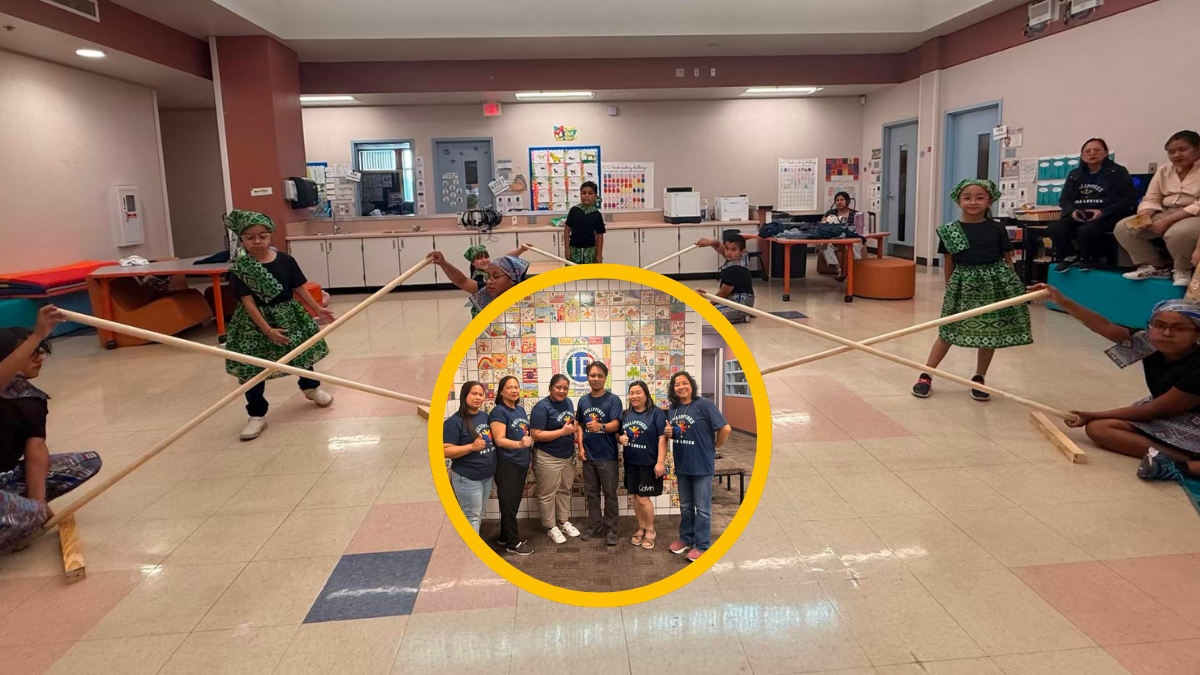

Some teachers leave a classroom at the end of the day and leave little behind. Mary Guzon, Allan Rogelio Sobrevilla, Chona Samson, Jenelyn Paguyo, Hydelita Malalis, and Susana Angelica Pascual are not those kinds of teachers. On most afternoons at Sandy Searles Miller Elementary School of International Studies in Las Vegas, Nevada, you’ll find children jumping between clapping bamboo poles — learning to keep time, trust their feet, and carry a piece of the Philippines with them.

Teaching is a decision most people make once. These six Filipino educators made it twice — first at home, then again on the other side of the world.
From the provinces to the desert
Their origins are as varied as the Philippine archipelago itself. Guzon came from Negros Occidental, where she spent 14 years in the Department of Education before eventually making her way through several U.S. states and into a Las Vegas classroom. Sobrevilla taught for 12 years as a university instructor in La Union before landing in Phoenix and, later, Nevada. Samson brought 18 years from Bulacan, Paguyo 16 from Isabela, Malalis 27 from Isabel in Leyte, and Pascual — the most seasoned of the group in the American school system — has been teaching in the U.S. for 18 years, now four of them in Las Vegas.
The decision to leave, they say, was never simple. “It meant leaving behind our families, our familiarity, and our comfort — but it was driven by the desire to grow professionally and to create better opportunities for ourselves and our loved ones.”
That tension — between the pull of home and the need to move — is something any overseas worker understands. But for educators, the stakes feel different. Teaching is rarely just a job. It is identity, vocation, community. To rebuild that from scratch in a foreign school system, with unfamiliar students and different expectations, requires a particular kind of nerve.
What helped, they found, was each other. Coming from different provinces with different dialects and regional customs, they formed something like a surrogate family in the Nevada desert — cooking Filipino food, calling relatives across time zones, and learning each other’s traditions as much as they were learning their new home’s. “Since we are from different parts of the Philippines — one from La Union, Tarlac, Isabela, Bulacan, Cebu, and Iloilo — through our collaboration, we not only support each other, we deepen our understanding of our own culture.”
How a partnership became a movement
The Filipino Folklorico Club did not begin as a grand vision. It began with an invitation.
During the 2022–2023 school year, Maria Ramirez — the school’s lead coach for Mexican Folklorico — asked the Filipino teachers to collaborate on a shared cultural dance program. What followed over the next several months was a gradual, organic realization: Filipino culture deserved its own dedicated space.
Malalis, Paguyo, and a colleague named Benjamin Serrano took the initiative and proposed the club to school leadership. Principal Lene Thorsen-Peters said yes almost immediately, recognizing its potential for cultural education and student engagement. The club was established, and it grew.
Today, Sobrevilla and Guzon serve as lead coaches, with Malalis, Paguyo, Samson, and Pascual as moderators. Together they run a program at an International Baccalaureate magnet school where cultural awareness is not a peripheral concern but central to the school’s identity.
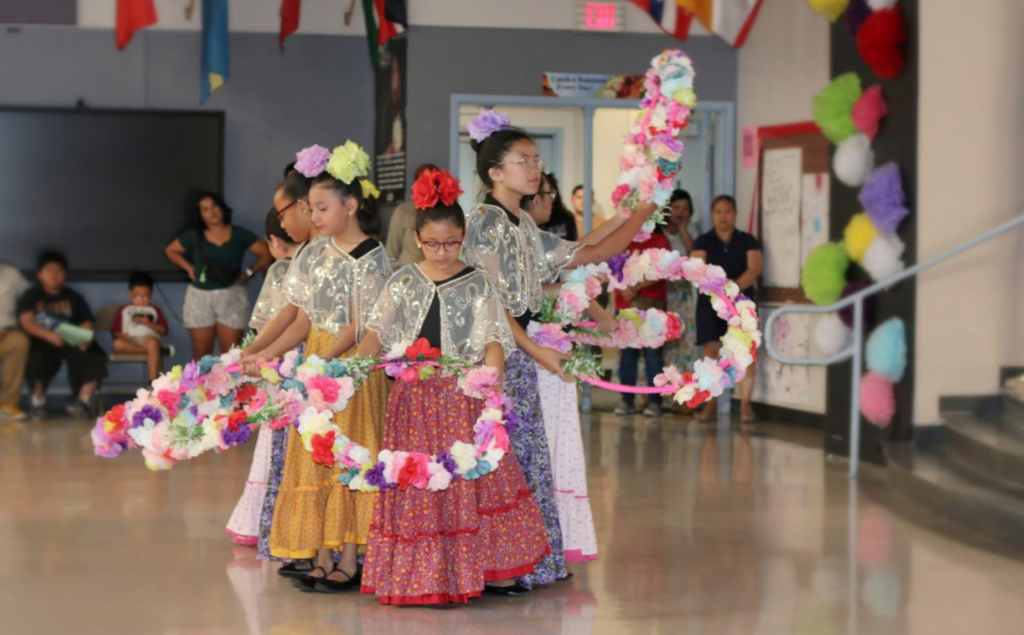
The club’s repertoire has expanded steadily with each year. Students began with Cariñosa — a courtship dance from Panay performed with fans and handkerchiefs — and Pandanggo sa Ilaw, the delicate tradition from Mindoro in which dancers balance oil lamps on their heads and the backs of their hands. The second year brought Gaway-Gaway, Bulaklakan, and Itik-Itik, the last of which has children imitating the waddling and splashing of ducks with an energy that, by all accounts, the students embrace wholeheartedly.

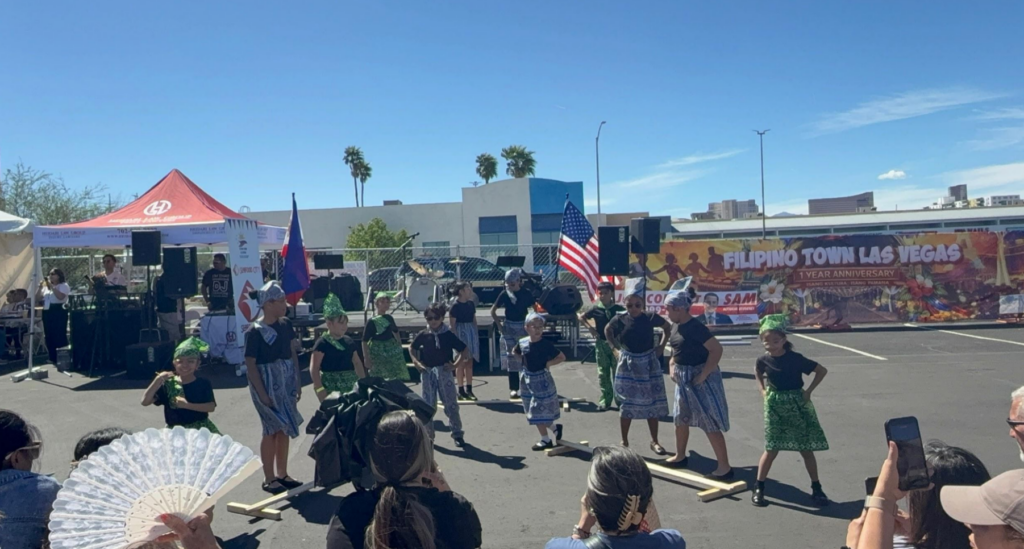
This year, the club is staging Polka sa Nayon, an interpretive piece set to “Piliin Mo ang Pilipinas,” and Tinikling — the iconic national folk dance that has, predictably, become the students’ favorite.
The bamboo tells you everything
Tinikling is not easy. The dance requires two people to clap long bamboo poles together in a steady rhythm while performers step in and out between them, faster and faster, without getting caught. It is a test of timing, agility, and trust — in your own feet and in your partners.
“Its fast-paced rhythm, precision, and teamwork make it both challenging and thrilling,” the teachers say. “Watching their faces light up with confidence and joy is truly rewarding.”
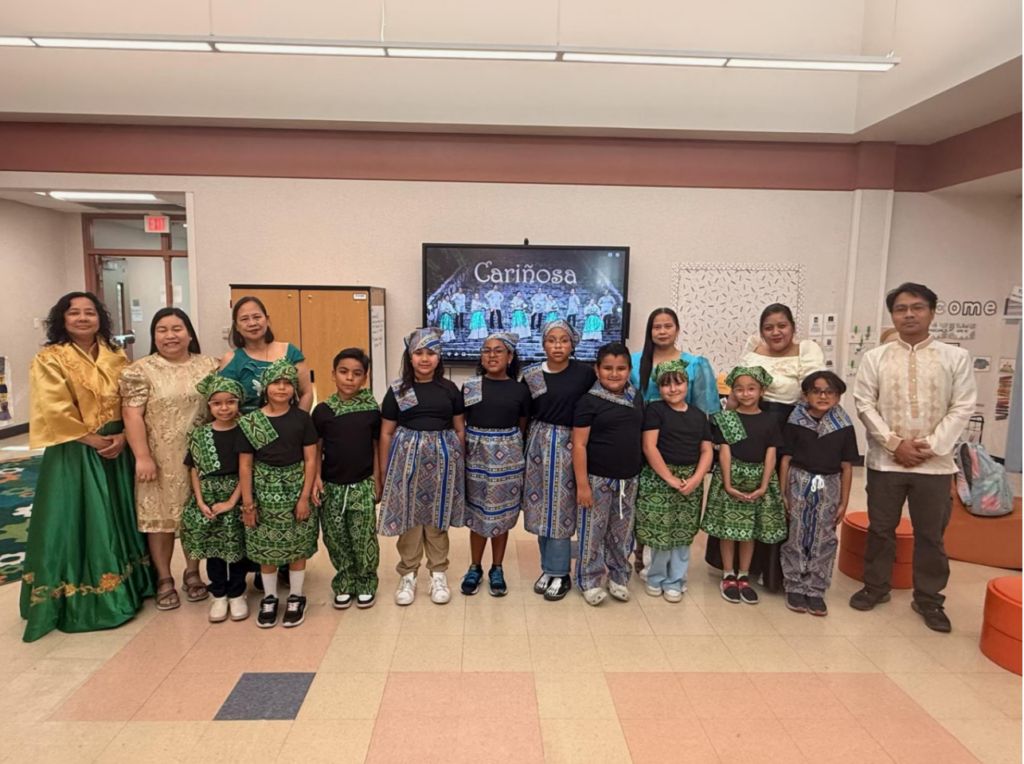
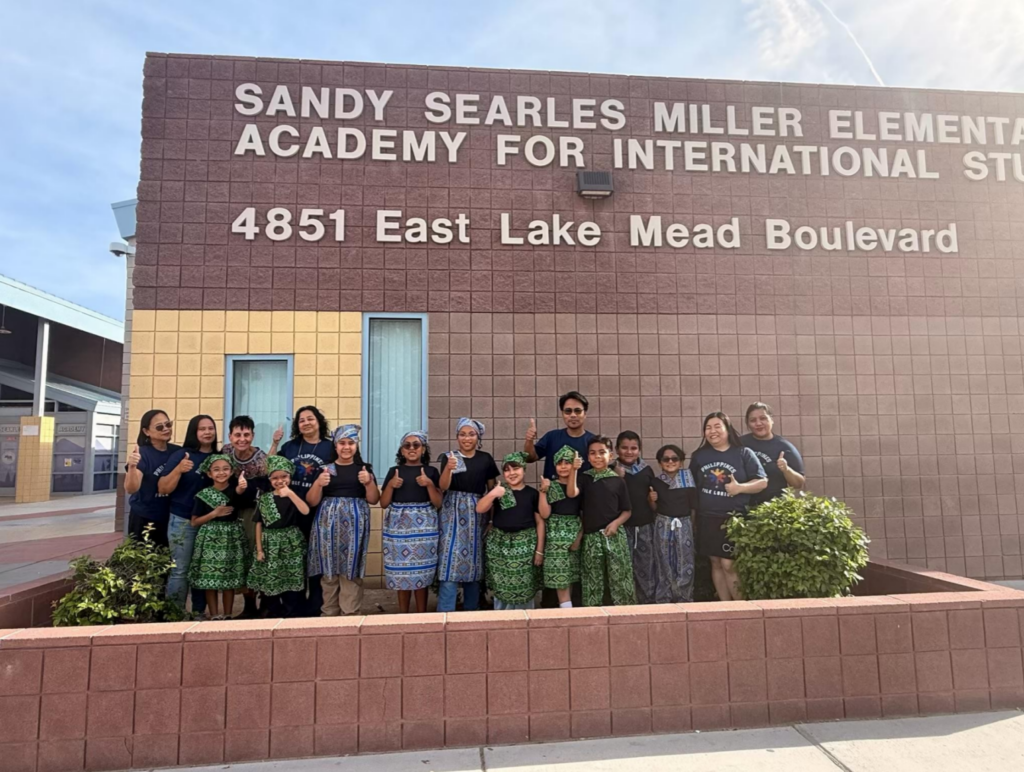
For many of the students at Sandy Searles Miller, this is their first real encounter with Philippine culture. A significant number of them are not Filipino. They come from different countries, different languages, different traditions. And yet something about the dances reaches them.
The teachers describe it not as a lesson in performance but as a lesson in perspective. “Our students don’t just learn the movements — they also explore the stories, values, and traditions behind each dance. Through this, they begin to see the beauty of a culture that may be different from their own.”
There is a particular moment these educators describe returning to when asked what makes all the effort worth it: the performance. Not the polished, final-product performance, but the moment just before — when a child takes the stage, finds the beat, and realizes with visible surprise that they can do this. “The pride in our students’ faces — their joy, confidence, and sense of identity — tells us we are making a meaningful and lasting difference.”
Parents applaud. Colleagues congratulate. But it is the children themselves who close the argument.
What they carry forward
Outside the club, these six educators maintain their connection to home in quieter ways — through food, through regular calls to family, through festivals and community gatherings in the Las Vegas Filipino community. The Philippines is not preserved only in performance. It lives in the everyday.
Their message to other Filipino educators abroad who might be hesitant to start something similar is direct: do not wait.
“Start where you are. Use what you have. Trust your voice, trust your culture, and trust your purpose. Because what you create — no matter how small it may seem — has the power to transform classrooms, inspire communities, and build bridges across the world.”
At Sandy Searles Miller, a school whose stated mission is to help students inquire, discover, and connect to the world, the Filipino Folklorico Club has become a living expression of exactly that. The bamboo claps. The students jump. And for a few minutes at a time, Las Vegas feels a little like home.
