



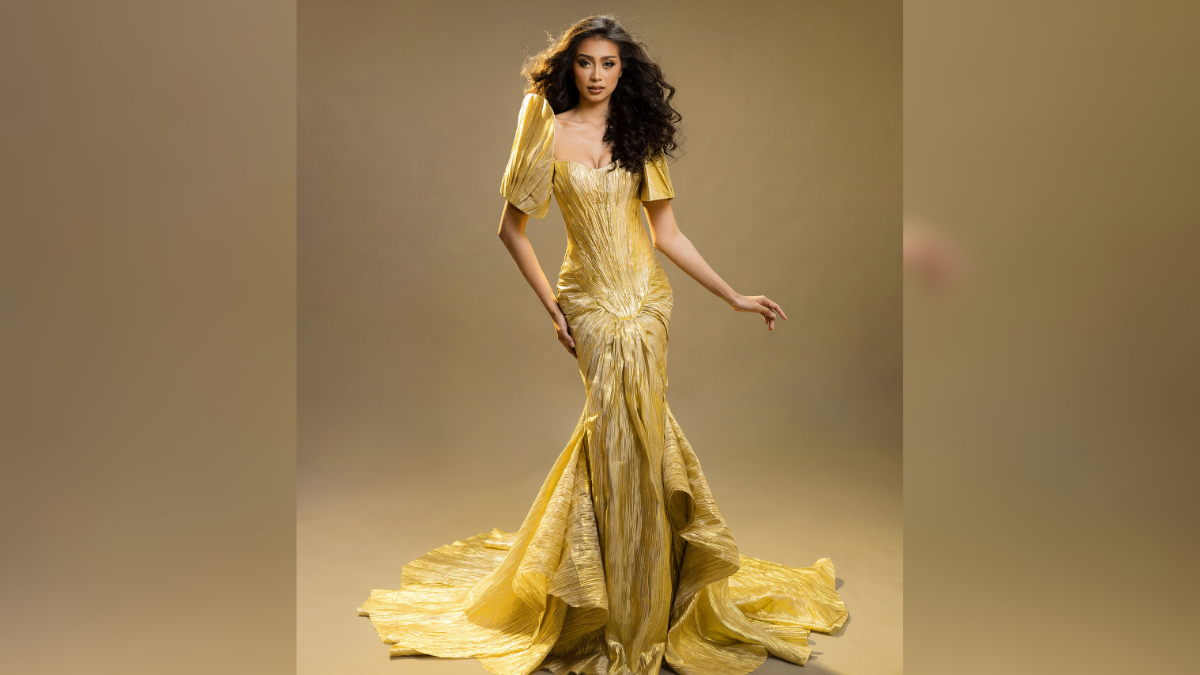

Many people think Filipiniana means terno. In fact, Filipiniana is a broader term, and terno is only one part of it.

Many national costumes have moved into museums or are worn mainly for festivals. Filipiniana is one of the few traditional dress forms in the world where this has not happened. It continues to live outside festivals and museums. The question is why. That is what I will try to answer in this article.
Filipiniana often looks modern because its design can be separated from the full historical silhouette. A designer can keep only the butterfly sleeves, transparent fabric, structured shoulders, or another recognizable element, and the look can still be read as Filipiniana.
This flexibility gives the style a wider presence in contemporary fashion. Filipiniana can appear in workwear, weddings, formal events, editorial shoots, or avant-garde collections while still remaining visually connected to its Filipino roots.
Filipiniana also includes:
traje de mestiza — a camisa blouse with pañuelo and saya skirt, formed during the colonial period;
baro’t saya — a more common and simpler version of the same ensemble;
Maria Clara — a silhouette connected to the character from Rizal’s novel, which later became a symbol of Filipino femininity.
How Modern Filipiniana Keeps Its Identity
Filipiniana was never defined by one exact shape. In modern versions, a designer can keep only a few details: the pañuelo, voluminous sleeves, the shoulder line, a defined waist, or transparent fabric.
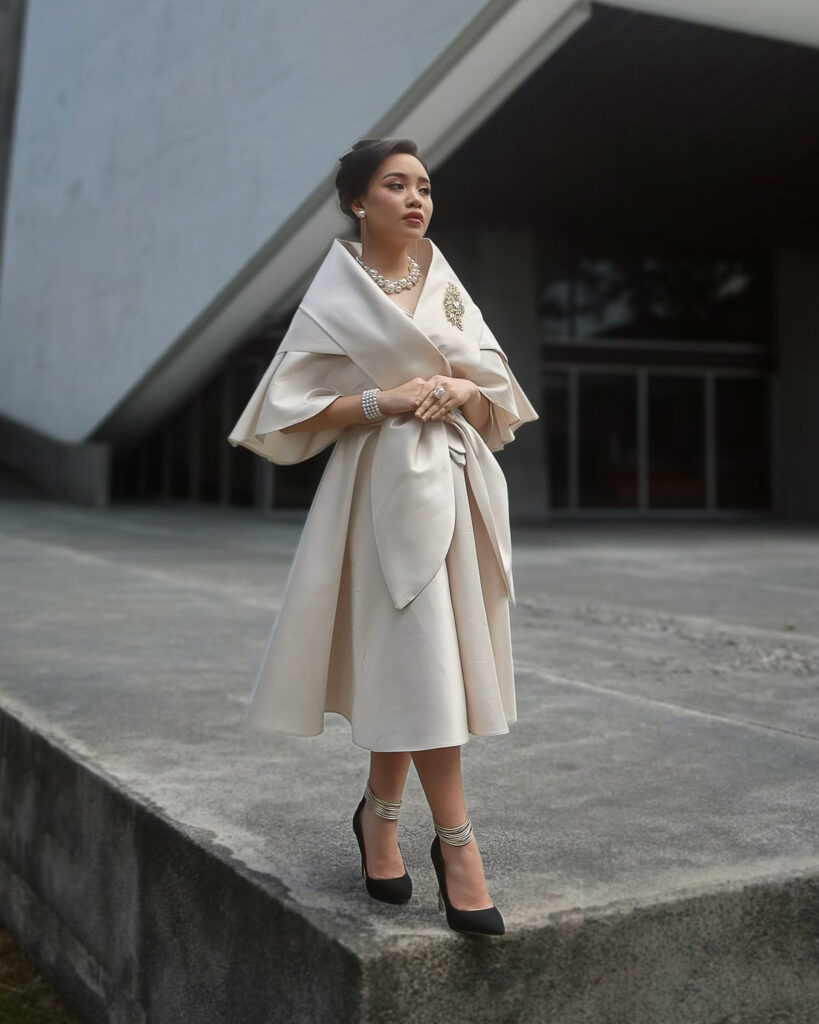
Credits: Designer: Josip Tumapa; Model: Graces Mei.
The first example is the closest to the classical look among the pieces shown here. The large folded collar refers to the pañuelo, which was worn over the camisa. The upper part is built around the shoulders, while the skirt keeps the Maria Clara silhouette, but without the traditional layering. That is why it feels like a modern version, not a reconstruction.
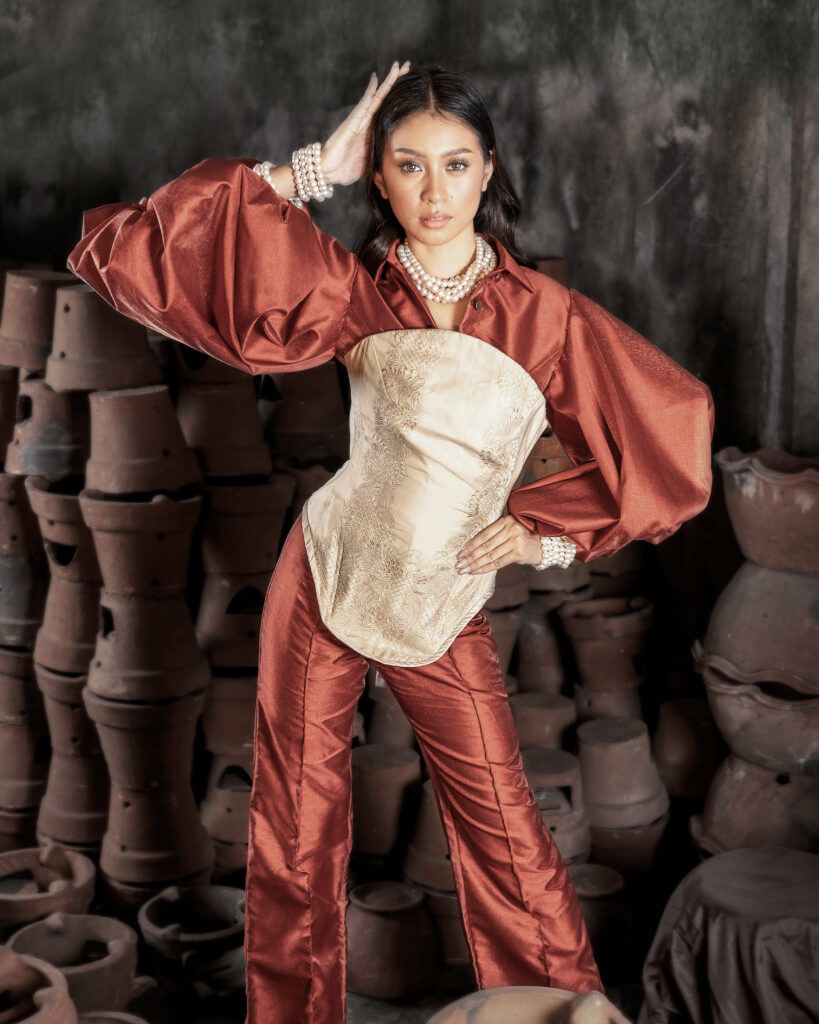
Credits: Designer: Josip Tumapa; Photographer: Gerard Dela Cerna; Model: Erica Jean Cadayday.
The second example moves further away from the classic form. Here, everything depends on the large sleeves — not in the rigid butterfly sleeve shape, but in a softer form closer to runway fashion. The embroidered corset-like center recalls traje de mestiza. The look is bolder, but the connection to Filipiniana is still readable.

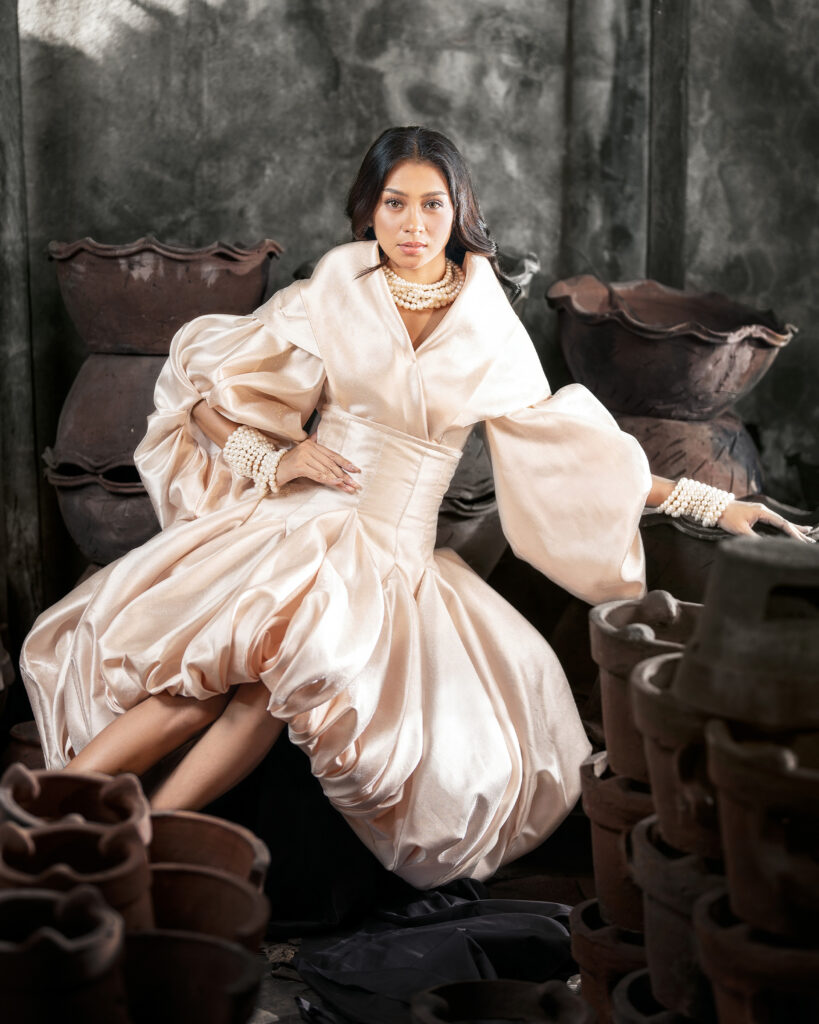
Credits: Designer: Josip Tumapa; Photographer: Gerard Dela Cerna; Model: Erica Jean Cadayday.
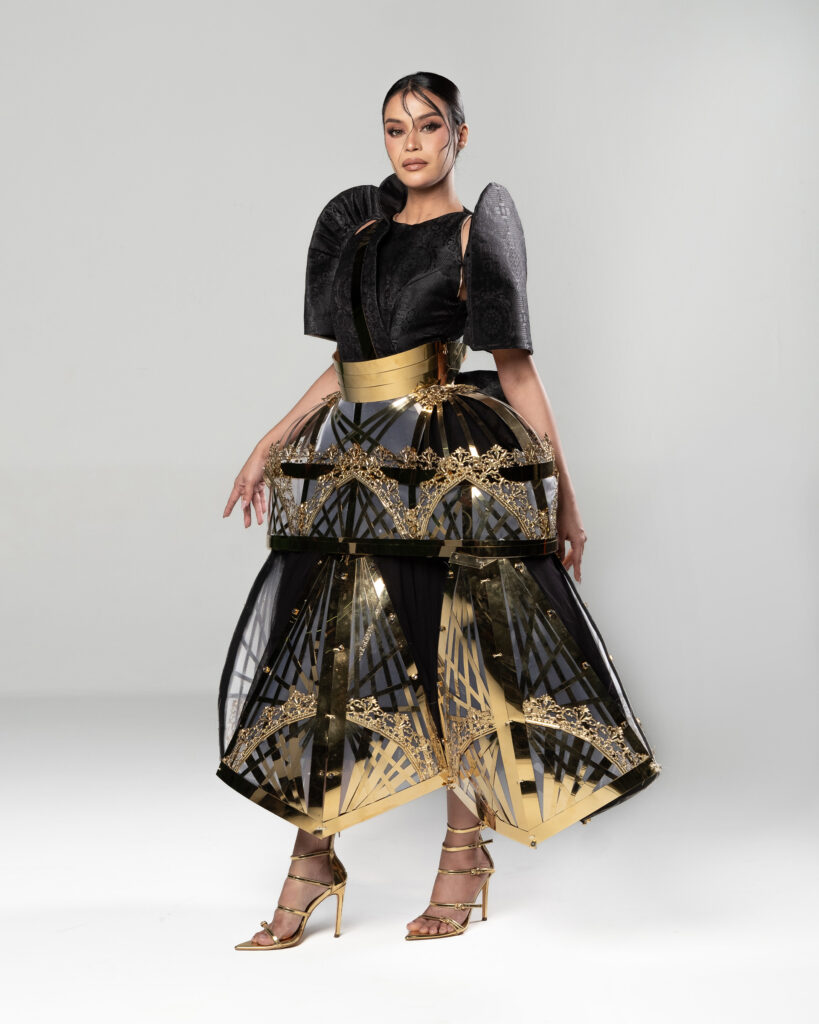
The third dress is not immediately read as Filipiniana. The voluminous sleeves, defined waist, and upper part with a pañuelo neckline keep the connection to the form. The skirt, however, is no longer historical at all — its proportions are closer to fashion editorial styling, but the shoulders and body line bring the look back to Filipiniana.
Credits: Designer: Josip Tumapa; Photographer: Gerard Dela Cerna; Model: Erica Jean Cadayday.
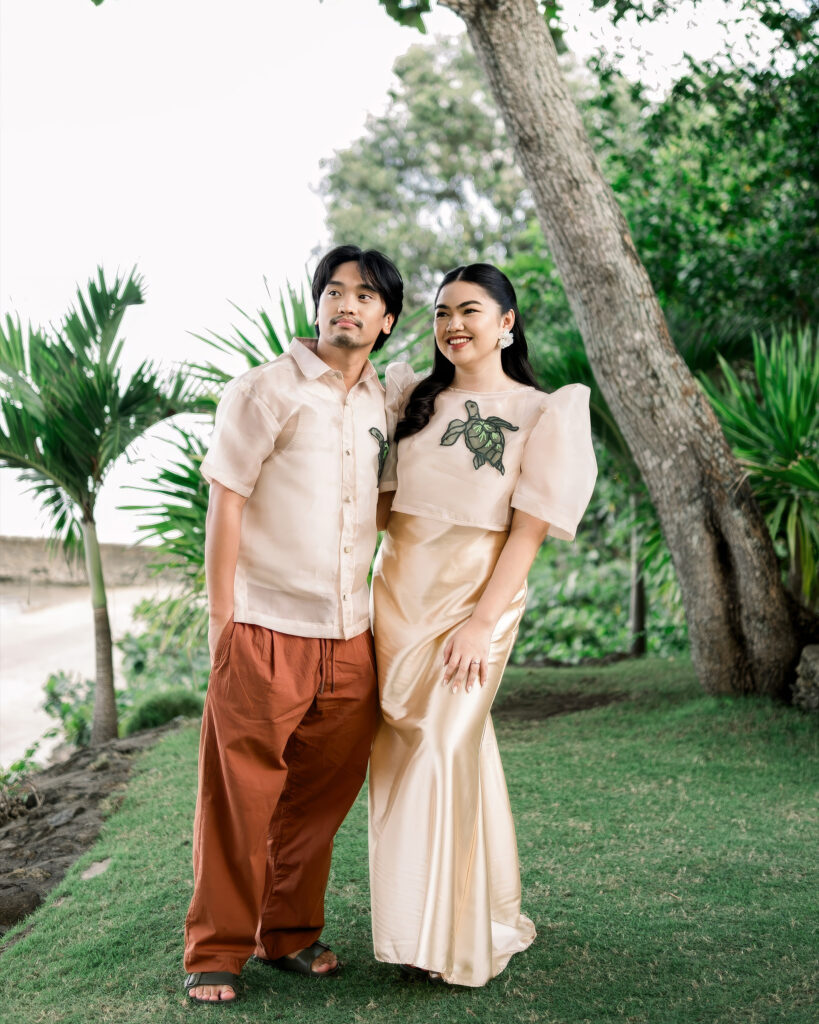
The fourth example was included together with Barong Tagalog intentionally: Filipiniana often exists alongside the barong. This is a more everyday contemporary look. The composition is built around appliqué, not traditional ornamentation. The same happens in the barong: the familiar pattern is replaced by the same appliqué, connecting both looks into one statement.
Credits: Designer: Josip Tumapa; Model: Fatima Alsowyed; Photographer: Steve Lumansoc.
Why Filipiniana Still Lives in Contemporary Fashion
Filipiniana remains open to new construction, materials, and proportions. A designer can keep one recognizable element — the sleeves, the shoulder line, the pañuelo, or the formal silhouette — and still create a look that belongs to the same visual tradition.
In 2024, Vogue Philippines showed modern interpretations of terno by different Filipino designers. Among them were Cary Santiago with the collection “Ikonograpiya” and Jojie Lloren with “A Lullaby for My Mother.” This shows that Filipiniana continues to develop not only as a cultural symbol, but also as part of contemporary designer fashion.
The Philippine government also provides strong support by organizing different fashion shows with Filipiniana. There are also dress codes for different events where Filipiniana becomes part of an official or formal look.
During the Marcos era, terno was also often used as part of the official state image. Imelda Marcos regularly appeared in terno at state events and international visits. This strengthened the connection between Filipiniana and the official representation of the country.
In my view, there is a thin line here that is easy to cross. History already has examples of governments promoting one clothing style too actively. If people did not feel personally connected to it, this kind of support could cause irritation and backlash.
But with Filipiniana, the situation developed differently. Government support alone would not have been enough to preserve the style. It continues to live through designers, brides, beauty pageant contestants, public figures, and ordinary women who still choose it for important occasions.
This shows that Filipiniana does not depend only on official support. Many Filipinos genuinely feel connected to this style and are willing to support it themselves.
That is why Filipiniana survived: its form changes together with people, but remains a recognizable part of Filipino identity.
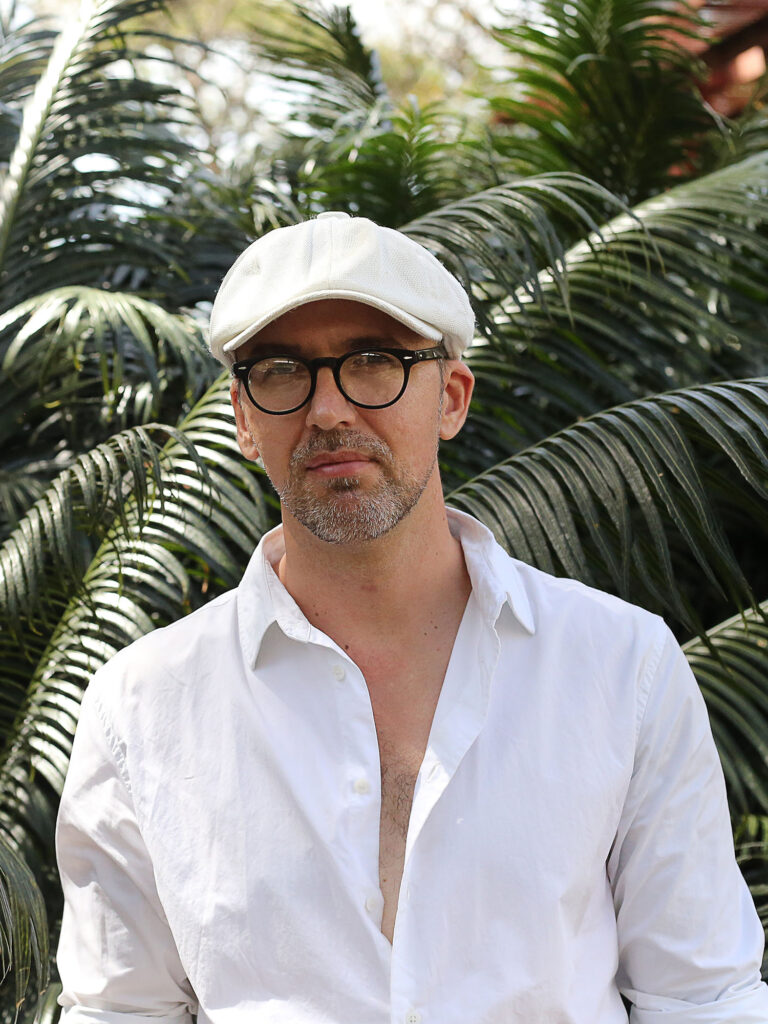
Anton Dvoryadkin is the General Manager of Josip Tumapa Design, a fashion design studio based in the Philippines. He works on editorial writing, digital presentation, and international communication for the brand: https://josiptumapa.com
