



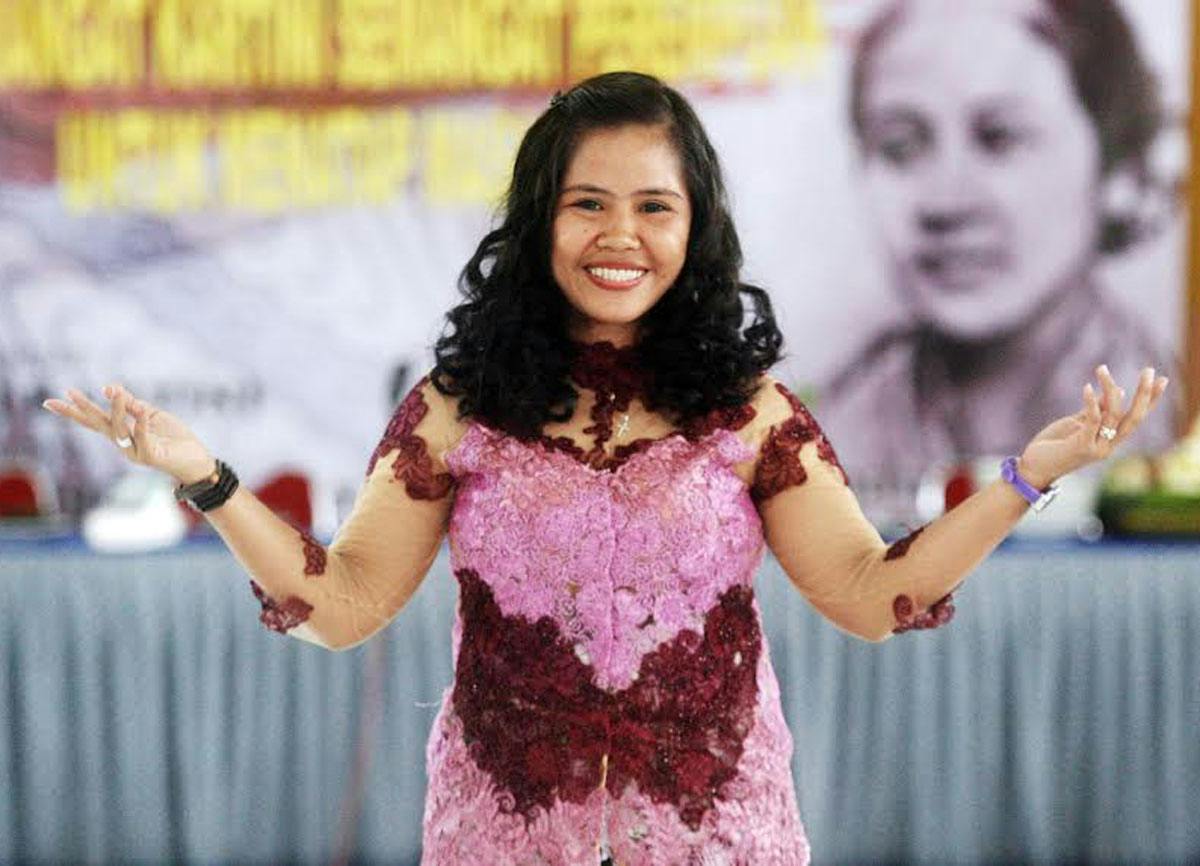

September 25, 2026: the night she walked out

The release papers came through on the night of Friday, September 25, 2026. Bureau of Corrections chief Gregorio Catapang Jr. handed it over personally at the Correctional Institution for Women (CIW) in Mandaluyong City, together with a copy of the absolute pardon President Ferdinand Marcos Jr. had signed the day before.
Mary Jane Veloso held the pardon up for the cameras, in tears. She was 41. The last time she had been free was April 25, 2010, the day she landed in Yogyakarta, Indonesia, carrying a new bag she had been given in Kuala Lumpur.
“Thank you so much for clearing my name and allowing me to return to my family,” she told reporters in Filipino. “I didn’t see my children grow, but I believe it’s not yet too late for me to be their guide.” (Translation as published by the Philippine Daily Inquirer.)
Sixteen years and five months separate those two dates. Nearly 15 of them were spent in Indonesian custody, much of it on death row.
1985 to April 2010: a job offer from home
January 10, 1985. Mary Jane is born in Cabanatuan, Nueva Ecija, the youngest of five children in a family living in extreme poverty. Her parents are Cesar and Celia Veloso. [Schooling and early work history: not established in available sources.]
Before 2010. The young mother works abroad for the first time, as a domestic worker in Dubai, for about 10 months.
January 1, 2010. She comes home to Nueva Ecija after about 10 months in Dubai. She has two sons, Mark Daniel and Mark Darren.
Early 2010. Neighbors from Talavera, Nueva Ecija, make her an offer. Maria Cristina Sergio, the daughter of one of her godparents, and Sergio’s live-in partner, Julius Lacanilao, say there is work for her as a maid in Malaysia. According to her mother and sister, the promised package is RM1,600 a month, a motorcycle and a mobile phone.
April 2010: Kuala Lumpur and Yogyakarta
April 22, 2010. Mary Jane and Sergio fly to Malaysia. On arrival, Sergio reportedly tells her the maid’s job is gone, but that another opening is waiting in Yogyakarta, Indonesia. The two stay in a Kuala Lumpur hotel for three days.
Before the onward flight. Sergio takes her to a mall and introduces two men: an African man known only as “Ike” and a fair-skinned man believed to be Lacanilao. The men buy her new clothes and a new bag and hand her US$500. When she remarks that the bag feels heavy, she is told it is because it is new.
April 25, 2010. The former domestic worker lands at Adisucipto International Airport in Yogyakarta on an AirAsia flight from Kuala Lumpur. Her bag sets off the X-ray alarm. Customs officers cut into the lining and find packets of heroin wrapped in aluminum foil, 2.6 kilograms in all, with an estimated street value of about US$500,000. She is 25 years old, and she is arrested on the spot.
April 27, 2010. Back in Nueva Ecija, her parents hear from her in-laws that she has arrived safely in Malaysia. When they visit Sergio, she tells them the employer is “very kind” and gives them clothes and milk supposedly bought by Mary Jane for her youngest son.
May 12, 2010. Mary Jane finally tells her family she is in jail.
May 13, 2010. Sergio warns the Veloso family to stay silent or face danger. According to the family’s account, she claims to belong to an international drug syndicate that will spend millions to get Mary Jane out.
2010 to 2011: a death sentence in six months
After the arrest. According to her advocates, police questioned the mother of two in Bahasa Indonesia, a language she did not yet understand, without a lawyer or translator present. At trial before the Sleman District Court, she was represented by a state-appointed lawyer with little experience in capital cases. The court interpreter translated proceedings from Bahasa into English, a language she was not fluent in. Throughout, she insisted she had no idea the drugs were in the bag.
October 11, 2010. The court finds her guilty of drug trafficking and sentences her to death by firing squad, less than six months after her arrest.
February 2011. An appeals court upholds the verdict.
May 31, 2011. Indonesia’s Supreme Court affirms the death sentence.
August 2011. President Benigno Aquino III asks then-Indonesian President Susilo Bambang Yudhoyono for clemency. The appeal is not acted on while Indonesia observes a moratorium on executions.
2011 to 2014. Mary Jane waits on death row at the women’s prison in Yogyakarta. [Details of her daily life in these years: not established in available sources. Later reports show she learned batik-making in prison.]
2014 to 2015: hours from the firing squad
December 2014 or January 2015. President Joko Widodo, elected on a hard anti-drug platform, rejects a batch of clemency appeals that includes hers. [Exact date differs across outlets; see Editor’s notes.] Philippine government lawyers file for a judicial review. It is denied.
February 2015. Aquino raises her case with Widodo during the Indonesian leader’s state visit to the Philippines, then follows up with three letters. At home, a #SaveMaryJane campaign spreads online, led by migrant and women’s rights groups.
April 2015. The Filipina is moved to the prison island of Nusakambangan in Central Java to await execution, alongside eight other drug convicts, including Australians Andrew Chan and Myuran Sukumaran. Vice President Jejomar Binay seeks a meeting with Widodo at the close of the Asian-African Conference commemoration in Jakarta.
April 27, 2015. Aquino speaks to Widodo on the sidelines of the 26th ASEAN Summit in Malaysia. In Manila, the National Bureau of Investigation files charges of illegal recruitment, human trafficking and estafa against Sergio and Lacanilao.
April 28, 2015. Sergio and Lacanilao surrender to police in Cabanatuan City, saying they have received death threats. The same day, Aquino phones Indonesian Foreign Minister Retno Marsudi directly, a break in protocol, and proposes that Mary Jane be kept alive as a witness against the syndicate.

April 29, 2015, around 1 a.m. The execution is stayed. The eight other prisoners are shot on Nusakambangan that night. Indonesia’s attorney general calls her reprieve a postponement to allow the investigation in the Philippines, not a pardon. Widodo later says her execution is “only delayed, not canceled.”
After the reprieve. Mary Jane returns to the Yogyakarta prison, still on death row.
2016 to 2022: a disputed conversation and a slow trial
August 16, 2016. The Regional Trial Court (RTC) Branch 88 in Sto. Domingo, Nueva Ecija, hearing the trafficking case against Sergio and Lacanilao, allows the prosecution to take Mary Jane’s testimony by written deposition in Indonesia. Indonesia’s conditions: she stays in custody, no lawyers present, no cameras.
September 9, 2016. President Rodrigo Duterte meets Widodo in Jakarta.
September 12, 2016. Widodo tells reporters in Banten that he briefed Duterte on the heroin and the delayed execution, and that Duterte said to go ahead if she were to be executed. Malacañang disputes the account. Presidential spokesman Ernesto Abella says Duterte told Widodo: “Follow your own laws. I will not interfere.” Days later, Duterte says he never discussed the Filipina with Widodo at all, and Widodo clarifies that Duterte had told him to proceed in line with Indonesian law. No public intervention on her behalf from Duterte is on record after that.
December 13, 2017. The Court of Appeals, acting on the recruiters’ petition, reverses the deposition ruling.
October 9, 2019. The Supreme Court reinstates it. It rules that her testimony can be taken through written questions before Philippine consular officials in Indonesia without violating the accused’s right to confront a witness.
January 30, 2020. The same Nueva Ecija court sentences Sergio and Lacanilao to life imprisonment and a P2 million fine for large-scale illegal recruitment. The case is not Mary Jane’s. It was filed by three other women from the area, Lorna Valino, Ana Marie Gonzales and Jenalyn Paraiso, who pressed charges in 2015 even though they were never deployed, hoping it would help save their neighbor.
March 4, 2020. The Supreme Court denies the recruiters’ motion for reconsideration with finality on the deposition. [Whether the written deposition was ever taken in Yogyakarta: not established. Reports in 2026 describe her June 2026 testimony as her first.]
2022 to 2024: the road home
September 2022. During President Ferdinand Marcos Jr.’s state visit to Indonesia, Foreign Secretary Enrique Manalo asks Foreign Minister Retno Marsudi for executive clemency for Mary Jane. Marcos does not publicly raise her case with Widodo on that trip.
May 2023. At the ASEAN Summit in Labuan Bajo, Marcos asks Widodo to re-examine her case and floats the option of letting her serve her sentence in the Philippines.
January 2024. On a visit to Manila, Widodo commits to re-examining the case.
November 19 and 20, 2024. The Department of Foreign Affairs confirms talks on a prisoner transfer. The next day, Marcos announces she is coming home. “She remains a victim of her circumstances,” he says. Indonesia’s senior law minister, Yusril Ihza Mahendra, calls it a new policy: Indonesia will not pardon a foreign convict, but it will transfer her. Her death sentence is lowered to life imprisonment, and any clemency after the transfer is left to Marcos.
December 6, 2024. Manila and Jakarta sign the transfer agreement. The Philippines agrees to respect the Indonesian court’s verdict and her status as a prisoner. Authority over her sentence, including clemency, passes to the Philippine government.
December 17, 2024. At Soekarno-Hatta International Airport in Jakarta, she speaks to the press before boarding.
December 18, 2024. Mary Jane lands in Manila in the early morning, after 14 years and eight months in Indonesian custody. She is taken straight to the CIW in Mandaluyong, where she is reunited with her parents and her two sons. That day, as a registered inmate, she again asks Marcos for executive clemency and insists she is innocent.
2025 to 2026: free in Indonesia’s eyes, still locked up at home
January 10, 2025. On her 40th birthday, her family delivers a petition with 8,283 signatures to Malacañang, asking for clemency. The same month, Sergio is moved from the CIW to the Iwahig Prison and Penal Farm in Palawan. Lacanilao is held at the New Bilibid Prison.
July 4, 2025. A second petition, with 13,537 signatures, goes to the Palace.
November 14, 2025. The National Union of Peoples’ Lawyers (NUPL) files a petition for a writ of habeas corpus with the Supreme Court. It argues that she has no charge, conviction or commitment order from any Philippine court, and that no treaty or law lets the Philippines enforce Indonesia’s judgment.
December 2025. The Supreme Court orders her trafficking complaint moved from Nueva Ecija to the Mandaluyong RTC for the purpose of taking her testimony.
Early 2026. In an open letter to Marcos, she writes about her elderly parents making the long trip from Nueva Ecija to visit her. “Nandito pa rin ako nakakulong kahit wala akong kasalanan at wala din po akong nagawang masama sa ating bansa,” she writes. (“I am still locked up here even though I am innocent and have done nothing wrong to our country.”)
April 2026. Justice Secretary Fredderick Vida says the Department of Justice may recommend executive clemency.
May 8, 2026. With her parents, the NUPL files a motion urging the Supreme Court to resolve the habeas corpus petition. Attached is a handwritten letter from Mary Jane to Chief Justice Alexander Gesmundo. She notes that her prison record lists a sentence of reclusion perpetua, which she believes has no legal basis, and that the coming Mother’s Day will be her 17th away from her sons.
June 19, 2026. Eleven years after the case was filed, she finally testifies against Sergio and Lacanilao before a judge, inside the CIW. Supporters from migrant, church and women’s groups rally outside on Correctional Road.
September 22 to 24, 2026. At a House budget hearing, Bataan Rep. Albert Garcia says the President is “seriously considering” an absolute pardon on humanitarian grounds. Palace press officer Claire Castro also signals the pardon is under consideration. On Thursday, September 24, Marcos signs it.
September 25, 2026. “Pinirmahan ko na ‘yung pardon niya kahapon,” Marcos tells reporters. (“I signed her pardon yesterday.”) In Cabanatuan, her lawyer Edre Olalia calls Celia Veloso with the news. “Hope prevailed after a long struggle,” her mother later writes on Facebook, in Filipino. That night, the Bureau of Corrections releases Mary Jane from the CIW and endorses her to her local government in Nueva Ecija for reintegration.
The case she filed against her recruiters in 2015, for qualified trafficking, illegal recruitment and estafa, remains pending.
