



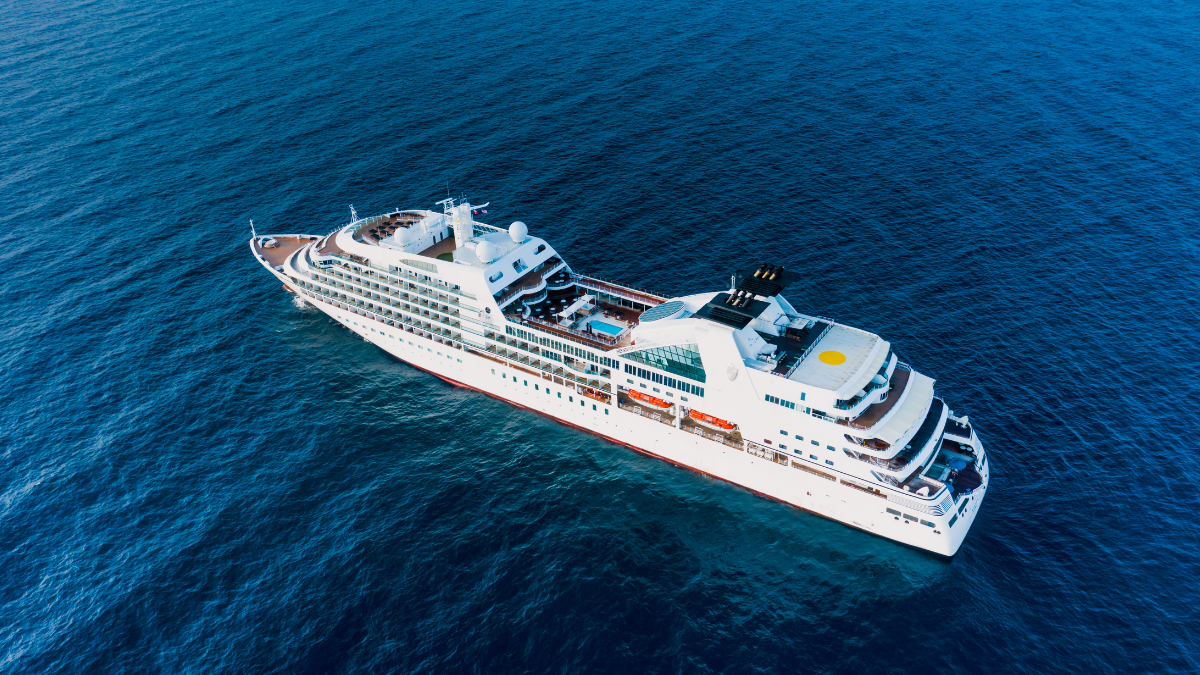

Three passengers aboard a cruise ship now anchored off the coast of Cape Verde have died amid a suspected hantavirus outbreak, with at least three others ill, the World Health Organization confirmed Sunday.

The MV Hondius, operated by Oceanwide Expeditions, departed Ushuaia, Argentina, more than a month ago and made stops in Antarctica before eventually sailing toward the Atlantic. According to CNN, the Dutch-flagged vessel is currently sitting off Praia, the capital of the Cape Verde archipelago, where authorities have barred passengers and crew from disembarking.
Cape Verde’s Health Ministry cited public health protection as the reason for denying port access, though local health officials have boarded the ship and assessed two symptomatic crew members — one British, one Dutch national — both presenting with acute respiratory symptoms and described as requiring urgent care.
Of the three deaths, the first was a 70-year-old Dutch man who fell ill with fever, headache, abdominal pain, and diarrhea and died aboard on April 11. His body was disembarked at Saint Helena for repatriation. His 69-year-old wife subsequently collapsed at a South African airport while attempting to fly home and died at a nearby hospital. Oceanwide Expeditions said it has not confirmed the two deaths are linked to the onboard medical situation. A German national died on May 2; his cause of death has also not been established.
The only laboratory-confirmed hantavirus case so far involves a British national who fell ill on April 27 and is in critical condition at a private facility in Johannesburg. The remaining five symptomatic individuals are classified as suspected cases pending further testing.
Hantavirus is most commonly transmitted through contact with infected rodent urine, droppings, or saliva, according to the U.S. Centers for Disease Control and Prevention. One variant — the Andes virus, endemic to parts of Chile and Argentina where the ship originated — carries limited evidence of human-to-human transmission, distinguishing it from other strains.

Family physician Scott Miscovich, president and CEO of Premier Medical Group, told CNN the ship-based outbreak was highly unusual. He said two scenarios were plausible: rodent contamination aboard the vessel, or one passenger acquiring the Andes variant and passing it to others. If human-to-human transmission is confirmed, Miscovich said, it would “change the future of travel medicine and infectious disease and tropical medicine.”
WHO regional director for Europe Hans Kluge sought to temper alarm, stating there was “no need for panic or travel restrictions” and that the virus “is not easily transmitted between people.” WHO said it is coordinating medical evacuation logistics for the two symptomatic crew members while conducting a full public health risk assessment.
Hantavirus pulmonary syndrome carries a fatality rate of roughly 38 percent among those who develop respiratory symptoms, with no cure beyond supportive treatment. The CDC notes that patients with severe breathing difficulties may require intubation.
Passenger and travel vlogger Jake Rosmarin posted a video Monday from the ship. “What’s happening right now is very real for all of us here. We’re not just a story. We’re not just headlines,” he said, his voice breaking. “We’re people, people with families, with lives, with people waiting for us at home. There’s a lot of uncertainty, and that’s the hardest part.”
149 people remain aboard the MV Hondius, including 17 Americans. Dutch authorities have agreed to accept the repatriation of symptomatic crew members, along with the remains of one of the deceased.
