




A Filipino dessert staple is getting a Dubai makeover just as the ingredient at its heart reaches a global commercial milestone.

Ube, the purple yam long central to Philippine cuisine, is now a documented worldwide food trend. The market for ube-based products was valued at $455 million in 2024 and is on track to nearly double, with projections placing it at $943 million by 2035. Restaurant menus globally have reflected that momentum, with ube appearances climbing more than 300 percent in recent years.
In the Philippines, the ingredient’s significance runs deeper than commerce. Certain farming communities mark the planting and harvesting of ube with traditional rituals, underscoring its roots in local cultural heritage that long predate its international breakout.
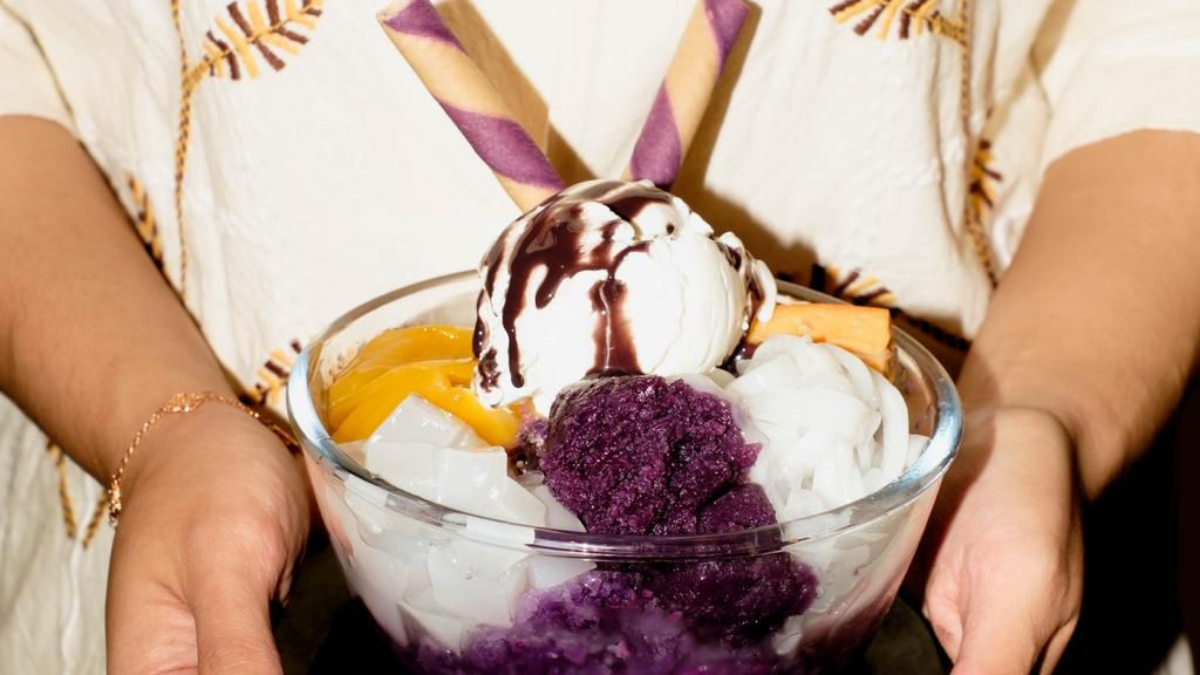
Spice Grill, a UAE restaurant known for Asian seafood and Filipino fusion cuisine, is now bringing that heritage to the Gulf through its version of halo-halo — one of the Philippines’ most recognizable desserts. The restaurant’s take on the dish goes beyond presentation. Rather than placing ube solely as a topping, Spice Grill infuses both ube and milk directly into the crushed ice base, distributing the flavor throughout the dessert rather than concentrating it at a single layer.

The result is a denser, creamier construction that still draws on the components that define traditional halo-halo: jackfruit for tropical sweetness, kaong — or sugar palm fruit — for textural contrast, and a finishing layer of ice cream.
A pandan variant is also on the menu. The Southeast Asian leaf, often compared to vanilla for its light, aromatic quality, has been gaining traction in international dessert culture alongside ube.
Lourds Adalia-Evertse, Managing Director of Spice Grill and the creative force behind the menu, is available for interviews. On-site tastings and media shoots can also be arranged upon request.
