



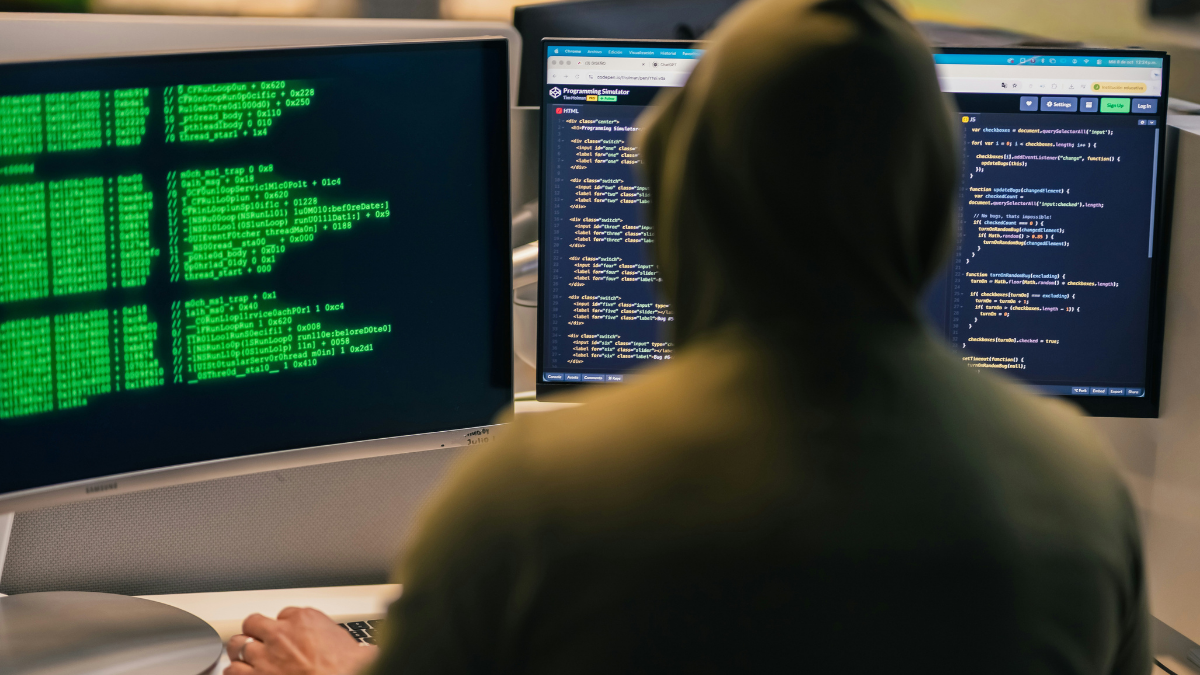

Artificial intelligence is increasingly being used to power cyberattacks targeting the UAE, with authorities warning that hostile actors are deploying advanced tools to exploit periods of instability. Mohammed Hamad Al Kuwaiti said recent incidents point to the use of platforms such as ChatGPT to plan and execute digital intrusions, including operations linked to Iran.

Alongside this, the Abu Dhabi Emergency, Crisis and Disaster Management Centre released a cybersecurity awareness guide outlining risks that tend to intensify during emergencies. Produced with the Department of Government Enablement, the advisory forms part of a wider preparedness campaign aimed at strengthening public resilience in high-risk situations.
Authorities identified six major threats that become more widespread in crisis scenarios. These include phishing scams, unauthorized account access, malicious software, identity impersonation through fake profiles, and fraud schemes enhanced by artificial intelligence such as deepfake content. Data exposure through unsafe websites was also highlighted as a persistent vulnerability.
According to the guidance, crisis conditions create an environment where cybercriminals can take advantage of confusion and urgency. People are more likely to act quickly without verifying information, rely on unofficial sources, or fall for misleading content circulating online.
The advisory lists several warning signs linked to potential scams, including urgent requests for personal details, suspicious links, unexpected demands for money, and messages promising unrealistic rewards. It also flags unusual login activity, unsolicited multimedia messages requesting sensitive information, and communications that imitate official institutions.
To reduce risks, individuals are urged to avoid interacting with unknown links, refrain from reusing passwords, and download applications only from trusted platforms. Sharing one-time passwords, uploading data to unverified sites, or forwarding unconfirmed information are also identified as common mistakes that can lead to security breaches.

During emergencies, officials recommend relying exclusively on verified sources, confirming the authenticity of digital content before sharing, and avoiding reactions driven by panic. Special caution is advised when using institutional email accounts on public platforms, particularly gaming services, due to the risk of misuse.
Al Kuwaiti noted that artificial intelligence has transformed cyberattack methods, making them faster, more convincing, and easier to scale. He said adversaries are using these technologies for reconnaissance, vulnerability detection, crafting sophisticated phishing campaigns, and generating misleading material for information manipulation.
He added that the country’s cybersecurity framework focuses on continuous monitoring and rapid response, supported by systems such as the National Cybersecurity Operations Center and real-time intelligence sharing mechanisms. “The country does not wait for threats to act; it maintains continuous readiness to safeguard national infrastructure and services.”
Authorities estimate that between 500,000 and 700,000 cyberattacks are being recorded daily, with many targeting key sectors during periods of heightened tension and showing a marked increase in complexity following recent regional developments.
Al Kuwaiti emphasized the role of the public in strengthening defenses, stating, “The most important message is that in times of tension, your awareness must be faster than phishing, calmer than rumors, and more accurate than fabricated content.”
