



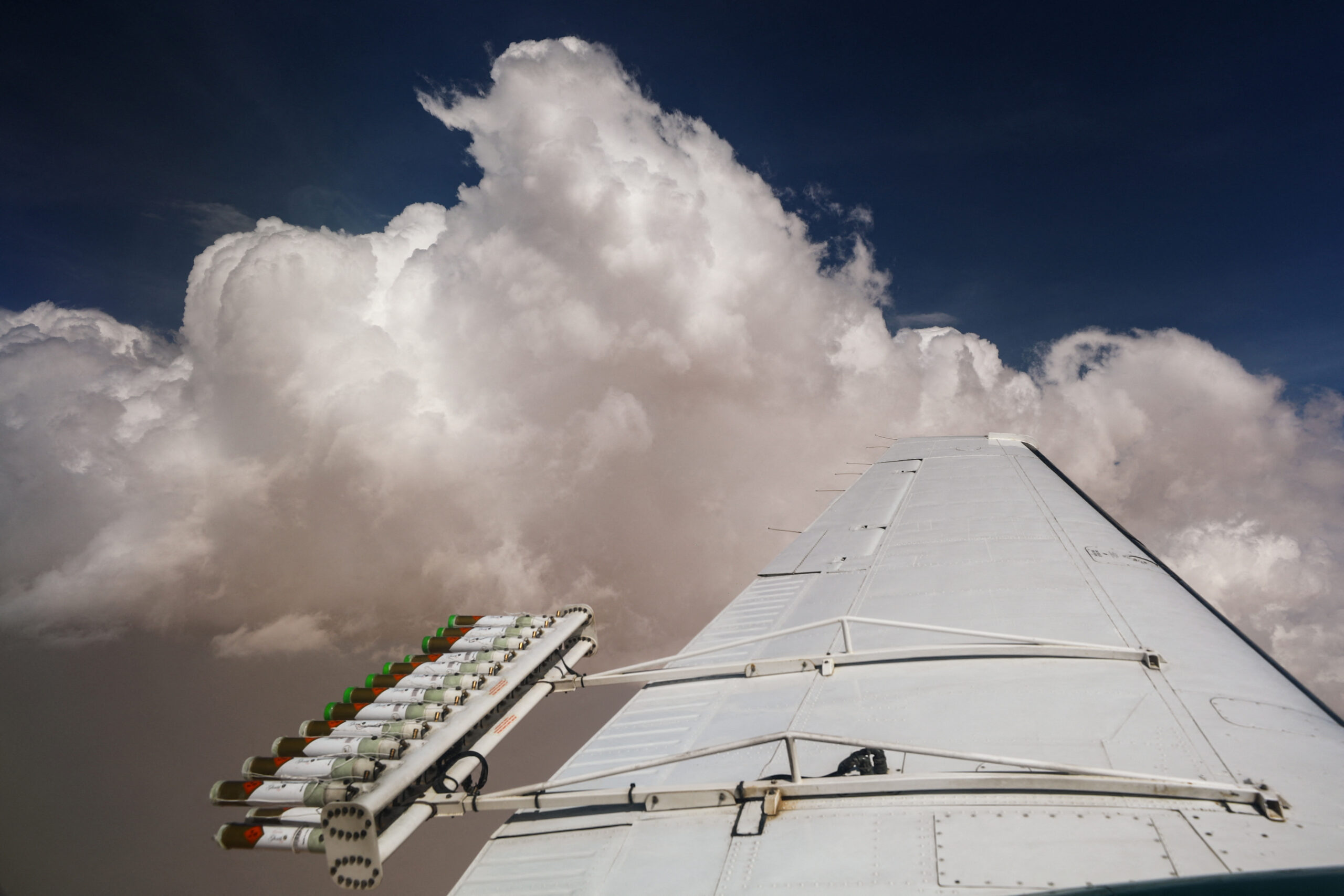

The UAE’s National Centre of Meteorology has conducted approximately 80 cloud seeding operations since January, targeting convective cloud formations as part of a broader push to bolster the country’s water supply.

According to Al Khaleej newspaper, Dr Mohammed Al Abri, the centre’s Director of Meteorology, said not every cloud type qualifies for the programme. “We target only convective clouds that are suitable for cloud seeding, while stratiform clouds present in some areas are not targeted,” he said, adding that this distinction accounts for why rainfall can differ sharply between locations even during the same weather event.
Al Abri said the trajectory and position of convective clouds are beyond human control, which means some areas will receive heavier precipitation while others see little to none. He framed this unevenness as an inherent characteristic of weather systems, not a flaw in the seeding methodology.

Dr Ahmed Habib, a meteorology expert at the centre, said operations will carry on through the rest of 2026 and into future years, contingent on cloud availability. He said the process depends on convective clouds with upward air currents and sufficient vertical development — conditions that cannot be scheduled in advance.
Al Abri also noted that weather patterns shift between years and seasons, with current conditions broadly consistent with historical norms, though varying in intensity. In the near term, he said light rainfall is expected over western and eastern parts of the country, driven by a shallow low-pressure system in the upper atmosphere.
The cloud seeding programme sits within a national strategy aimed at increasing precipitation, recharging groundwater reserves, and securing long-term water availability — a pressing concern in an arid environment where natural rainfall is scarce.
