



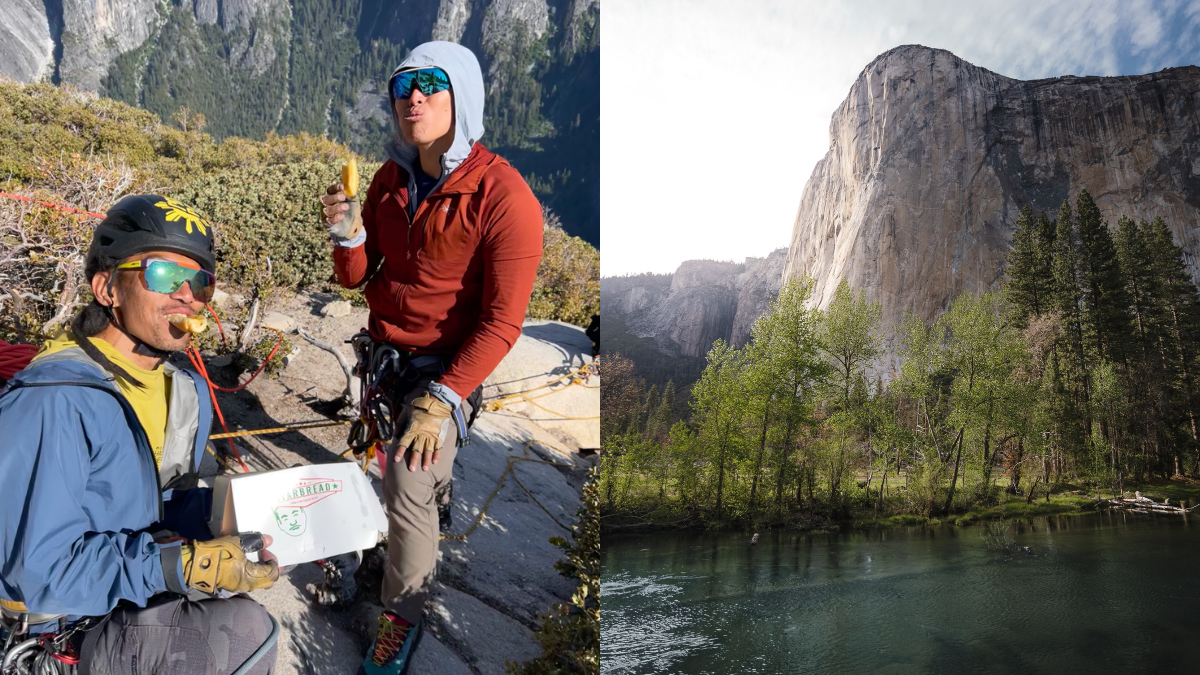

An all-Filipino team has climbed The Nose on El Capitan, one of the most iconic and demanding big-wall routes in the world, in what the pair says is the first ascent of the line by a Filipino team.

Ivan Cataluña, 29, originally from Midsayap, Cotabato, and Gerry Egbalic, 53, of Iba, Zambales, made the climb from May 13 to 16, 2026, scaling roughly 3,000 feet of vertical Yosemite granite before raising the Philippine flag at the top.
The route demanded that they fold nearly every climbing discipline into a single push. “Kasi ang big wall climbing, you have to free climb. You have to incline. You have to also know how mag-haul ng bag which is you need pulley system, mechanical advantages. And you need, parang maging safe, eventually you’ll have to learn rescue. And then on top of all those skills, the technical skills that you have to learn for rock climbing, you also have to have endurance and strong base fitness and mental fortitude,” Cataluña told Philstar.com in an interview.
Because the wall offers no flat ground, the pair hauled everything they needed up with them — sleeping setup, food, water, gear, an emergency kit, even a system for sanitation — and slept suspended on the rock face through shifting temperatures and wind. The exposure itself wore at them, with Cataluña describing how the dizzying drop beneath their feet drained their mental reserves the higher they went.
The most punishing stretch came on day two, when Egbalic discovered that six gallons of their water sat buried at the bottom of a haul bag. Since opening it required a stable spot, they pressed on through darkness to reach a safe pitch, climbing until midnight.
This was not their first attempt. An earlier try stalled at Dolt Tower, forced down by foul weather and slim scheduling windows. A later effort brought kinder conditions but no less difficulty.

The partnership behind the climb began almost by chance. The two first crossed paths during the pandemic at Red Rock Canyon near Las Vegas, where Egbalic — brown-skinned, dreadlocked — was climbing solo when Cataluña spotted him and wondered whether the stranger was a kababayan. “From that moment on, sobrang saya ko kasi simula nung nag-start akong mag-climbing, wala pa akong na-meet na Filipino. Siya ang unang-una na Filipino na nakilala ko, kasi sa Utah, ibang-iba ang mundo doon dahil wala gaanong diversity, panay puti, and wala masyadong Filipino,” Cataluña said. Egbalic, recalling the same instant of recognition, said it felt “meant to be.”
The bond deepened on a later, far less happy trip. In 2022, en route from Utah to Yosemite, Cataluña ended up paired with a climbing partner he found prejudiced toward minorities. “Hindi ako makapaniwala sa sinabi niya [about minorities.] Sa isip ko, nakalimutan niya ba na isa akong brown, isa akong minority, bakit niya sinasabi ito? Kaya, hindi ako makapaniwala na I’m doing this trip with a person na prejudiced,” he said, adding that he loathed every moment and just wanted it over. It was Egbalic’s invitation to his van, and a shared meal of corned beef and rice, that gave him his only sense of safety on the trip — and where the dream was first floated aloud.
They named the effort Projek Pango. “Pango” — snub-nosed — is often hurled at Filipinos as an insult, and the pair set out to reclaim it. “All this time, ang word na ‘pango’ has been negative. I hope yung message is ma-realize ng mga Pinoy na it doesn’t have to be negative. It’s a good thing. Kasi natural, that’s our natural features,” Cataluña said. Egbalic framed the name as a deliberate stand against imported beauty standards and lingering colonial mentality, a call to embrace authentic Filipino identity. Beyond the personal stakes, the project was conceived to widen Filipino presence in outdoor and climbing communities, where that representation has long been thin.
For Cataluña, who had stood atop El Capitan once before, the difference this time was everything. “When I did it the first time, it felt really wrong. Nothing was right,” he said, recalling that even a lifelong dream felt hollow in the wrong company. He had privately vowed, after that van meal, to back Egbalic whenever the older climber was ready.
That, for Egbalic, is what set the climb apart. He has summited and had fun with non-Filipino partners, he said, but sharing the wall with someone who carried the same migrant history, language, food and humor changed the experience entirely. “If I climb the nose again, I’m pretty sure it won’t be the same exact experience that I have,” he said.
The summit moment, oddly, landed without fireworks for Cataluña. The emotion struck him the morning before, at Camp 6, when he opened his eyes to the pitch above, the sunrise, and the drop to his left, and understood the dream was within arm’s reach.
