



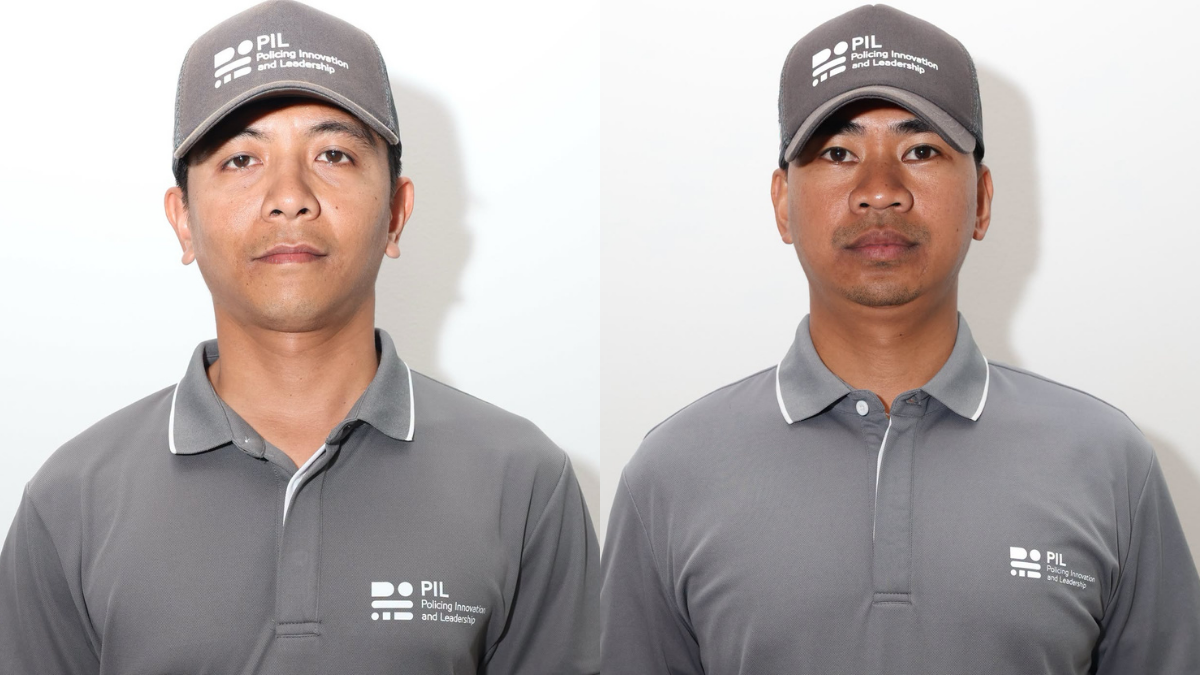

Innovation, not enforcement alone, is what stayed with Major Richard Curada Luzano and Captain Modesto Dumanging Nahiwan after weeks of training abroad. The two Philippine National Police officers came home convinced that the future of their profession lies in technology, community ties, and a more anticipatory style of leadership — lessons they now hope to carry into their own commands.

The pair earned places in the third run of the Policing Innovation and International Leadership Diploma (PIL), a program run by Dubai Police alongside Rabdan Academy that drew officers from 45 nations into a single cohort.
Luzano said his motivation was straightforward: sharpen his leadership and reach for a higher standard in his craft. He walked away fixed on the idea of adaptive leadership, arguing that modern police work demands strategic thinking, a readiness to innovate, and the flexibility to work across different groups while staying ahead of problems rather than reacting to them. He credited the program with giving him tools he can bring back to his own ranks.
“This programme provided me with a unique opportunity to enhance my leadership capabilities, broaden my perspective on modern policing strategies and gain valuable insights into innovative practices that can be applied within my organisation,” he said.
Nahiwan framed excellence differently — as a matter of measurable impact, added value to the public, and operating within the bounds of legitimacy and procedural fairness. He entered the course wanting a global vantage point and left with something broader.
“The programme strengthened international cooperation among participating countries and equipped me with a forward looking mindset to develop our services in the Philippines,” he said.

The learning ran in both directions. Luzano brought the PNP’s playbook on community engagement and crime prevention into the room; Nahiwan spoke to how Philippine forces build partnerships, adapt under crisis, and hold together operationally under pressure. Both said that trading these experiences across borders sharpened the course for everyone in it.
On the technical side, the two gravitated toward frameworks and methods new to them. Luzano singled out Tuckman’s model of group dynamics and structured approaches to innovation, noting that organizations have to refine what already works while pushing past familiar limits at the same time. Nahiwan pointed to the way smart technology, leadership training, and community outreach were woven together, calling that blend the backbone of a police system that acts before problems escalate.
Dubai’s own operations left a mark. Luzano described the emirate’s Smart Police Stations — round-the-clock, self-service, and built to protect privacy — as “innovation at its finest.” Nahiwan took in the broader network of advanced tools and infrastructure, which he said reflected a “steadfast commitment to innovation and excellence in serving the public.”
The connections forged among the 45 delegations mattered as much as the curriculum, both men said. They argued that cross-border cooperation is indispensable for confronting transnational crime, sharing intelligence, and circulating the practices that lift standards everywhere.
As for what comes next, each has a plan. Nahiwan intends to push technology-driven, community-centered policing at home, with an eye on reinforcing police legitimacy and delivering better service. Luzano means to build a stronger culture of innovation within his organization, leaning into community engagement and strategic problem-solving as the areas where he can move first.
