



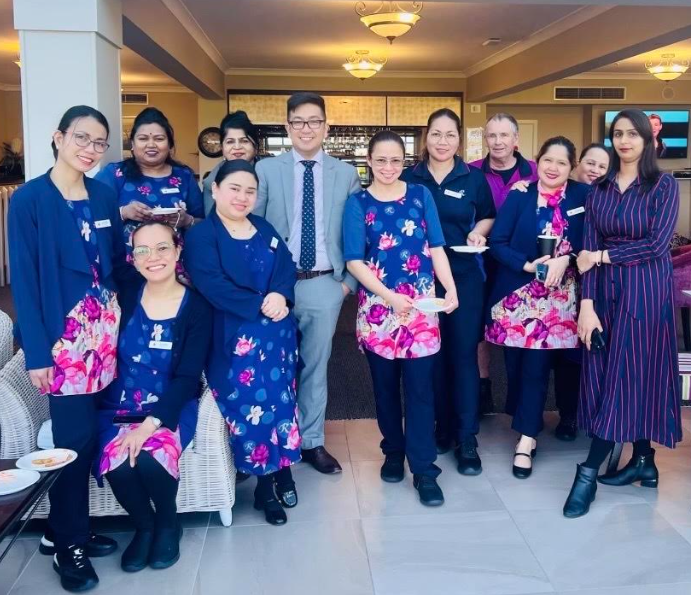

Across New Zealand’s healthcare and aged care sectors, Filipino nurses continue to make meaningful contributions through their compassion, leadership, and unwavering commitment to excellence. Among them are two inspiring professionals from Bohol, Philippines—Judette Froilan-Algodon and Alberto “Albie” Calope Jr.—whose journeys reflect the growing influence of Filipino nurses in leadership roles abroad.

For Judette Froilan-Algodon, nursing has become more than a profession; it is a calling rooted in compassion and service. A graduate of Silliman University, Judette has accumulated more than 16 years of experience spanning hospital nursing, public health, and aged care. Since January 2024, she has served as a Clinical Manager in aged residential care, where she oversees clinical operations, supports staff development, and ensures the delivery of high-quality, person-centred care.
While nursing was not initially her first choice of profession, Judette was deeply influenced by the example set by her relatives, whose kindness, selflessness, and commitment to helping others inspired her to pursue a career in healthcare. Today, these principles remain at the heart of her work, guiding her leadership and empowering her to champion resident wellbeing while supporting continuous improvement within her team.
Sharing a similar passion for aged care leadership is Alberto “Albie” Calope Jr., a graduate of Holy Name University in Tagbilaran City, Bohol. Since beginning his nursing career in 2007 and migrating to New Zealand in 2008, Albie has built a distinguished career in aged residential care. He currently serves as a Village Manager, leading multidisciplinary teams and driving quality improvement initiatives that enhance the lives of residents.
For Albie, one of the most rewarding aspects of his work is mentoring future leaders. He takes pride in seeing team members grow in confidence, capability, and leadership while delivering exceptional care. His approach reflects a belief that sustainable healthcare excellence depends not only on systems and policies but also on empowering people.

Like many internationally educated nurses, both Judette and Albie encountered challenges when they first arrived in New Zealand. Adapting to a new culture, healthcare system, and workplace expectations required resilience, openness, and continuous learning. Through these experiences, they developed a deeper appreciation for culturally responsive care and gained valuable insights into serving diverse populations.
Despite building successful careers abroad, both remain deeply connected to their Filipino heritage. Cultural celebrations, workplace diversity initiatives, and strong Filipino communities help them maintain meaningful connections to their roots. These opportunities allow them to share Filipino traditions while fostering greater cultural understanding among colleagues, residents, and communities.
Their stories exemplify the broader contributions of Filipino nurses in New Zealand. Beyond clinical expertise, Filipino nurses bring empathy, adaptability, leadership, and a strong commitment to service. Increasingly, they are assuming leadership positions where they influence care delivery, mentor future professionals, and shape organizational cultures.
Reflecting on his journey, Albie offers a message that resonates with Filipino nurses everywhere: “Be proud to be a nurse. Ours is a profession that allows us to touch lives and make a meaningful difference every day.” It is a sentiment shared by Judette and countless Filipino nurses who continue to elevate the profession across the globe.
As healthcare systems worldwide face growing challenges, the achievements of Filipino nurse leaders such as Judette Froilan-Algodon and Alberto Calope Jr. demonstrate how Filipino nurses continue to lead with competence, compassion, and integrity. Their success not only enriches New Zealand’s healthcare system but also brings pride to the Philippines and serves as an inspiration to future generations of nurses.
