





Most people picture Greenland as ice, silence, and distance — a place you visit, not a place you build a life. The reality on the ground in Ilulissat is warmer and more crowded than the postcards suggest, and one of the people responsible for that is Rosalie Acero Busaco, a 37-year-old Filipina who arrived looking for a job and ended up running several companies and a small community of her countrymen.

She is now the director and CEO of Ilulissat Services ApS, overseeing manpower coordination, cleaning and laundry, hospitality, restaurants, real estate, and property management. She is also a property owner. But the version of her story that matters most to her isn’t the org chart. “Through my success, I am bringing my team with me,” she shares with TGFM — a line she returns to often, and one that explains almost everything about how she operates.
The question that followed her out of Bahrain
Before Greenland, there was Bahrain. Rosalie spent her early twenties there, working under employers she still speaks about with respect — Mr. Ibrahim Khalid and Mr. Hamid Al Hawatchi, whose leadership she credits with shaping her. When her two-year contract ended, her managing director offered her another, and made clear the terms were negotiable. They wanted her to stay.
She left anyway. She was 24. “I believed that life is not meant to remain in the same place forever,” she recalls. On her way out, her managing director asked her where she saw herself in ten years. Her answer wasn’t modest.
“I want to be like you,” she told him. “And if that happens, I will personally come back and tell you that I finally made it.”
That exchange became a kind of engine. She didn’t yet know what the next path looked like — only that she wanted to keep learning, and that staying comfortable wasn’t the same as moving forward.
Starting with a workforce of one
The path, when it came, started about as small as a business can. Ilulissat Services ApS began as a laundry operation with exactly one employee: herself. She walked into hotels, houses, companies, tourist boats — anyone who might need washing done — and offered her services directly. There was no team behind her yet. There was just the work.
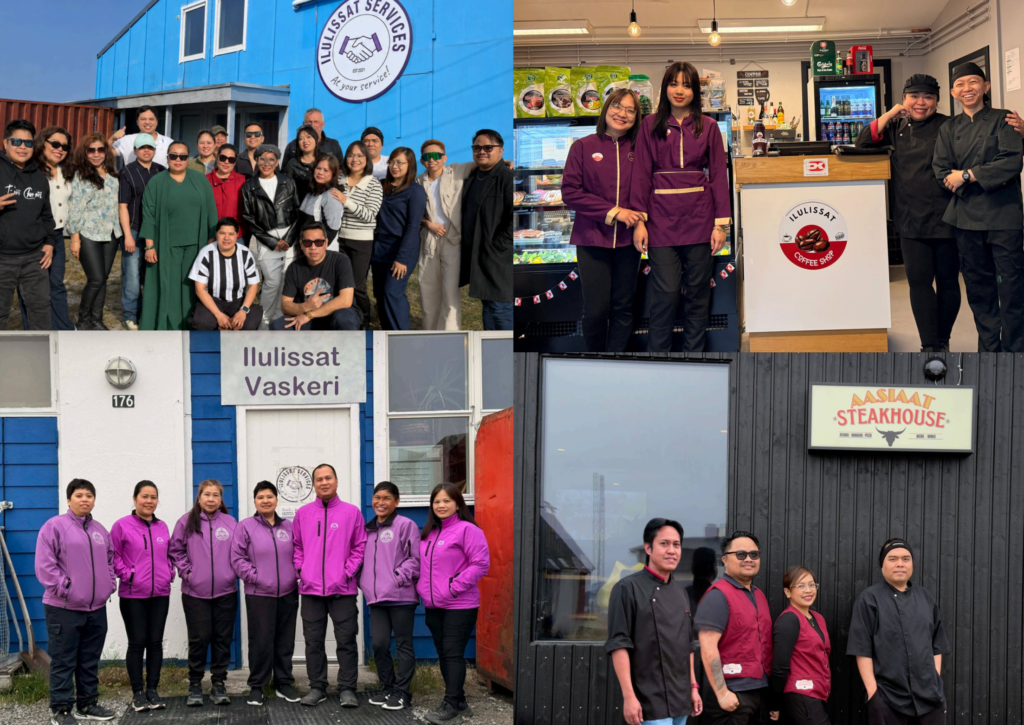
Demand grew, so she expanded into cleaning. That grew too, and after about a year she began bringing Filipino workers over from Bahrain to keep up. What she noticed next became the foundation of everything that followed: her clients weren’t just satisfied with the labor, they trusted it. “The companies became happy with the quality, dedication, and reliability of our Filipino workers,” she says. “Their satisfaction created trust, and that trust opened more doors.”
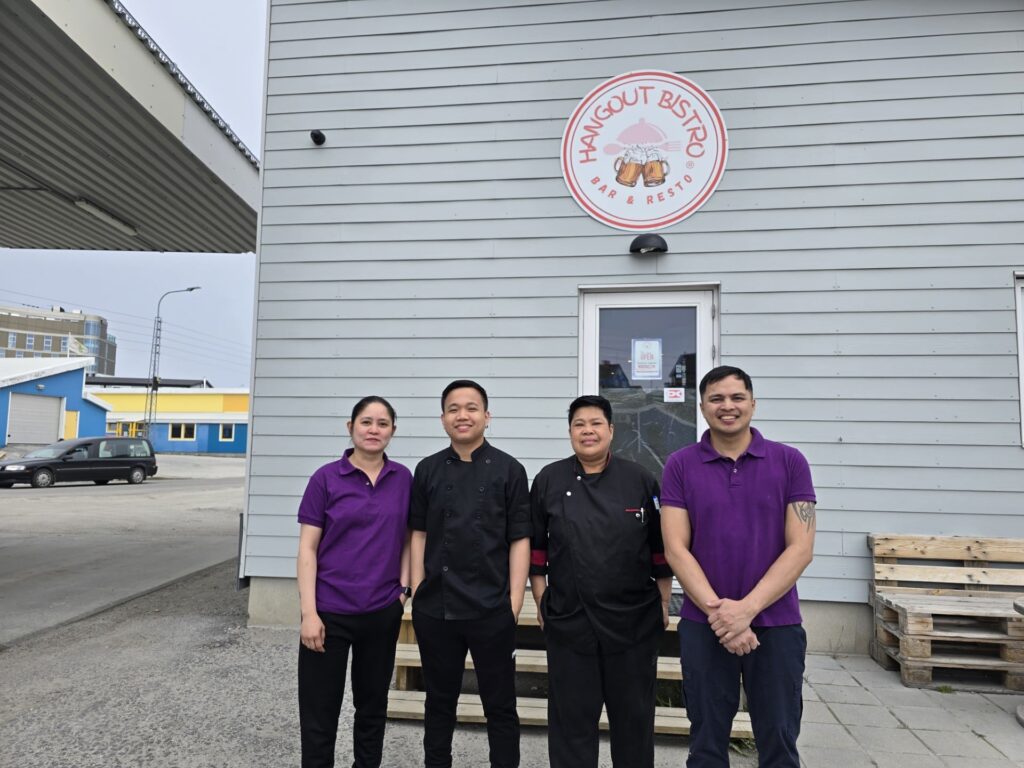
The doors led somewhere unexpected. Cleaning and laundry earnings funded her first restaurant, Hangout Bistro in Ilulissat, followed by Aasiaat Steakhouse and Ilulissat Coffeeshop. Property management came after that; today her company owns and manages houses and services client properties as well.
Her read on all of it is unsentimental. “You don’t have to start big,” the former one-woman laundry service says. “You just have to start, work hard, recognize opportunities, and be willing to grow.”

Hiring for the story, not the résumé
Here is where her business diverges from most. When Rosalie interviews someone, she isn’t primarily scanning for skills. She asks what keeps them going. “Behind every OFW is a story, a family, and a reason for taking the risk of working abroad,” she says — and some of those stories arrived at her door in bad shape.
One man in his fifties came to Greenland on employment promises that fell apart in his first months, including a salary that never materialized. Rather than turn him away over his age or his situation, she hired him. Another Filipina had worked as a housemaid and gone days without proper food; at her lowest, the woman survived roughly ten days on water and small sachets of cereal. Rosalie has also taken on single mothers raising five children, workers whose parents were seriously ill, people buried in debt, and small-business owners from the Philippines whose ventures could no longer support their families.
Her hiring logic is deliberate. “Skills can be learned. Experience can be gained,” she says. “But determination, honesty, willingness to work, and the courage to start again are qualities that cannot easily be taught.” One of her youngest hires came aboard at 18, straight out of junior high with no work history — someone others hesitated to take a chance on. She trained the teenager, who now works as a barista, saves money, and is thinking about returning to her studies. At the other end, one of her team members is turning 58 this year.
Watching the barista grow in confidence, she says, means as much to her as watching a seasoned worker succeed. “Sometimes, the person who needs a chance the most becomes the person who works hardest to prove that the chance was worth giving.”
Building a bridge, not just a business
Over five years, she says her work has helped place more than 300 Filipinos across 25 companies — a figure she offers as proof of something larger than her own balance sheet. Some of those workers have since bought houses, land, and businesses back home. “Seeing them build something for themselves and their families makes me feel that what we are doing has a purpose beyond employment,” she says.
She resists the idea that any of it is hers alone, and she pushes back just as firmly on a common anxiety about migrant labor. “OFWs are not a threat,” she says. “We are a necessity in the global workforce.” Filipinos didn’t come to Greenland to take opportunities, in her telling, but to fill real gaps — contributing skills, supporting businesses, becoming part of the towns they live in.
The niche she carved for herself is that connection point: understanding what Greenlandic companies need, finding Filipinos willing and able to do the work, and making sure both sides come out ahead. She describes it less as staffing than as trust-building — a bridge held up by responsibility and dignity as much as by contracts.
Her advice to anyone eyeing the same leap is plain. Save. Work hard. Stay humble. Don’t let the homesickness and doubt grow bigger than the reason you left. And measure success by more than distance traveled.
“Dahil ang tunay na tagumpay ay hindi lang kung gaano kalayo ang narating mo, kundi kung ilan ang natulungan mong makarating din,” she says — because real success isn’t only how far you’ve come, but how many people you helped arrive too.
She came to Greenland looking for one opportunity. She’s convinced the hundreds that followed are only the start.
