



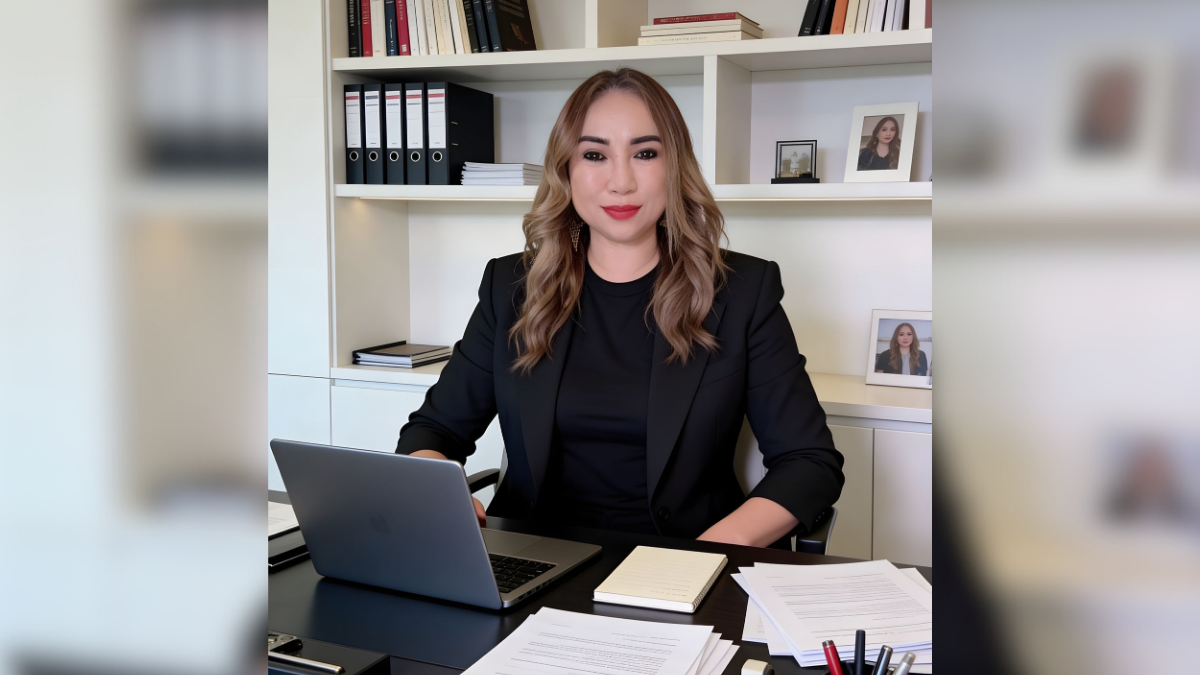

Most Filipinos who leave for work abroad carry the same quiet calculation in their heads: how many years, how much saved, and then what. For Gimmarie “Gem” Bassig Reyes, that calculation eventually gave way to a different question altogether — not when to stop, but what to build.

After more than 18 years working overseas, Gem now leads the GEMS Group of Companies in Bahrain, an expanding consortium that spans education, real estate, homecare, professional development, artificial intelligence, and events. It is an unusually broad portfolio for anyone, let alone a Filipina who started as a procurement manager in the Emirates.
Her early years in the UAE gave her a front-row view of how organizations are run. As Procurement Manager and Executive Assistant to a Group CEO, she worked closely with top-level decision-making — tracking costs, anticipating needs, translating executive priorities into ground-level execution. It was unglamorous work, much of it invisible, but it was an education in itself.
The shift to Bahrain marked a different kind of chapter. Before founding GEMS, Gem served as Academic Director and Dean of another institute, taking on the work of building curricula, leading faculty, and holding up standards in an environment where none of those things come easily. It was there, she has said, that the idea for her own institution took shape — not out of ambition alone, but out of a conviction that skills-based learning, done properly, could genuinely change lives.

That conviction became GEMS Global Institute, the anchor of what is now the GEMS Group. The other companies — GEMS Real Estate, GEMS HomecarePlus, GEMS Professional Development Institute, GEMS AI Academy, and GEMS Events — grew around it, each one connected to the same underlying mission: create pathways for people, especially Filipinos, to build something lasting for themselves.
Gem has been open about the personal cost of the journey — the years of adjusting to unfamiliar places, the weight of being far from home, the professional pressure that comes with leadership roles in countries where you are always, in some way, a guest. She frames these not as wounds but as instruction.
Her current focus extends beyond running a business. She is working toward programs in women’s empowerment, OFW transition into entrepreneurship, and skills training designed for people who have spent years working for others and are ready to work for themselves. For Gem, the story of the overseas Filipino worker does not have to end with a return ticket and a savings account. It can end — or more accurately, begin — with something built.
She is still building.
