



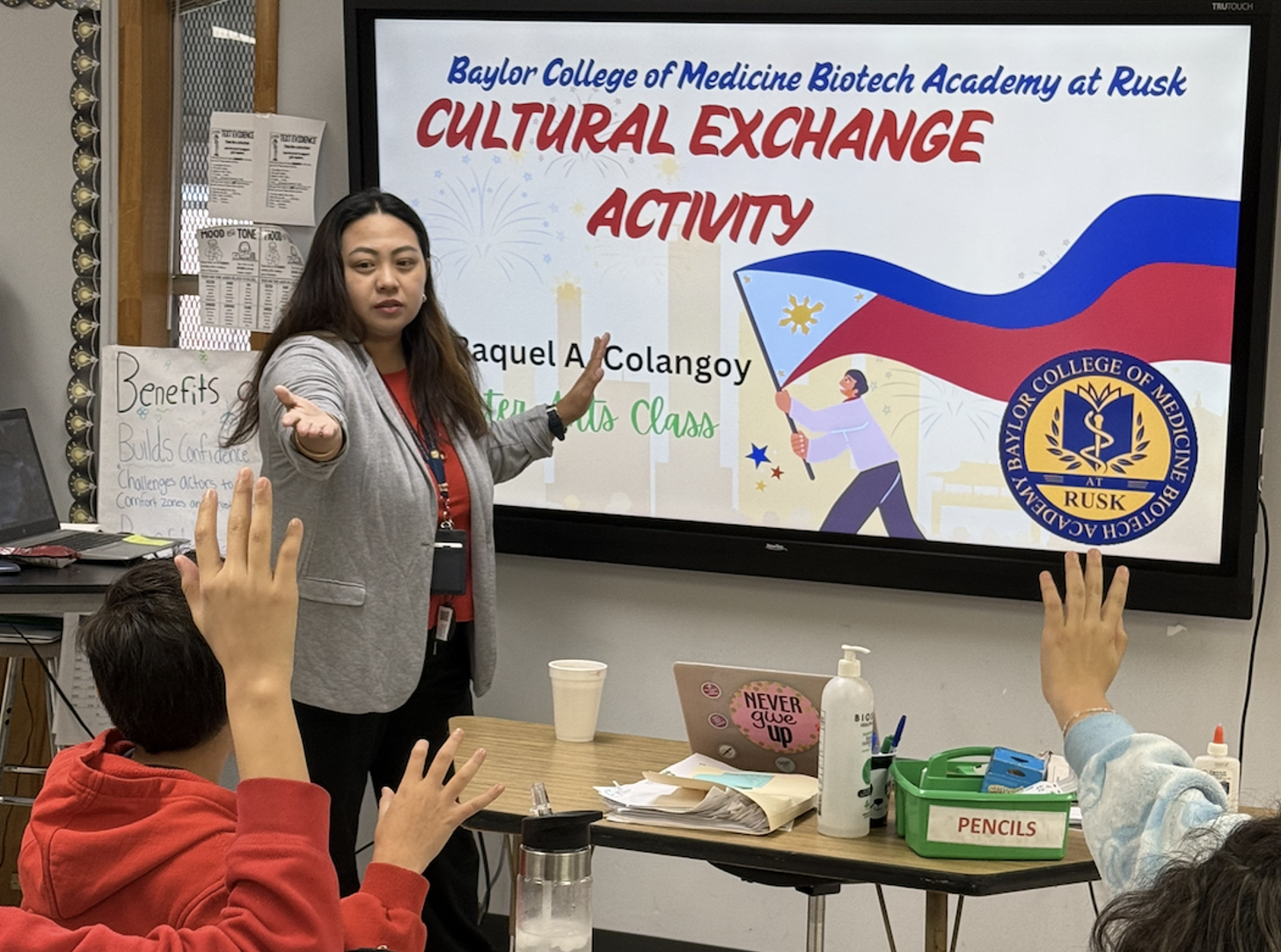

The arts get treated as the soft option, the elective you take when you can’t handle the hard sciences. Then you meet a teacher who uses theater to train future doctors, and the whole hierarchy collapses. Raquel A. Colangoy, a 41-year-old Filipina educator at the Baylor College of Medicine Biotech Academy at Rusk Middle School in Houston, has spent four years proving that the stage and the clinic are not as far apart as they seem.

Why a public speaking teacher belongs in a health science school
Rusk is not an ordinary middle school. It is a Health Science–focused STEAM+M magnet, the kind of place where students are being groomed to become physicians, nurses, and researchers. Into that environment, Raquel teaches Speech and Theater Arts, and she does not see herself as an outsider to the science.
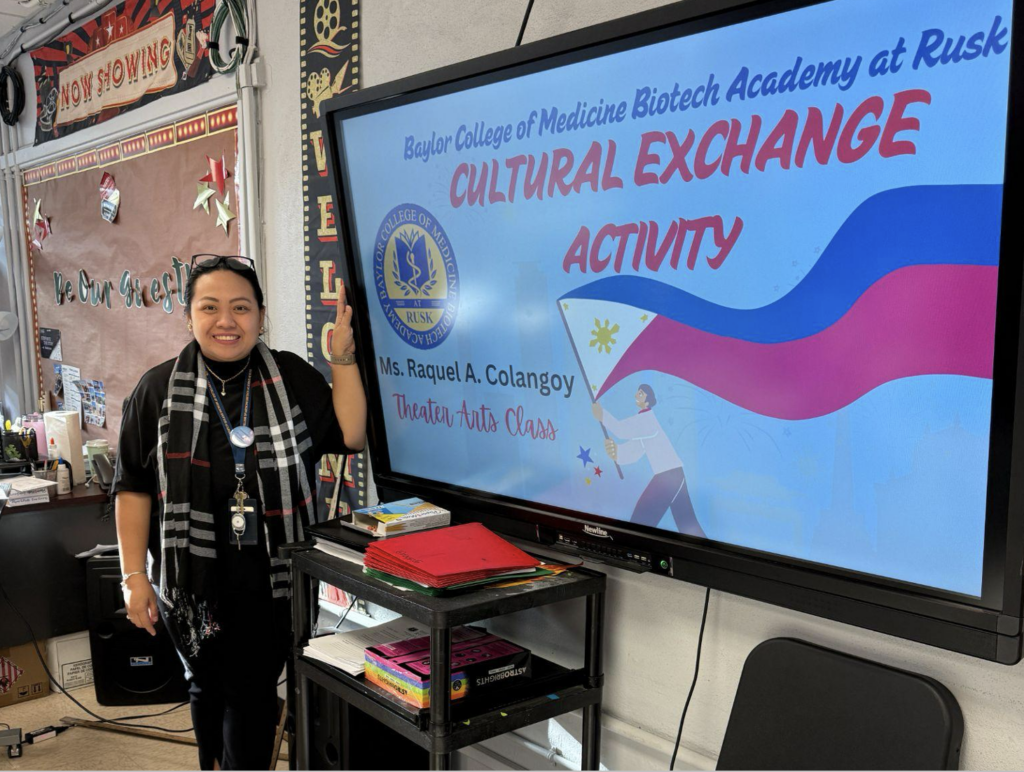
Her argument is simple and she makes it without apology. “I believe that the arts are not separate from STEM and health education—they are a powerful tool that helps students understand people, communicate ideas, and make a meaningful impact in the world,” she shares with TGFM.
In her classroom, students take complex health information and turn it into something an audience can actually absorb. They build speeches on health communication, stage performances around emotional wellness and advocacy, and rehearse the kind of empathy that does not show up on a biology exam but matters enormously at a hospital bedside. The former subject area head frames communication, empathy, and storytelling as core clinical skills rather than decorative ones — the difference between a doctor who knows the diagnosis and one who can deliver it to a frightened patient.
It is a conviction built on more than two decades in education, sixteen of them at an international school in Las Piñas, where she rose to lead the Filipino and Foreign Languages Department. That long runway matters, because what came next did not go the way she expected.
The first year that humbled a veteran
Twenty years of teaching. A leadership post. Experience with multicultural classrooms. By any reasonable measure, Raquel arrived in Houston prepared. She thought so too.
“I thought I was emotionally prepared for the transition,” she recalls, “but adjusting to a new education system, classroom expectations, and student behavior required a lot of learning and reflection.”
The hardest part was classroom management. The methods that had served her for sixteen years in the Philippines did not transfer cleanly to an American middle school, and she had to confront that directly. What she landed on was less a technique than a philosophy: relationships first. Understand where students come from, listen, show genuine care, and the teaching becomes possible.
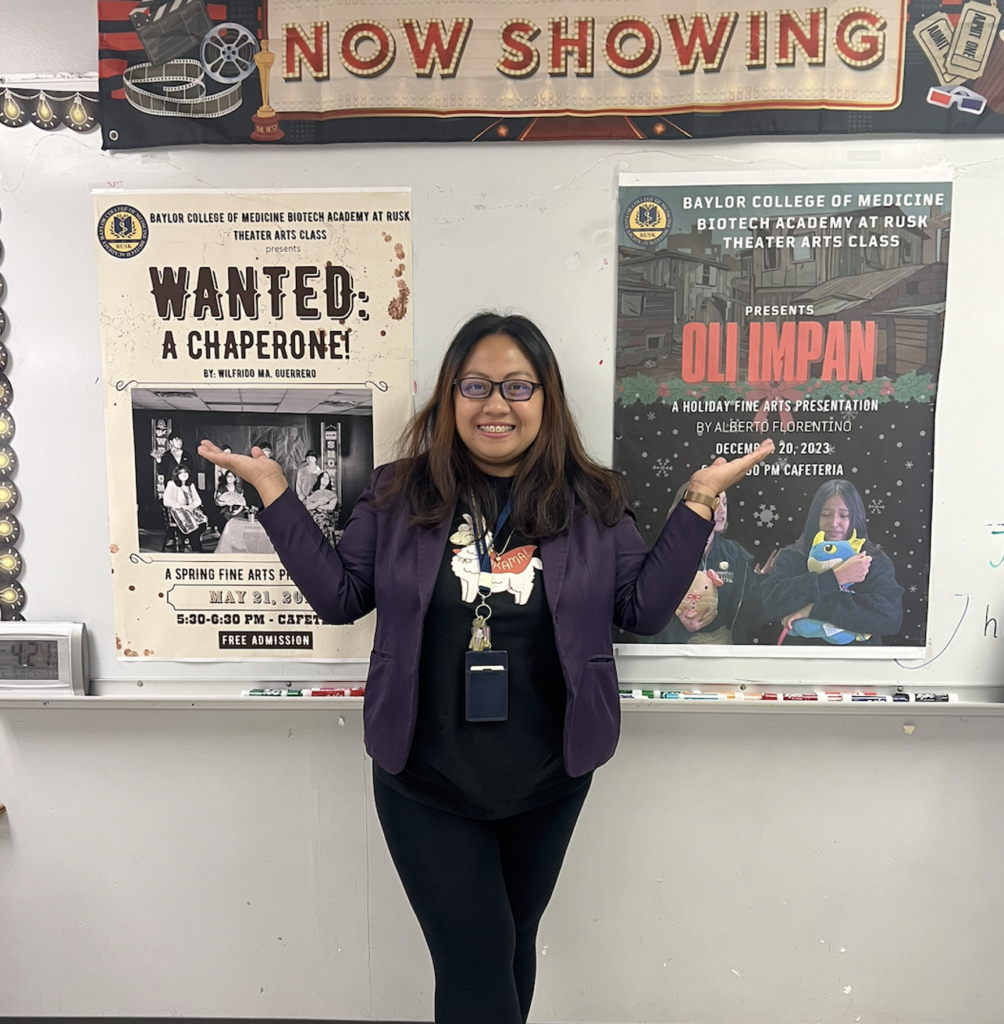
She distills it into a line she now lives by. “Students need to know that you care before they are ready to learn from you.” Her family, her faith, and the people who believed in her purpose carried her through that disorienting first stretch — and the humility it forced on her became, in a way, the foundation of everything that followed.
There is something pointed about an educator with her résumé admitting she had to start over. She does not hide it. If anything, she offers it as the central lesson of going abroad.

A Filipina teaching Americans to speak
Here is the detail she returns to with obvious pride: English is not her first language, and she is teaching public speaking to American students.
She refuses to treat that as a limitation. “I am proud that a Filipino can teach communication in an American classroom,” she says, and she reads her own background as an asset — proof to her students that courage and self-expression are not the property of native speakers.
The recognition has followed. She has been a consistent Teacher of the Year nominee, and was recently invited into the Distinguished Teacher Review process, an honor reserved for educators in roughly the top 30 percent of a district of some 10,000 teachers. But the moment she describes as the most rewarding has nothing to do with awards. It is watching a shy student who once dreaded standing up in front of the class transform into a confident performer. Many arrive afraid to speak; through speech and theater, she says, they discover their voices.
She also brings the Philippines into the room. Every year she directs productions that link the arts and sciences, and she folds Filipino culture, language, and theater into her lessons, letting Houston students encounter a country most of them will never visit. For four years she has, in her words, served as an ambassador of Philippine culture, language, and literature — building bridges between cultures one classroom at a time.
The mission underneath the job
For all the talk of curriculum and recognition, Raquel keeps circling back to something larger than a teaching post. Her path abroad was not the plan. Her original dream was to keep serving her community in the Philippines, including a feeding program she helped start fifteen years ago.
“I believe that there is no accident in God’s plan,” she says, and she has come to see the move to the United States as a continuation of purpose rather than a departure from it. Serving, she realized, does not only happen in one place.
That belief shapes the advice she offers fellow Filipinos abroad, and it is notably free of the usual emphasis on salary. Stay humble. Be willing to learn how to unlearn and relearn. Leave pride behind, because that is what makes room for growth and real relationships. Success overseas, she insists, is not measured only in financial terms — it is measured in character, integrity, and the impact you leave behind.
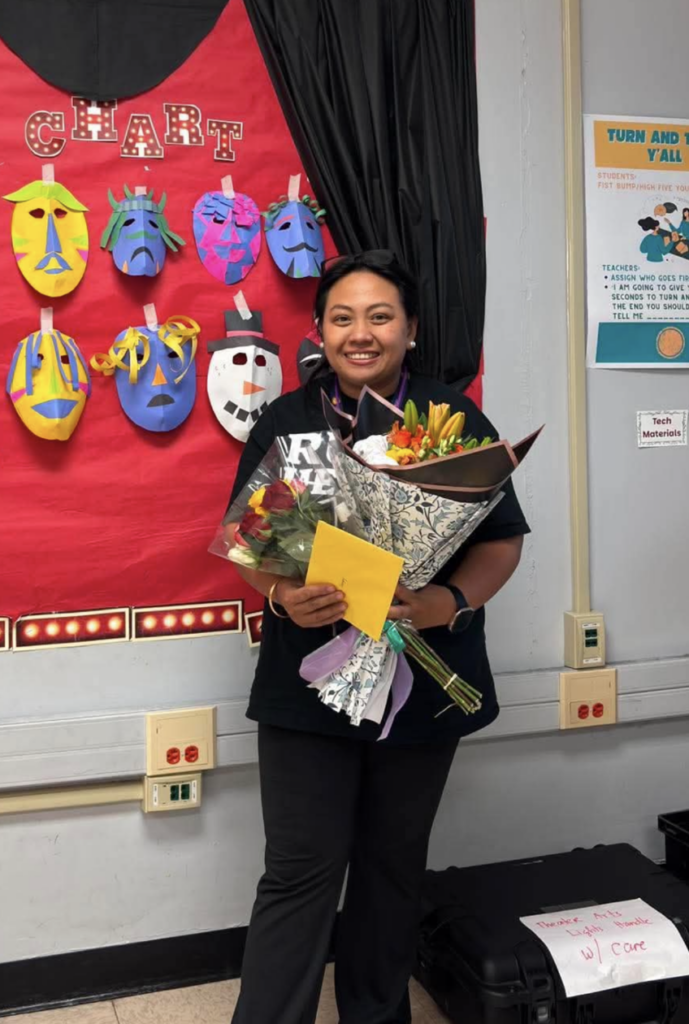
She is already practicing the homecoming version of that advice, welcoming and mentoring incoming teachers through their own difficult transitions, the way she once needed someone to do for her. When her time abroad ends, she wants to carry what she has learned back to the Philippines and pass it to the next generation of teachers chasing the same dream.
For now, the work continues in Houston, one nervous student at a time, in a classroom where a Filipina teacher keeps proving that learning to speak — clearly, bravely, with empathy — might be the most clinical skill of all.
