



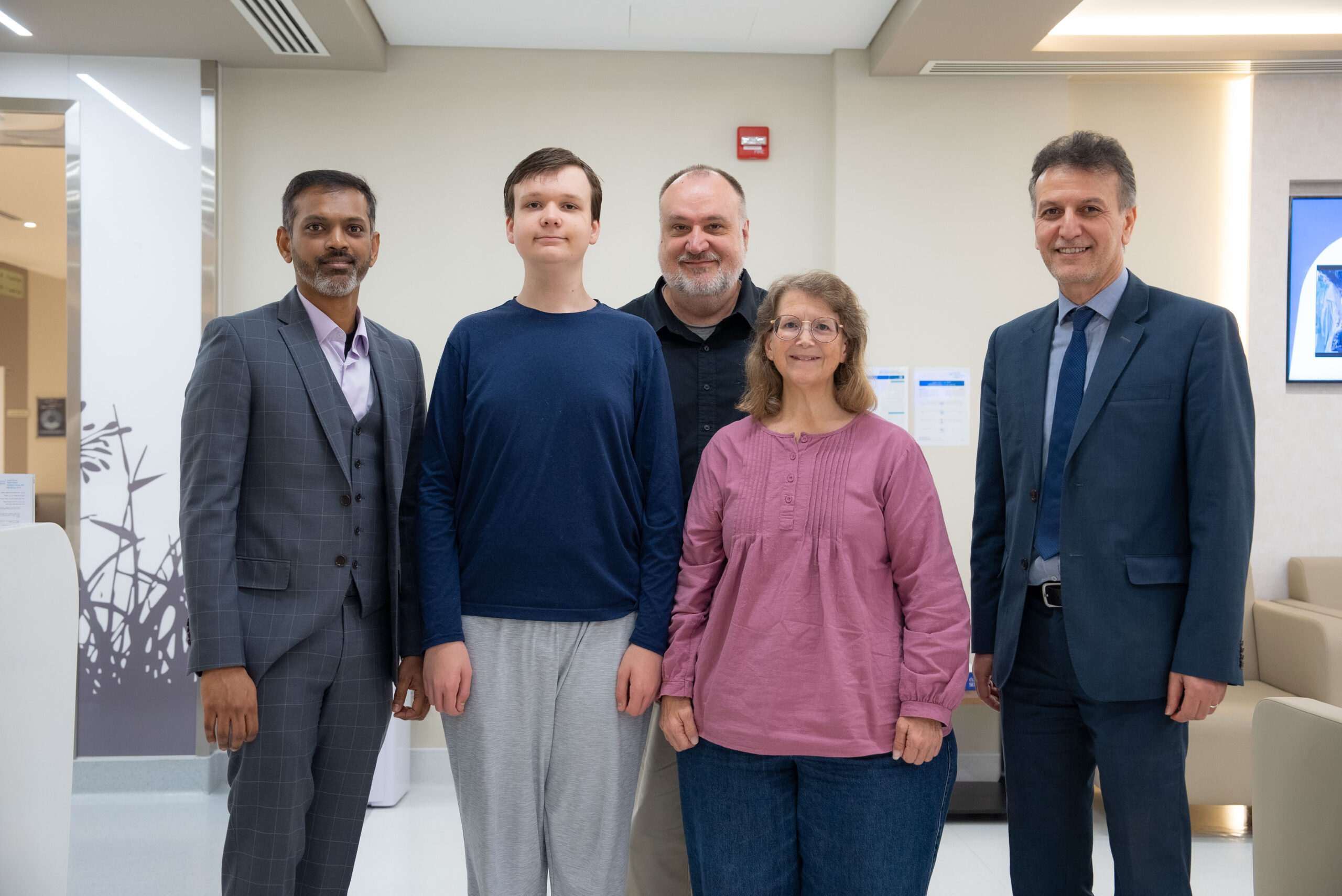

A 15-year-old boy is recovering well after surgeons at Sheikh Khalifa Medical City in Abu Dhabi corrected a spinal curvature that had reached 102 degrees — a deformity severe enough to compromise his movement, posture, and overall physical function.

The case was complicated by a concurrent diagnosis of MOG antibody-associated demyelination, a rare autoimmune neurological disorder affecting the nervous system, which added layers of clinical risk to an already demanding procedure.
Consultant Neurosurgeon Dr. Mahmoud Benour said the outcome demonstrated what coordinated expertise across disciplines could achieve. “This success reflects the strength of SKMC’s multidisciplinary collaboration. Complex spine surgery requires not only technical surgical expertise but also advanced perioperative care, critical care support, and coordinated rehabilitation. When expertise, technology, and teamwork align, even the most challenging cases can achieve exceptional outcomes.”
The operation brought the patient’s spinal curvature down to 28 degrees. He is now pain-free, physically active, and showing measurable gains in balance and posture, according to SKMC, which is part of SEHA, a subsidiary of PureHealth.

Spine surgeons worked alongside pulmonologists, anaesthesiologists, paediatric intensive care specialists, and rehabilitation experts in planning and executing the procedure — a structure that Dr. Arun Babu Rajeswaran, Division Chief of Neurosurgery at SKMC, said was essential given the case’s complexity.
“This case highlights the critical importance of early diagnosis and timely intervention in managing scoliosis,” Dr. Rajeswaran said. “When left untreated, spinal curvature can progress rapidly, increasing surgical complexity and associated risks. Despite the severity of this case, a 102-degree curvature in a 15-year-old patient, we achieved an excellent outcome through meticulous preoperative planning and advanced surgical techniques. Our objective is always to restore function, enhance quality of life, and empower patients to live confidently and without limitations.”
Scoliosis affects an estimated two to three percent of the global population. Clinicians say detection during childhood and adolescence is key to preventing the kind of advanced deformity seen in this case, and the hospital noted that paediatric scoliosis rates in the UAE are rising — placing greater urgency on routine screening and early referral.
