



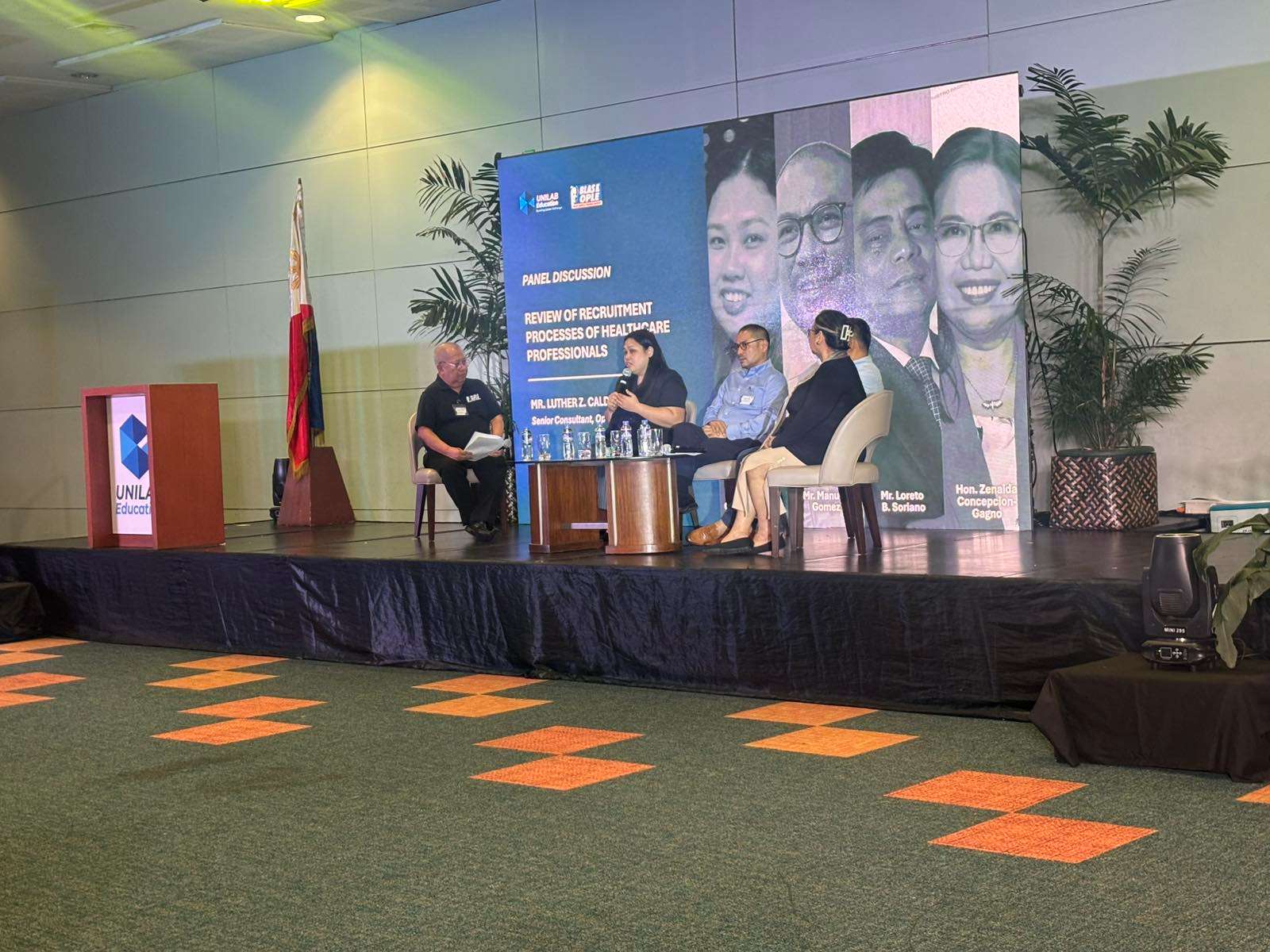

The head of the Commission on Filipinos Overseas warned Thursday that the country’s healthcare system faces mounting pressure from a steady outflow of medical professionals, and that the recruitment pipeline driving it must be held to higher ethical standards.

CFO Secretary Dante “Klink” Ang II delivered the remarks during the Healthcare Education and Migration Forum, an event jointly organized by Unilab Education, Inc. and the Blas F. Ople Policy Center. Panelists from the recruitment and nursing sectors joined him, including Health Carousel Philippines President Marianne Grace Nagera and Board of Nursing member Hon. Zenaida Concepcion-Gagno, who addressed efforts to digitalize government processes from deployment through repatriation.
Industry figures presented at the forum show the Philippines continues to rank as the top global source of nurses, with an estimated 15,000 to 20,000 healthcare workers leaving each year for positions in the Middle East, Europe, and North America. The volume has left domestic hospitals chronically short-staffed, forcing policymakers to weigh the constitutional right to work abroad against the strain on local health services.

Ang framed the CFO’s role not only as a diaspora services body — pointing to programs such as LINKAPIL and the BaLinkBayan portal — but as a frontline institution in the government’s anti-trafficking work. Its mandatory pre-departure orientation seminars and recruitment monitoring are designed to shield workers from deceptive or coercive placement schemes.
“We must align our education and training with global standards while safeguarding our own healthcare system,” he said, pushing for migration arrangements that keep Filipino professionals tied to the country’s long-term development goals.
Ang called on governments and recruitment bodies to pursue transparency and sustainability in how healthcare workers are sourced and deployed, arguing that unchecked migration patterns ultimately weaken the national system they are meant to serve.
