



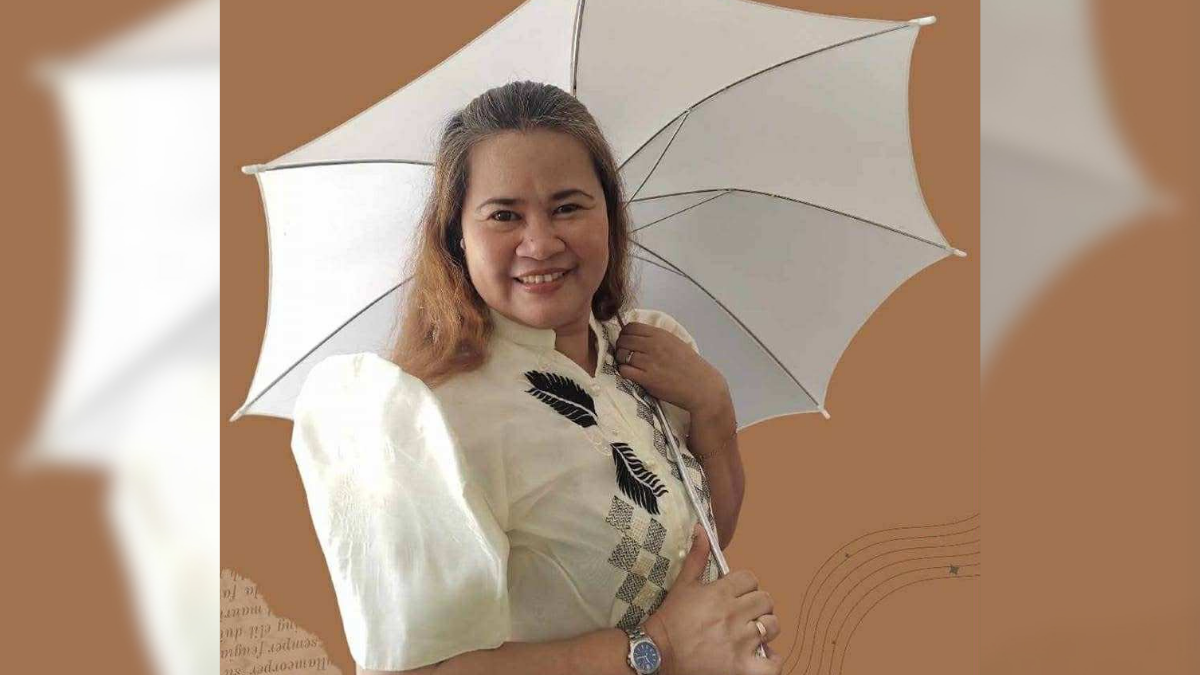

Her father knew he might not live to see it. Near the end of his life, he said it plainly: he might die without any of his five children ever reaching the United States, the country he’d always dreamed of. Heidy Yngreso Aranas didn’t answer him. Working abroad wasn’t her dream. She wasn’t confident in her English, was afraid of flying, and had built a comfortable life in the Philippines that she saw no reason to leave.

She was in her late forties when something shifted. The comfort that had once felt like enough started to feel like a question she hadn’t answered. So she applied—not because the fear had gone away, but because, at her age, she decided to leave her comfort zone anyway. What followed was almost two years of waiting, a stretch of rejection and silence long enough to make most people quit. On July 7, 2024, she landed in the United States as an international teacher. It was her first job overseas, and it fulfilled a wish her father had carried to the end of his life.
Twenty years before the leap
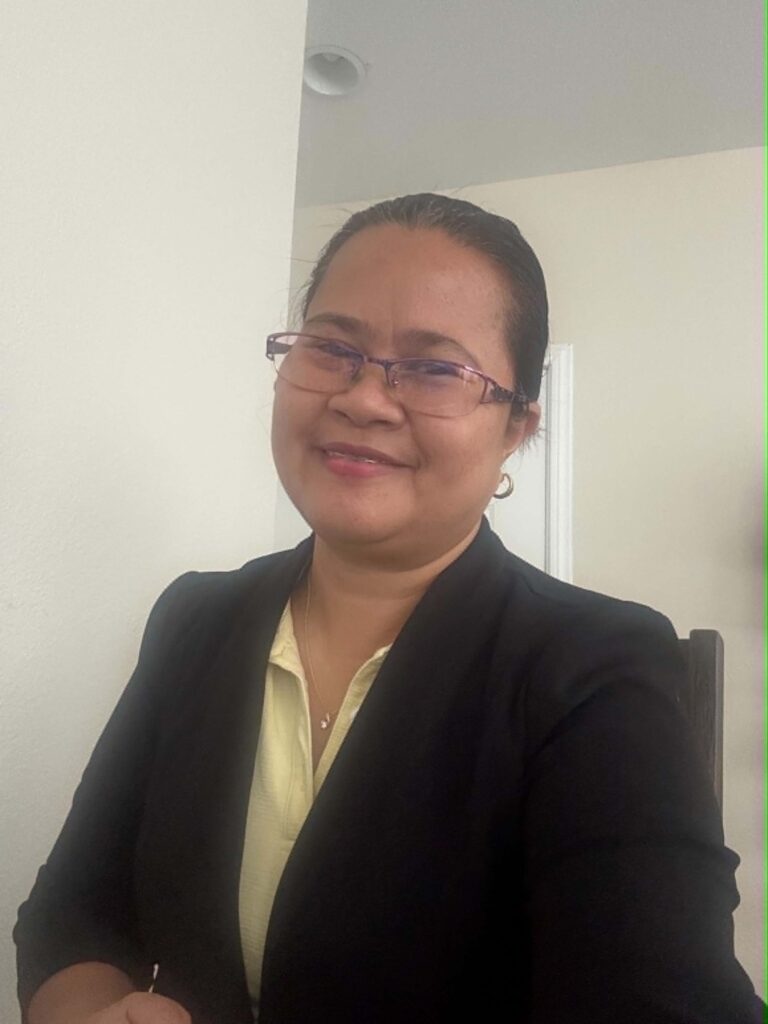
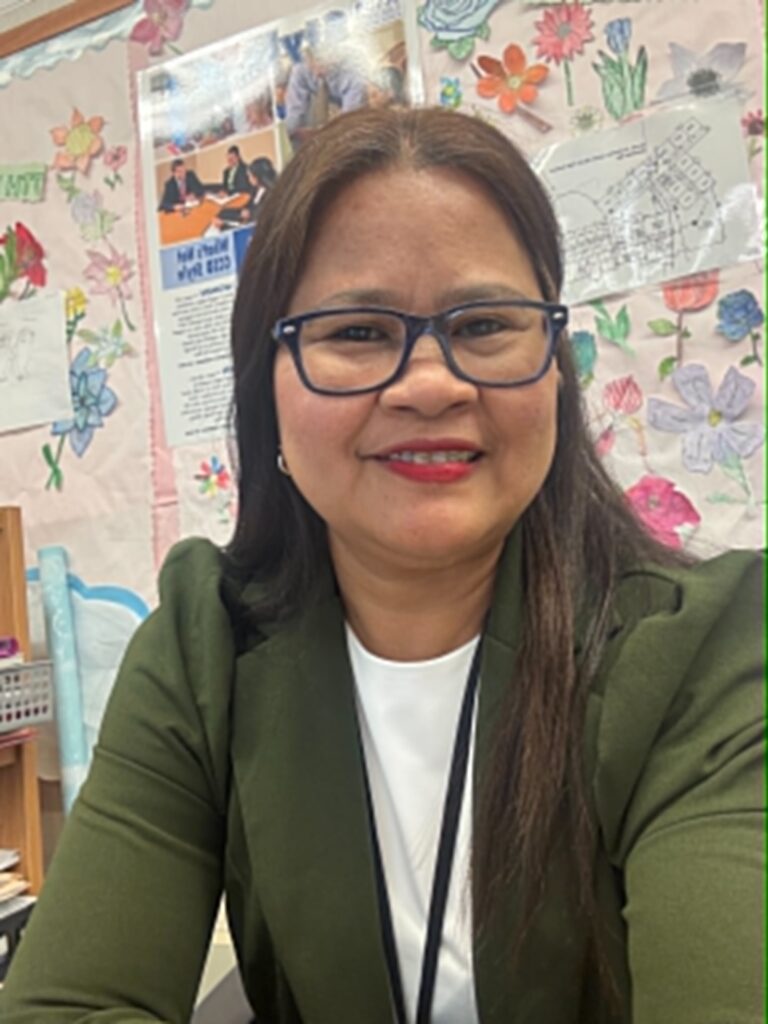
By the time she boarded that plane, Heidy had already spent more than twenty years in Philippine classrooms. Teaching, for her, was never just the delivery of lessons. “It is also about understanding students, adapting to their needs, and helping them believe they can still improve, no matter where they start,” she shares with TGFM. That belief shaped a career that reached well past the required curriculum.
The role closest to her heart wasn’t a teaching assignment at all. For two decades she served as a Supreme Student Government adviser, guiding student leaders through the unglamorous work of planning activities, making decisions, and taking responsibility for their peers. She watched teenagers grow into people who could lead. “Seeing young leaders grow in confidence and reach their potential has always been one of the most fulfilling parts of my career,” she recalls. It also taught her something she’d carry abroad: that a teacher’s greatest impact often happens outside the four walls of the classroom.
She took on the roles that tend to go unnoticed. As alumni teacher coordinator and Adopt-a-School coordinator, she connected her school to former students and outside partners who could support the community. She joined the first Continuous Improvement team at Calubcub 1 National High School and took part in research work. None of it made headlines. All of it, she says, taught her the value of teamwork and of always looking for ways to do better by her students.
The decision to uproot all of that came down to three people. Two of her daughters are now in college, and she wants to see them finish the courses they dream of taking. “As a mother, I want to give my children better opportunities and help them build a good future,” she says. She’s quick to note that her family made the move with her—a detail that clearly matters. “I am thankful that my family is here with me, because we are able to face this journey together.” The professional growth is real, but she doesn’t pretend it’s the reason she came. “At the end of the day, my family is my biggest reason for being here.”
A different kind of classroom
Today she teaches History and Geography 8 and Cultural Awareness at South Academic Center in Las Vegas, part of the Clark County School District. The job asked her to rebuild much of what she knew. A new school system, a different culture, unfamiliar expectations, and a student body more diverse than any she’d taught before—all of it had to be absorbed at once.
South Academic Center is not a conventional school, and the work reflects that. Her students are there to reset before returning to their home schools, which means her days rarely repeat. She prepares lessons and assessments, tracks progress, talks with families, and manages classroom behavior, but the real skill is reading the room. “Every day can be different, and sometimes I have to adjust my lesson or approach depending on what my students need that day,” she says. Flexibility, patience, and consistency stopped being ideals and became daily requirements.

What she appreciates most about the role is harder to put on a lesson plan. “Sometimes students need someone who will be patient with them, guide them, and give them another chance to do better,” she says. The satisfaction comes in increments—a shift in behavior, a new willingness to participate, a student finally ready to head back to their home school. “When a student begins to change their behavior, becomes more responsible, participates in class, or is ready to return to their home school, I feel that I have done something meaningful.” For her, the principle underneath it is simple: every student deserves a chance to reset, refocus, and move forward.
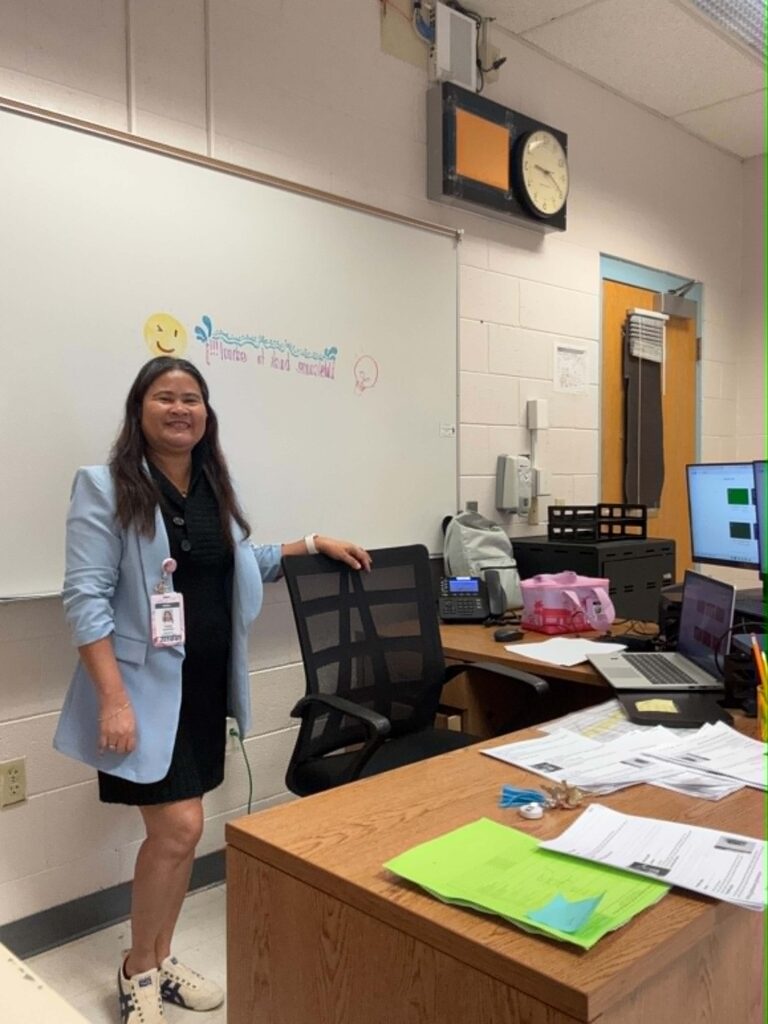
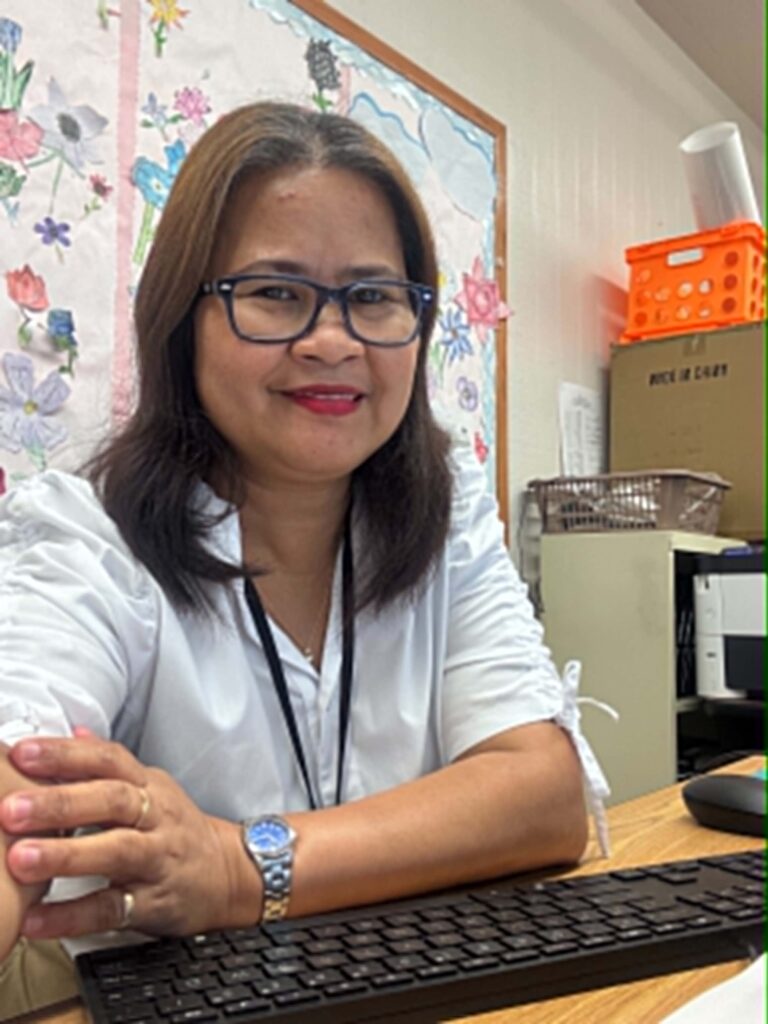
The American system surprised her in ways she welcomed. Teachers here, she found, are largely left to teach. Supportive principals, modern classroom technology, online resources, and a manageable grading system have made the work feel lighter than it did back home. “My main responsibility is to teach,” she says, and she doesn’t take that for granted. Most of it gets done during working hours, which means she isn’t hauling stacks of work home each night. The result is a balance she names outright as one of the biggest benefits of the move: she can give her students her best during the day and still have real time with her family after.
What the waiting taught her
The version of this story that skips the hard part isn’t the true one. Before any of the balance and satisfaction, there was nearly two years of applying with nothing to show for it. She admits there were moments she wanted to give up. What kept her going was the picture of a new life with her family on the other side of it—and a support system she can still list by name.
Her husband and three children anchored her. So did one trusted person at school, the colleague she could cry to and tell everything. Her batchmates, all chasing the same American dream, understood the specific ache of waiting in a way no one else could. And there were others—people she believes were sent her way—who helped her financially and made the move possible at all. “Through all of them, I learned to keep my faith, stay hopeful, and never give up on my dream,” she says.
Faith runs through how she talks about the whole ordeal, and it’s the core of what she’d tell any Filipino struggling abroad. “There will be challenges with family, finances, work, and relationships, but always keep your faith,” she says. “I always believe that when the time is right, He will make it right.” When the opportunity you prayed for finally arrives, she adds, hold on to Psalm 23: “The Lord is my shepherd.” The rest of her advice is plainer, the kind earned rather than borrowed: work hard, be wise with your decisions, choose people you can trust, stay humble, and never forget why you started.
Ask her to name the highlight of a career now spanning two countries and she won’t reach for an award. It’s the young people—the ones she mentored for twenty years in the Philippines and the ones she’s teaching now in Nevada. “The most rewarding part of being an educator is knowing that somehow, I became part of a student’s journey,” she says. There’s a second achievement she allows herself, quieter but no less hard-won: proof that after more than two decades in education, she was still brave enough to begin again in another country.
She isn’t planning to stay away forever. When her tenure abroad ends, she hopes to bring what she’s learned back home, to help students and teachers there grow the way she’s seen it happen here—though she’d gladly return to the U.S. if the chance came again.
Some part of her keeps circling back to her father. “I hope my dad is proud of me up there,” she says. “I know somehow I fulfilled one of his dreams by being here.” That she reached the country he dreamed of by taking a path she never planned to walk isn’t lost on her. It’s become, in fact, the closest thing she has to a philosophy. “Sometimes the path we never planned to take becomes part of our purpose.”
Nothing in life is permanent except change—and every change, she’s learned, carries an opportunity to grow.
