



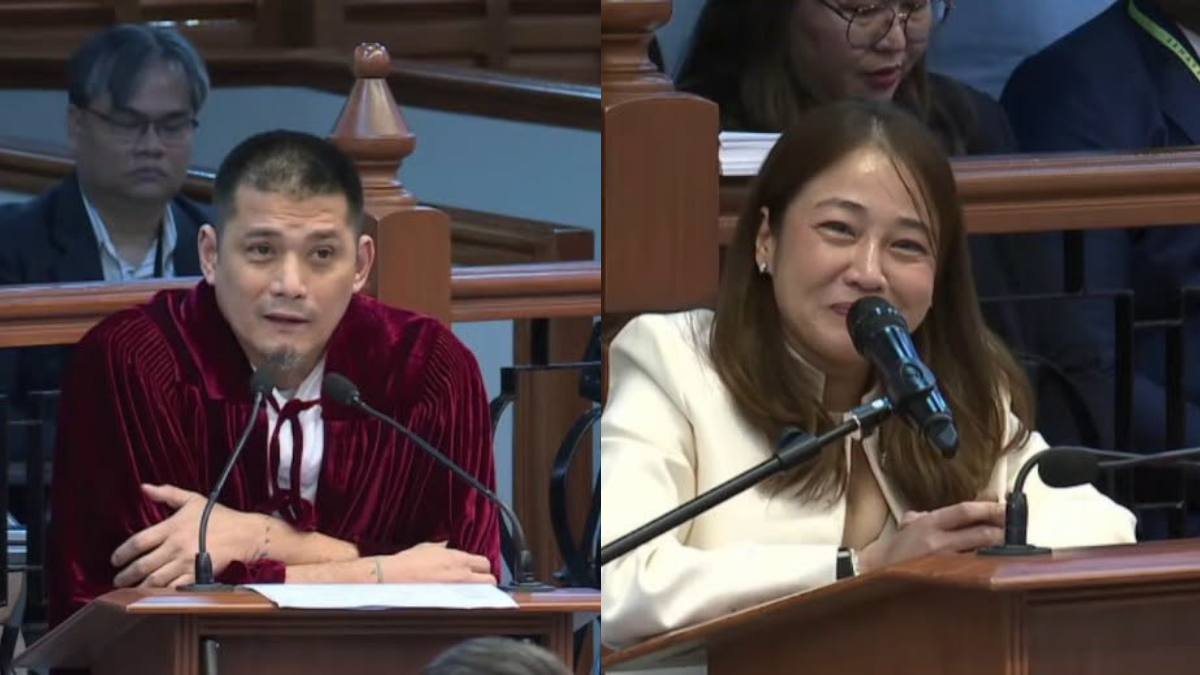

The Katipunan and the men who led it became an unlikely reference point at Vice President Sara Duterte’s impeachment trial, as Senator-judge Robin Padilla pressed the prosecution to weigh the historical value of concealed identities against its argument that aliases pointed to wrongdoing in the disbursement of confidential funds.

Padilla told private prosecution counsel Mae Divinagracia that the country’s revolutionaries operated under assumed names throughout their fight against Spanish rule, a practice he traced across the years from 1892 to 1896. That reliance on secrecy held, he said, until Teodoro Patiño disclosed the existence of the secret society to the authorities. Among the cover names Padilla cited were “Dimasalang,” “Siling Labuyo,” and “Tikbalang.”
“Ito po ang pinakamagandang panahon para maipaalala po sa inyo na ang ating mga bayani ay gumamit ng alias,” the senator said.
Divinagracia declined to weigh in on the motives of those historical figures, telling the court she was not familiar with the specific conditions under which they adopted the names. She turned instead to the statute at hand, noting that the Anti-Alias Law does not prohibit an assumed name outright so long as the person’s true identity is disclosed alongside it.

“First, Your Honor, I cannot comment. I’m not sure of the circumstances surrounding their use of aliases. Under the Anti-Alias Law, ina-allow naman po ang paggamit ng alias provided na naka-disclose rin ano ‘yung real name,” she said.
The prosecutor drew a line between the wartime setting of the revolution and the matter before the court, arguing that a nation at war presented an entirely different set of circumstances. Padilla did not accept the distinction, pointing to the continuing armed campaign against the New People’s Army as a present-day conflict in which combatants operate under aliases of their own.
“Ang gusto ko lang pong ipaalam sa ating prosecution, napakahalaga po ng alias sa panahon ng ating [giyera]. Hindi po ginagamit ang pangalan at hindi po pumipirma,” Padilla said.
The exchange fed directly into one of the central threads of the confidential funds article, where investigators have flagged assumed names appearing on acknowledgment receipts tied to the Office of the Vice President’s spending. Padilla, a member of the Senate minority, has emerged as one of the more vocal defenders of the Vice President among the senator-judges, having earlier contended that confidential allocations under Duterte helped blunt communist activity.
