



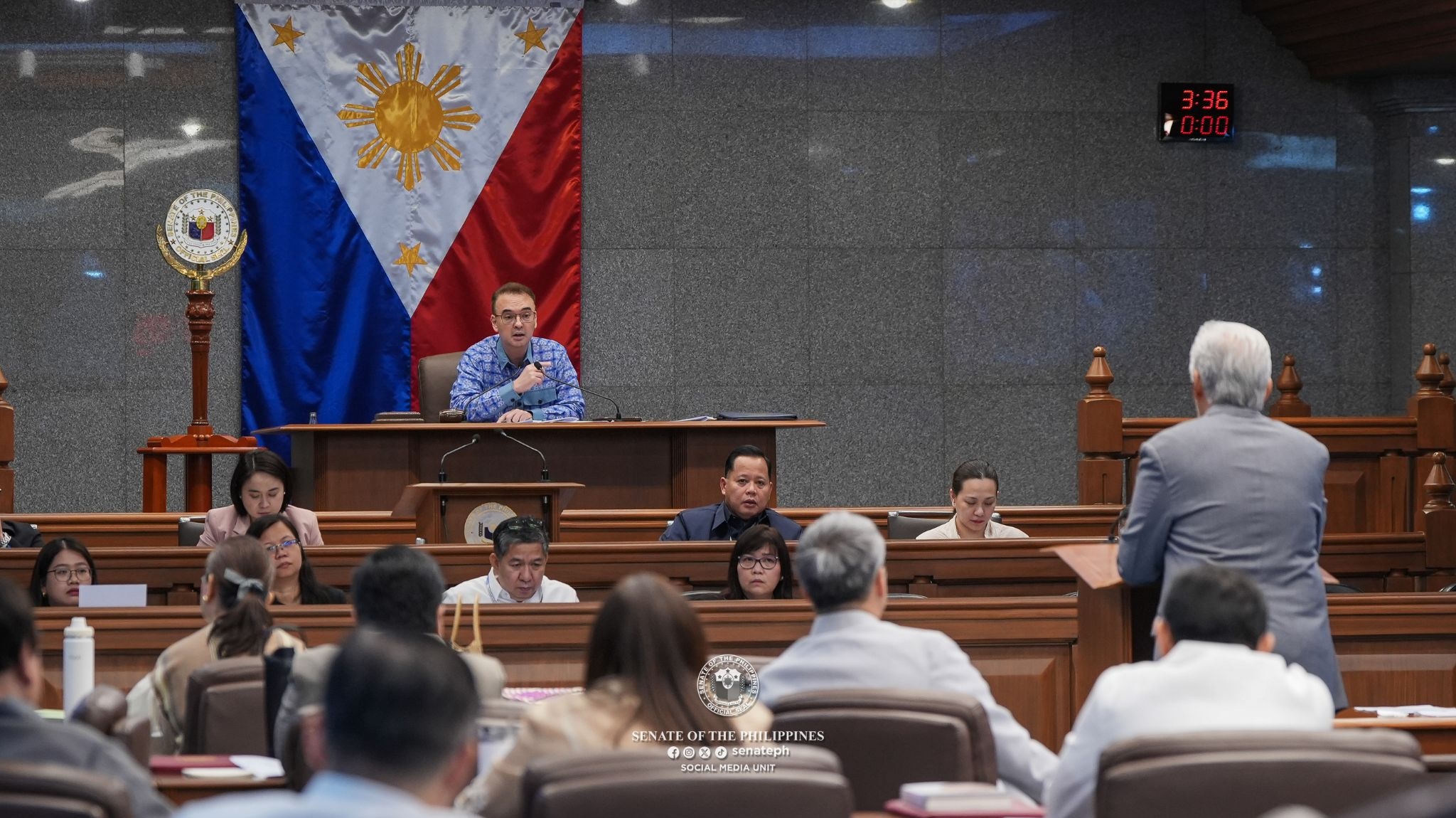

A new survey has found that public confidence in the Senate dropped significantly following its recent leadership transition, even as the House of Representatives held firm in public esteem despite voting to impeach Vice President Sara Duterte.

The poll, conducted by market research firm Tangere from May 12 to 13, recorded a Senate satisfaction rating of just 29 percent — down from 44 percent in the same period last year. Distrust in the chamber stood at 52 percent, with only 27 percent of respondents saying they trusted the institution.
The data suggests widespread skepticism about the motivations behind the Senate’s change in leadership. Eight out of ten respondents — 83 percent — said they believed the transition was driven by political interests rather than a genuine desire to serve the public. Only 37 percent said they supported the move.
“When people feel that changes in leadership are just about playing politics instead of actually serving the public, they lose faith in the Senate,” Tangere Chief Executive Officer Martin Peñaflor said. “This is reflected in the sharp contrast with the House of Representatives, where ratings remain steady despite making heavy decisions like the impeachment of the vice president.”
The House recorded a 51-percent satisfaction rating and a 52-percent trust rating over the same survey window — figures that held even as the lower chamber moved forward with a second impeachment complaint against the Vice President. Dissatisfaction and distrust in the House came in at 29 percent and 30 percent, respectively.

On the impeachment itself, a slim majority of respondents backed the move, with 52 percent in support and 37 percent opposed. Backing was concentrated among 25- to 50-year-olds in Luzon and Visayas, while opposition was driven largely by the same age cohort in Mindanao.
The survey also touched on the International Criminal Court arrest warrant issued against Sen. Ronald Dela Rosa. Fifty-two percent of respondents said Dela Rosa should surrender to the National Bureau of Investigation. That position drew the most support from Luzon and Visayas, while Mindanao showed the strongest resistance — 57 percent of respondents there said they disagreed.
Peñaflor said the numbers pointed to a clear public appetite for principled governance. “These results show that Filipinos care deeply about how our government is run,” he said.
The survey covered 1,200 respondents nationwide through stratified random sampling with quota-based selection, using a mobile-based application. It carried a margin of error of ±2.77 percent at a 95-percent confidence level. Respondents were drawn from the National Capital Region (12 percent), Northern Luzon (23 percent), Southern Luzon (22 percent), Visayas (20 percent), and Mindanao (23 percent).
Tangere is a member of the Marketing and Opinion Research Society of the Philippines, the European Society for Opinion and Market Research, and the Philippine Association of National Advertisers.
