



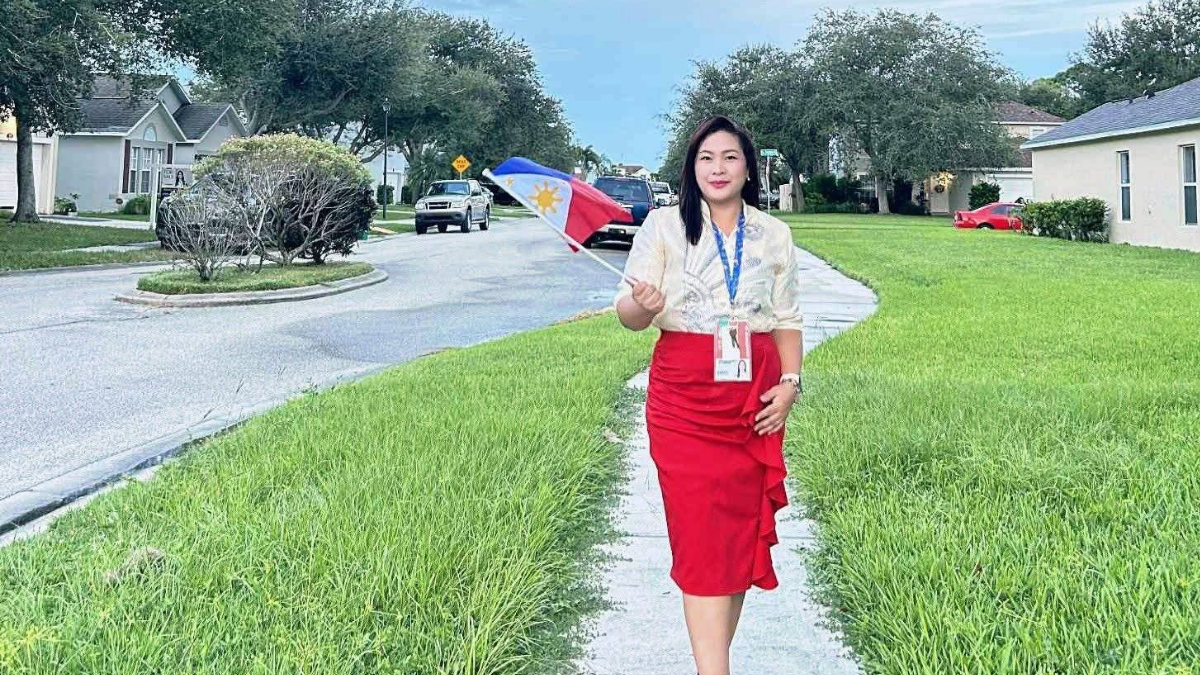

Some careers begin with a calling. Others begin with necessity — and somewhere along the way, the two become indistinguishable. For fifteen years, Rahnee de Leon-Candaza gave everything she had to public school classrooms in the Philippines: her time, her creativity, her legal studies, even her paintings. Then came the moment when giving everything was no longer enough.

Now based in the United States, the 38-year-old educator from the Philippines is teaching English Language Arts, Social Studies, and Art at Aero Stream Academy, where she also coaches a student team in Odyssey of the Mind — a program built on exactly the kind of creative resilience that has defined her own life. Nine months into her first posting abroad, she is already being groomed for a competitive scholarship that will take her to the Washington International School Institute for Teachers in Washington, D.C. this July. It is a trajectory that might look like a straight line from the outside. From the inside, it has been anything but.


Fifteen years and one hard decision
Rahnee’s career in the Department of Education reads like a case study in educational vocation. She served simultaneously as a Head Teacher, Child Protection Coordinator, and Guidance Counselor. She won a regional art competition. She was recognized as an Outstanding Child Protection Coordinator at the division level. She became a graphic illustrator for DepEd, creating visual materials and storybook graphics for learners who had little else. She was a finalist for the Fulbright Scholarship and received a Distinguished Award in Teaching for “Nourishing the Mind, Feeding the Future” — a project that partnered with local restaurants to provide food support to underserved students.
During the pandemic, when supply chains collapsed and families in her community were struggling to eat, Rahnee bartered her paintings for rice, canned goods, and basic necessities, which she then distributed to families and pedicab drivers. She did this while simultaneously pursuing law school, making it through her junior year before life demanded something else of her.
“Teaching goes beyond the classroom,” she says. “It is about transforming lives and uplifting communities.”
That belief has never wavered. What changed was the math.
The weight of being the eldest
In Filipino households, being the eldest child carries a particular kind of weight. Rahnee has carried it without complaint for most of her adult life, but there came a point when the debts, the caregiving responsibilities, and her mother’s worsening health converged into a crisis she could not manage on a teacher’s salary alone.
“There were times I was barely getting by,” she says, “managing overwhelming debts while also supporting my parents as the eldest child.”
When her mother required surgery, Rahnee scrambled for funds. In her desperation, she made financial decisions that later led to a civil case — one she faced head-on in court, explaining to the judge that everything she did was out of love for her mother. She did not minimize what had happened. She owned it, named it, and moved forward.
That moment of public accountability, humbling as it was, says something essential about who Rahnee is. She does not run from hard truths. She teaches with them.

It was her children, ultimately, who pulled her through. “My greatest motivation came from my children and my promise that they would not inherit my struggles,” she says. The decision to seek work abroad was not a retreat. It was, in her framing, a commitment — to her family, to her own growth, and to a version of herself she had not yet had the resources to fully become.
What a classroom in America taught her
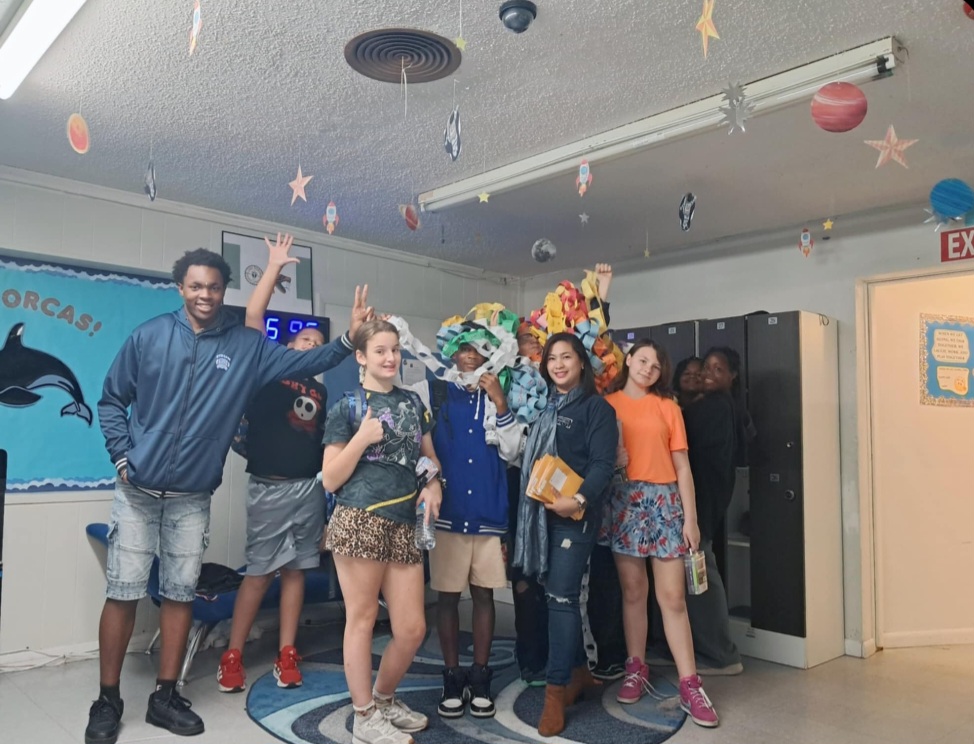
Teaching in the United States has asked Rahnee to do something she is very good at: adapt. Her students are learning English Language Arts and Social Studies — U.S. History, World History, Civics — and she is learning alongside them in her own way, absorbing a new educational system while bringing her own approach to it.
Her background in the arts has become one of her most valuable teaching tools. Visual thinking, she says, changes how students engage with difficult material. History stops being a list of dates when a teacher can help students see it, feel it, and respond to it creatively.


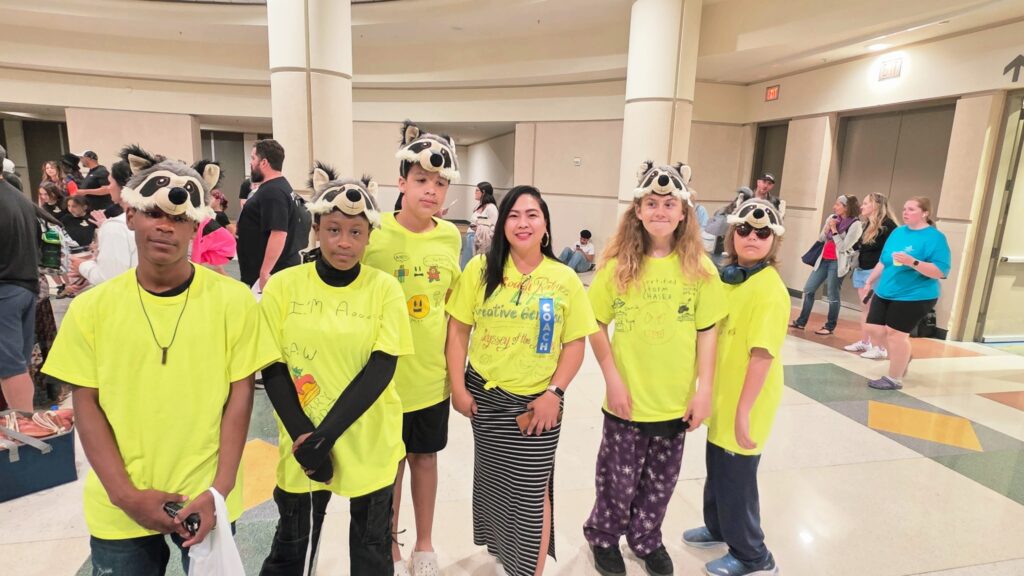
The Odyssey of the Mind experience crystallized this for her. The competition challenges students to solve open-ended problems through teamwork and imagination — and despite the learning curve of navigating a new system, Rahnee coached her team to a regional placement and a spot at the state level. “This experience affirmed my belief,” she says, “that education is not confined within four walls, but expands when teachers are willing to stretch beyond traditional limits.”
Her principal clearly agrees. The endorsement for the Washington, D.C. institute was not something Rahnee applied for independently — it came from her school’s leadership, an institutional vote of confidence that she is making an impression.
What comes after
Rahnee does not speak about her time abroad as an escape. She speaks about it as preparation.
Her school, which specializes in aerospace and STEAM education, is exploring expansion into the Philippines — a development she sees not as a coincidence but as a convergence. She wants to bring innovative, future-ready education models back home. She plans to finish her Guidance and Counseling studies, return eventually to her law degree, and establish programs that support disadvantaged learners in the areas of mental health, child protection, and access to quality education.
The art will stay. It always has.
“Every sacrifice carries a purpose,” she says, “even when it is not immediately clear.”
To her fellow Filipinos working overseas, her advice is grounded and practical: be wise with finances, choose trust carefully, and do not face struggles alone. “Asking for help is a strength, not a weakness,” she says — a line that sounds simple until you know the kind of courtrooms and hospital corridors she has walked through to earn it.
