



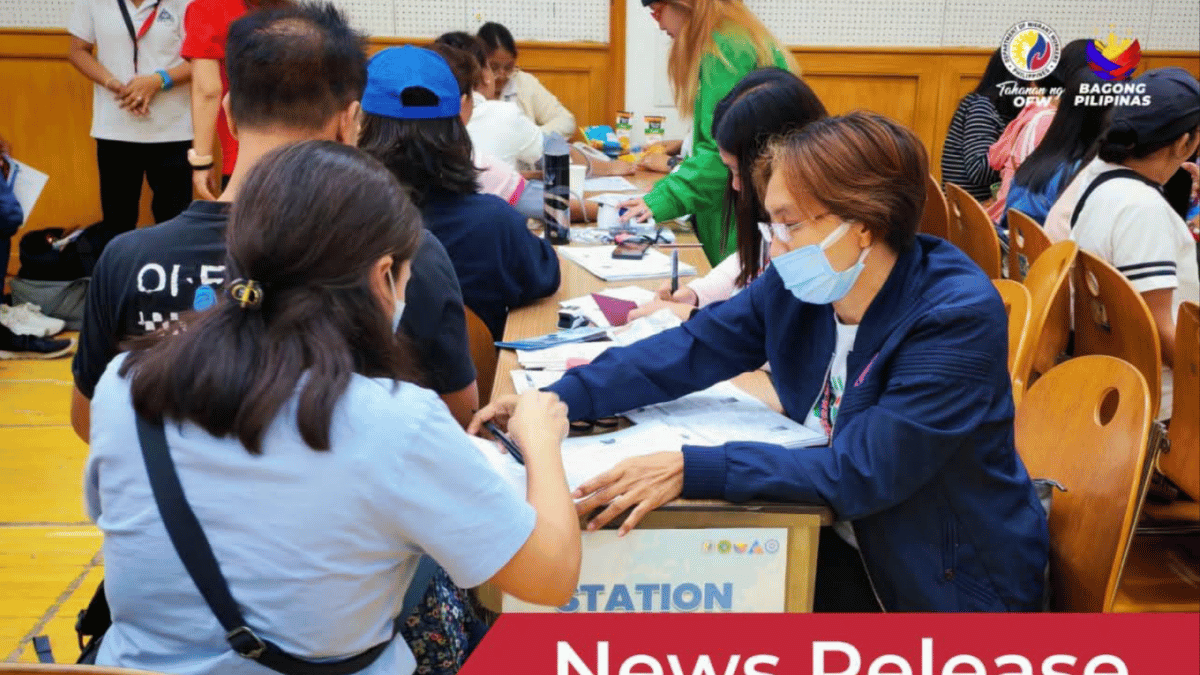

Filipino workers headed for Saudi Arabia are now being routed through an online medical screening system that assigns them a clinic automatically, a setup the Department of Migrant Workers (DMW) says runs against Philippine law.

The Gulf Health Council (GHC) began activating its WAFID portal for Saudi Arabia-bound workers on September 17, 2026. Instead of letting applicants pick where to undergo their medical examination, the platform uses an algorithm to pre-assign a facility.
Migrant Workers Secretary Hans Leo Cacdac said that arrangement amounts to “decking,” a practice banned under Section 16 of Republic Act No. 10022. The law gives overseas Filipino workers (OFWs) the right to choose any medical facility accredited by the Department of Health (DOH).
The legal question is only part of the concern. According to the DMW, workers could end up paying portal charges on top of their medical fees, pushing total costs past the limits set by the DOH. Those assigned to clinics far from home would also have to shoulder transportation and accommodation expenses, which the agency said is inconsistent with fair-recruitment standards.
Officials from the DMW and the DOH took up these issues on September 25, 2026. Their talks covered how WAFID assigns clinics, what medical tests and fees are required, how medical facilities are regulated, and the worker’s legal right to choose among accredited clinics.

Both agencies agreed that WAFID’s rollout should be handled under a proper Philippine regulatory and inter-agency framework, and that any part of it carried out in the country must follow local laws and regulations.
“The DMW remains committed to facilitating the orderly deployment of OFWs while ensuring that the implementation of foreign employment requirements within Philippine territory is undertaken consistently with Philippine law and the protection of the rights and welfare of Filipino migrant workers,” Cacdac said.
Talks with Gulf authorities and the GHC are ongoing, with the DMW seeking to align the region’s health requirements for incoming workers with protections under Philippine law.
On who should set the rules for local clinics, the DMW pointed to the Supreme Court’s 2016 decision in AMCOW v. GAMCA and deferred to the DOH, which holds primary authority to regulate health facilities in the country and the fees they charge.
