



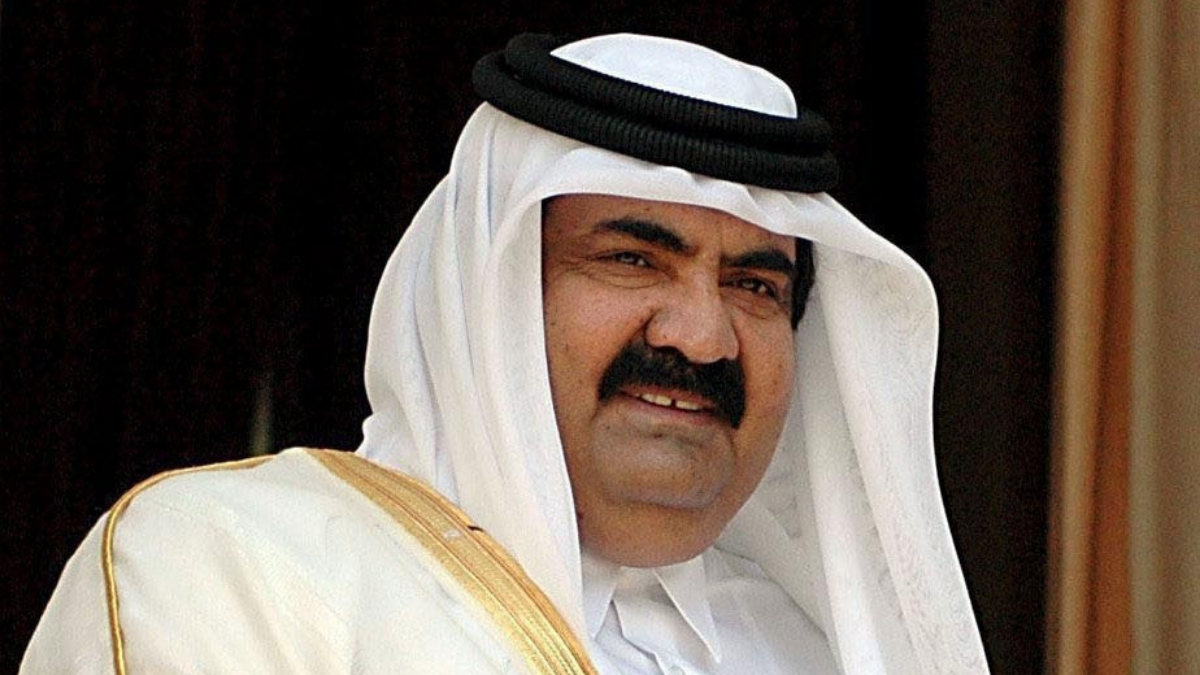

Sheikh Hamad bin Khalifa Al Thani, who steered Qatar through nearly two decades of transformation before handing power to his son, has died at 74, the country’s government confirmed on Sunday through an official website.

The announcement came from the emir’s office, which posted a tribute on social media. “With hearts steadfast in faith in God’s decree and destiny, the Bureau of the Emir mourns the great loss to the nation of the late — may God have mercy on him — His Highness the Father Amir Sheikh Hamad bin Khalifa Al Thani,” the statement said.
His years in office reshaped how the world saw Qatar. In 1996, a decree from the emir brought Al Jazeera into existence, and the broadcaster grew into one of the most powerful media voices across the Arab world. He also created the Qatar Investment Authority, a sovereign fund that poured billions into overseas assets ranging from Volkswagen to the London retailer Harrods to the Paris Saint-Germain football club.
Qatar’s geography belied its ambitions. Roughly a third the size of Belgium, the country sits atop one of the planet’s richest natural gas deposits. Foreign investment and partnerships turned it into a top exporter of liquefied natural gas, and its GDP per capita climbed to rank among the highest anywhere. During his rule the population barely reached two million, most of them foreign nationals.

The path to that prosperity began in June 1995, when Sheikh Hamad seized control from his father in a bloodless takeover carried out while the older ruler was outside the country. What he took over was a modest emirate with depleted finances; within a handful of years he had set it on a course toward rapid growth and a far larger regional and international role.
His tenure also drew scrutiny. Qatar secured hosting rights for the 2022 FIFA World Cup in 2010, a bid later shadowed by corruption claims and by criticism over how migrant laborers were treated. Beyond its borders, his government channeled hundreds of millions of dollars into Gaza, including funding for coastal roadwork, and a hospital in Gaza City still carries his name.
Observers came to regard him as a principal architect of the modern Qatari state, a leader whose time in power coincided with an era of swift economic expansion. In a move with few precedents in recent Arab history, he chose in June 2013 to step aside voluntarily, passing the throne to his son, Sheikh Tamim bin Hamad Al Thani.
