



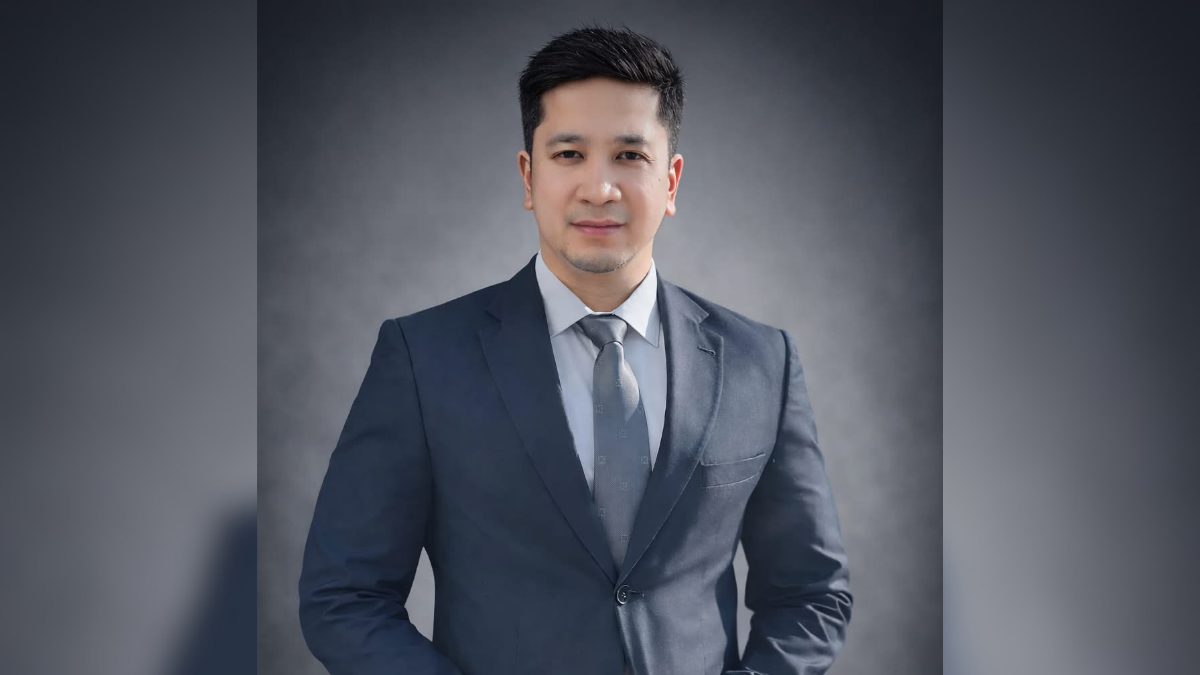

A hospital dialysis unit runs on a rhythm most people never see. Machines hum in three- and four-hour cycles, patients return week after week for years, and the nurses who care for them carry the quiet weight of chronic illness alongside the technical precision the work demands. It is a corner of healthcare where excellence is measured not in dramatic saves but in steady, repeated acts of attention. Abram Nikko Puno Gonzales built an entire career in that space, and then went one step further, deciding that the most lasting thing he could do was not treat patients himself but shape the people and systems that do.

Today, at 37, Abram serves as Unit Manager at SEHA Kidney Care in Abu Dhabi, one of the leading providers of renal care in the United Arab Emirates. The role puts him at the center of a high-performing dialysis unit, responsible for its clinical, operational, and strategic management all at once. On any given day that means leading multidisciplinary teams, holding the unit to Department of Health (DOH) and Joint Commission International (JCI) accreditation standards, pushing quality improvement initiatives, and developing the nurses who will one day run units of their own. But ask him to name the thread that ties it together and he reframes the whole enterprise.
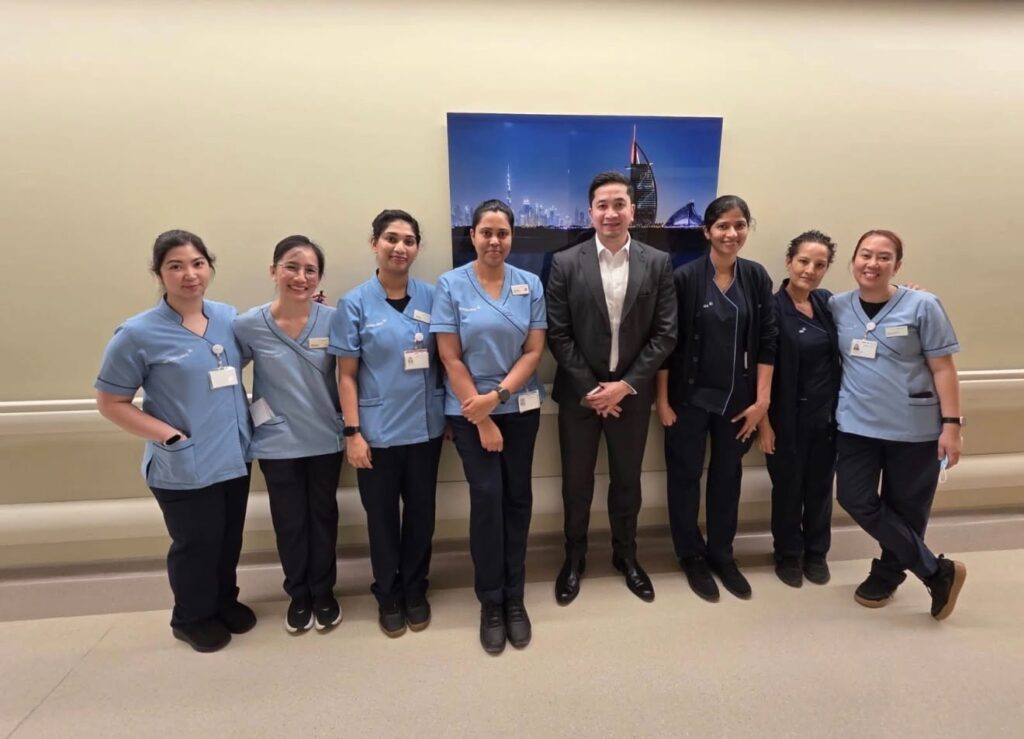
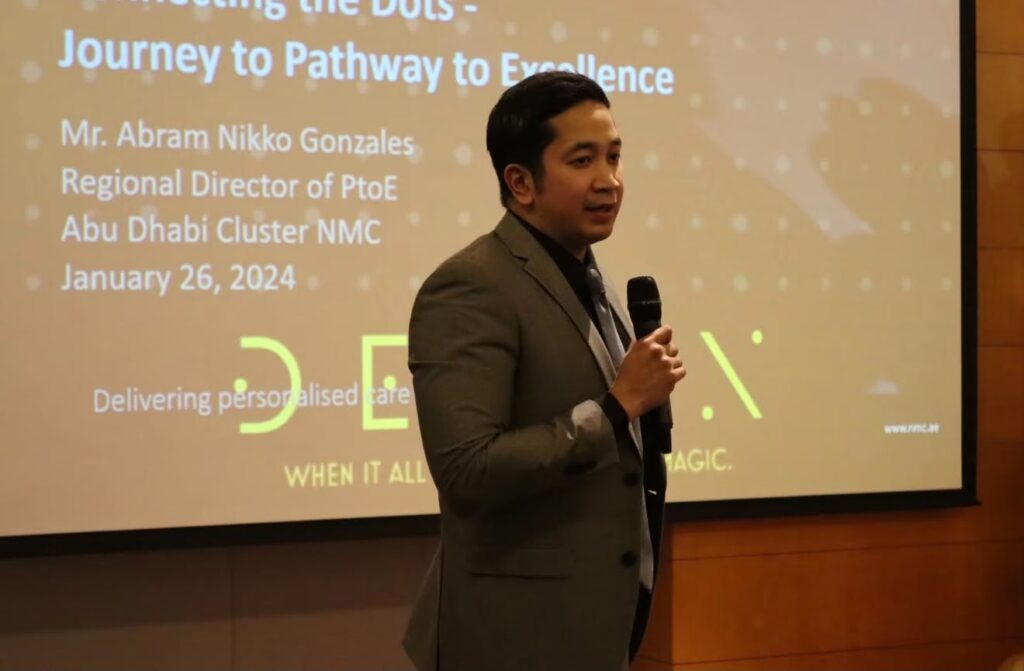
“Leadership is not simply about managing operations,” he shares with TGFM. “It is about inspiring people, building trust, and creating an environment where both patients and healthcare professionals can thrive.”
From a Bulacan ward to a certification record
Abram’s story starts far from Abu Dhabi, in a 300-bed tertiary government hospital in Bulacan. He began at Bulacan Medical Center as a Senior Registered Nurse in the Medical Ward before moving to the Hemodialysis Unit, and it was there that his interest in nephrology took root. The chronic nature of kidney disease, and the long arc of patient relationships it creates, drew him in a way acute care never quite did.
That early focus produced an early milestone. In 2012, he placed first in the Philippine Certified Renal Nurse (CRN) certification examination, a result that signaled both aptitude and a particular seriousness about the specialty. It was not the last time his name would sit at the top of a list.
Even then, teaching pulled at him as much as bedside work. Alongside his clinical duties he lectured at Pondang Reviewers Bulacan, coaching nurses preparing for the NCLEX and HAAD licensure examinations. The instinct to lift others up, to hand over knowledge rather than hoard it, showed up long before he held any title that formally required it. “Sharing knowledge and helping fellow nurses achieve their professional goals remains one of the most fulfilling aspects of my career,” he says.
The 2014 decision and the years that followed
In 2014 he made the move that reorganized his life. He accepted his first overseas position in the United Arab Emirates, joining NMC Specialty Hospital in Abu Dhabi, initially as a Registered Nurse in the Urology Department before advancing to Charge Nurse in the Dialysis Unit. The professional adjustment was real. He was suddenly practicing inside an internationally accredited system, working shoulder to shoulder with colleagues from a dozen different countries, held to standards that left little room for improvisation.
The personal adjustment was harder. Leaving family behind is the part of the overseas Filipino story that rarely makes it into the highlight reels, and he does not gloss over it. Holidays, celebrations, and milestones happened at a distance he could not close. “Homesickness was something I had to learn to manage while adapting to a completely new country and healthcare system,” the Filipino nurse recalls.
What followed was a steady climb rather than a single leap. In 2016 he joined NMC Royal Hospital in Khalifa City, Abu Dhabi, and over the next several years moved from Charge Nurse for Nephrology and Dialysis Services through a succession of increasingly senior posts, Nursing Supervisor, Nursing Manager for Outpatient and Dialysis Services, Deputy Nursing Director, and eventually Interim Nursing Director. He was trusted to provide executive leadership coverage when the Director of Nursing was away, a responsibility that says as much about institutional confidence as any award. Later postings as Unit Manager at Mediclinic Parkview Hospital in Dubai widened the aperture further before he arrived at SEHA Kidney Care.
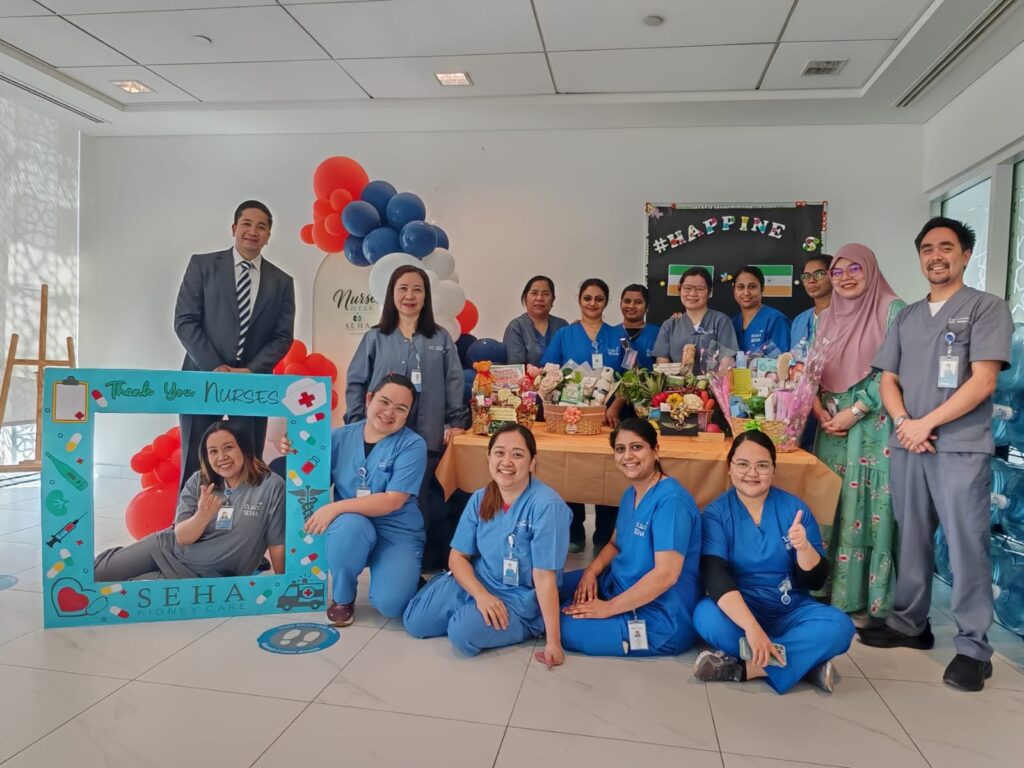
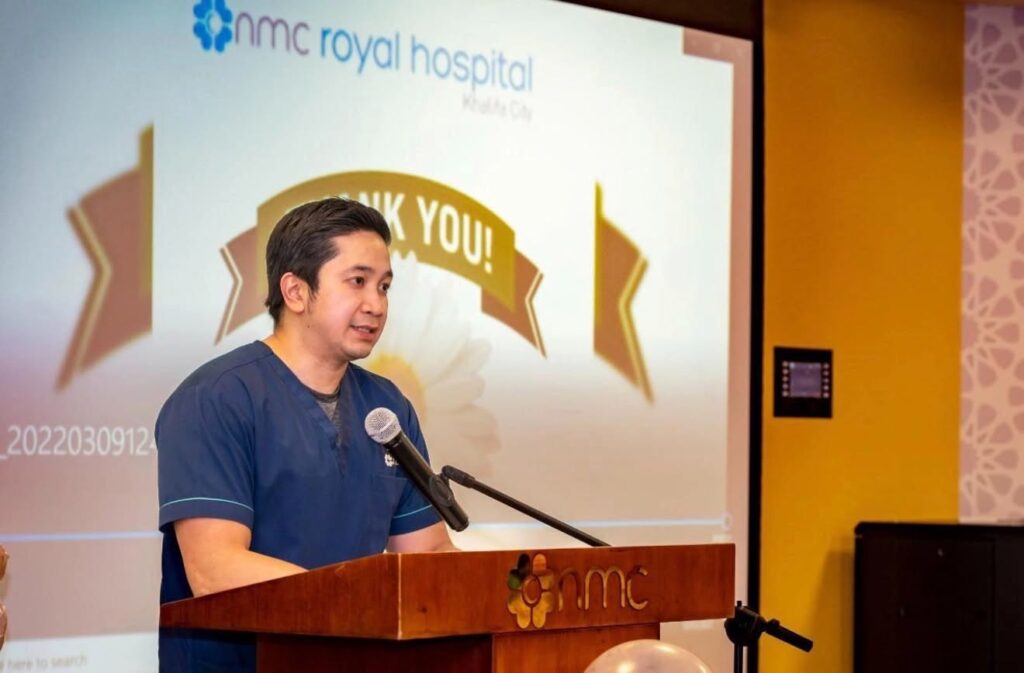
The recognitions accumulated along the way, and they are worth noting: Best in Nursing Management Award in 2018, Best Nurse Award in 2019, Quality Champion Awards in 2019 and 2023, Best Quality Improvement Project in 2023, and an Excellence Service Appreciation Award the same year. He lists them, then sets them aside. The awards matter less to him than what he considers the real work, “mentoring nurses, building resilient teams, and implementing sustainable improvements that continue to benefit patients and healthcare organizations.”
Caring for the people who care for people
Somewhere in that climb, his definition of the job changed. The satisfaction of treating a patient well never disappeared, but it was joined and eventually eclipsed by something broader. He found that his largest contribution was no longer at the bedside at all. It was in the systems that determined whether hundreds of bedsides functioned properly, and in the nurses who staffed them.
He has a phrase for the philosophy that emerged: “caring for the people who care for people.” It sounds simple, almost like a slogan, until you notice how consistently it organizes his decisions. He talks about building healthy work environments, about nurses feeling valued and empowered, about the direct line he sees between how an organization treats its caregivers and the quality of care its patients receive. “I firmly believe that when organizations invest in their caregivers, patients ultimately receive safer, higher-quality, and more compassionate care,” he says. “This philosophy has become the foundation of my leadership approach.”

His proudest moments reflect that shift in priorities. They are not, by his own account, the trophies. “Some of my proudest moments have not been receiving awards or recognition,” he says, “but witnessing my team achieve goals they once thought were beyond their reach and seeing patients benefit from the culture of excellence we have built together.”
That orientation toward people also carried him into roles beyond the org chart. He served as Regional Director for Pathway to Excellence in the Abu Dhabi Region, championing professional nursing practice across multiple facilities, and coordinated the DAISY Award Program, which recognizes extraordinary nurses. Both are, in a sense, the institutional expression of the same instinct that once had him lecturing exam-review classes in Bulacan.
A second home, and the turn that made it one
The loneliness of those first years abroad did not resolve on its own. It resolved, in large part, because his life abroad grew roots. He met his wife in the UAE, and building a family there changed the emotional arithmetic entirely. What had been a workplace became something closer to home.
“Having my wife and our family with me transformed the UAE from simply being my workplace into my second home,” he says. “Their presence has provided me with emotional stability, balance, and renewed motivation.” It is the kind of turning point that reframes everything that came before it, less a career decision than a human one, and he credits it plainly for allowing him to pour himself into his responsibilities without being hollowed out by distance.
His family in the Philippines remained the other anchor. Their encouragement, prayers, and belief in him, he says, gave him the strength to persevere through the difficult early stretch. And a series of mentors, leaders who modeled integrity, humility, and compassion, shaped the kind of leader he decided to become. He is emphatic that none of the climb was solitary.
The plan to go back
For all that the UAE has given him, Abram has never treated it as the final destination. He is unusually direct about this. Working abroad, in his framing, was always an investment rather than an endpoint, a way to gather knowledge he intends to carry home.
“I have never viewed working overseas as a permanent destination but rather as an investment in my professional growth,” he says. The vision for the return is specific. He wants to bring international experience in healthcare governance, quality management, patient safety, and nursing leadership to bear on Philippine hospitals, schools, and healthcare organizations, helping them reach world-class standards.
Two advocacies sit closest to that plan. One is leadership development in nursing, born of his conviction that competent, compassionate nurse leaders are what the future of healthcare actually depends on. The other is renal care itself. Having watched chronic kidney disease grow into a heavier and heavier burden on patients and families, he hopes to support early detection, patient education, and better access to quality renal services, particularly in communities that currently go without. “The Philippines has produced some of the world’s most compassionate and highly skilled nurses,” he says, “and I consider it both a privilege and a responsibility to give back.”
What he would tell the ones just starting out
Asked what he would say to fellow Filipinos struggling overseas, Abram returns to the reason people leave in the first place. Few do it because it is easy. They do it, he says, dreaming of a better future for the people they love, and that purpose is worth holding onto when the loneliness sets in.
His practical advice is unsentimental. Never isolate yourself; reach out to family and trusted friends, because “sometimes, a simple conversation with someone who genuinely cares can make all the difference.” Never stop learning, because attitude, integrity, and professionalism open more doors than raw talent. Live within your means and think long-term, since overseas work is not permanent and the discipline to save and plan is what turns a hard sacrifice into lasting stability. Choose the people around you carefully, and let trust be earned rather than given away.
And underneath the specifics, one constant. “Never lose your identity as a Filipino,” he says. “Stay humble regardless of your achievements, treat everyone with kindness and respect, and remain grateful for every opportunity that comes your way.”
It is a fitting close for someone who measures success the way he does, not by titles or promotions but, in his words, by “the person you become, the lives you positively influence, and the legacy you leave behind.” Twelve years into a career that has taken him from a government ward in Bulacan to the management of a specialized renal unit in Abu Dhabi, the nurse who chose to lead seems to have kept that measure firmly in view, and to already be planning the day he brings all of it back home.
