



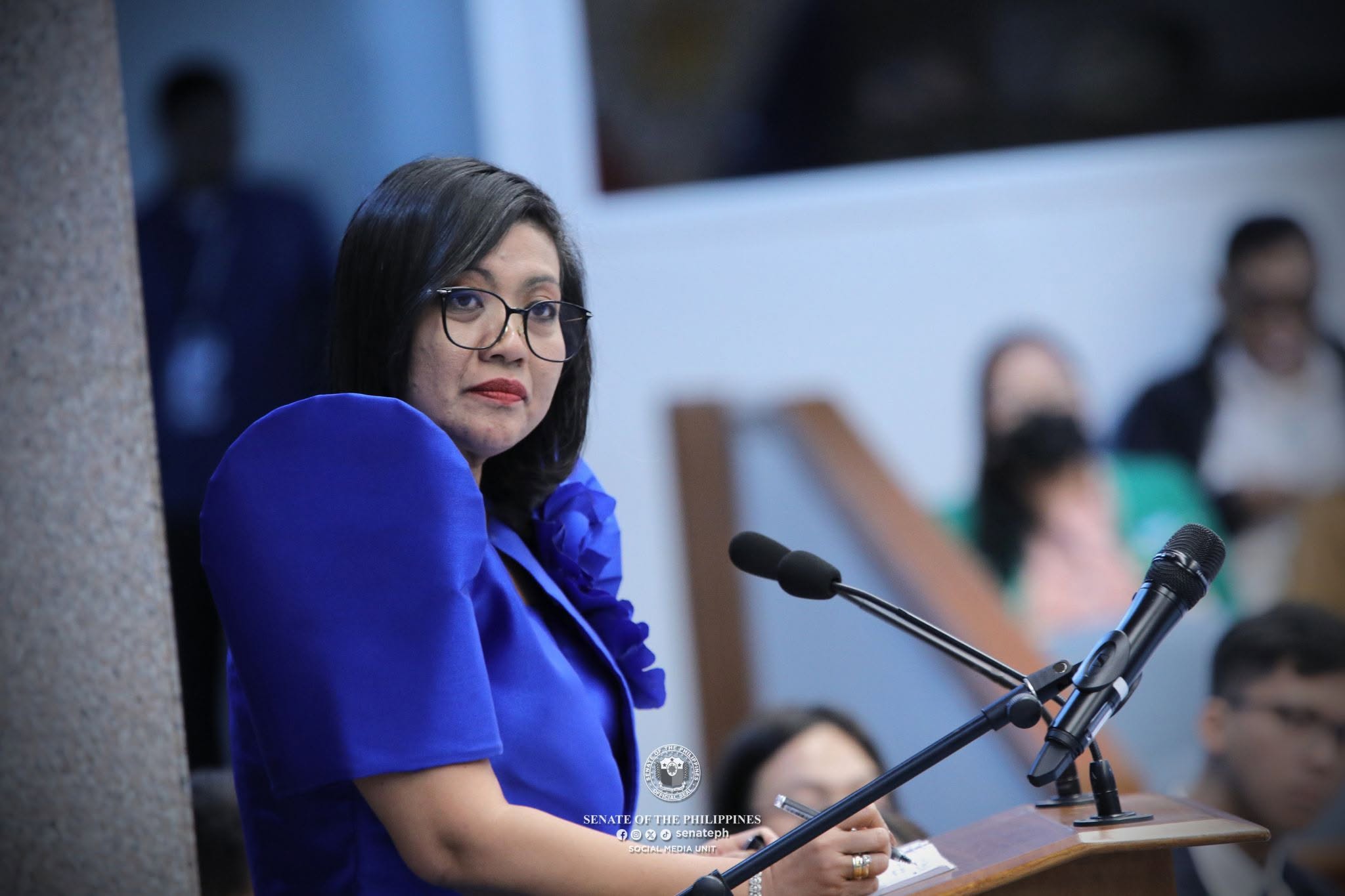

House prosecutors may skip the bribery allegations against Vice President Sara Duterte and pivot instead to a case built largely on financial paperwork, a move that could tighten the scope of her impeachment trial and hasten its conclusion.

Lead public prosecutor Gerville Luistro, a Batangas representative, said Thursday that the panel is debating whether to set aside Article 3—which claims Duterte bribed Department of Education (DepEd) procurement officials—and take up Article 2, covering alleged unexplained wealth tied to the Vice President and her husband, lawyer Manases Carpio. No final call has been reached, she cautioned.
Part of the reasoning, Luistro explained, is to ease the load on the Senate impeachment court and keep the trial from stretching indefinitely. “We do not want to drag this impeachment trial too much,” she told reporters after a House hearing, pointing to both the toll on the public and the senators’ other duties.
She resisted framing the bribery article as a soft spot. Prosecutors still stand behind those allegations, she said, though she acknowledged that Article 3 and Article 1 both revolve around DepEd. “I’m not saying that it is the weakest,” Luistro said. Because the misuse of confidential funds spanning the Office of the Vice President and DepEd has already been laid out, the panel is questioning whether a second DepEd-anchored track justifies the extra courtroom days. “All of them are strong,” she said of the articles. “But we have this confidential fund already pertaining to both the OVP and DepEd. Perhaps we focus on something else.”
The appeal of Article 2 lies in its evidence. Bicol Saro Rep. Terry Ridon, who heads that team, said his group is readying its presentation and could be summoned as early as mid-September. Prosecutors have secured subpoenaed bank data on Duterte, Carpio and 19 of their businesses, along with the couple’s tax records—material Ridon called the “last important pillar” of the case. That documentary foundation means the panel would not need to build another witness-driven narrative.

The financial figures are considerable. Ridon has flagged Duterte’s declared net worth climbing from P7.2 million in her 2007 SALN—her debut in politics as Davao City vice mayor—to P88.51 million by 2024, a 1,120-percent surge. Prosecutors have also traced P6.7 billion in total transactions through the couple’s accounts, split between P4.4 billion in inflows and P1.5 billion in outflows. Anti-Money Laundering Council Executive Director Ronel Buenaventura, testifying before a House justice committee last April, put flagged covered and suspicious transactions at P6.77 billion between 2006 and 2025, reflected in 630 covered transaction reports and 33 suspicious transaction reports.
Manila Rep. Joel Chua confirmed Wednesday that dropping Article 3 was under discussion, later stressing the bribery case itself remains sound and is only expendable because speed has become a priority. He likened the approach to the 2012 impeachment of former Chief Justice Renato Corona, when prosecutors jettisoned an article to zero in on the rest.
Timing is pressing. Presiding Officer Francis Escudero has floated a revised calendar with extended October sittings—Oct. 1-2, Oct. 5-9 and Oct. 12-15—followed by a break from Oct. 16 to Nov. 8 for budget work, with hearings resuming Nov. 9 and 16 before normal scheduling returns Nov. 23.
Meanwhile, the panel has wrapped its Article 4 presentation on the alleged grave threats against President Marcos, the first lady and former Speaker Martin Romualdez, and expects to close out Article 1 by Sept. 9 after ten witnesses. Whatever the panel decides, Article 3 stays part of the articles of impeachment as things stand.
