



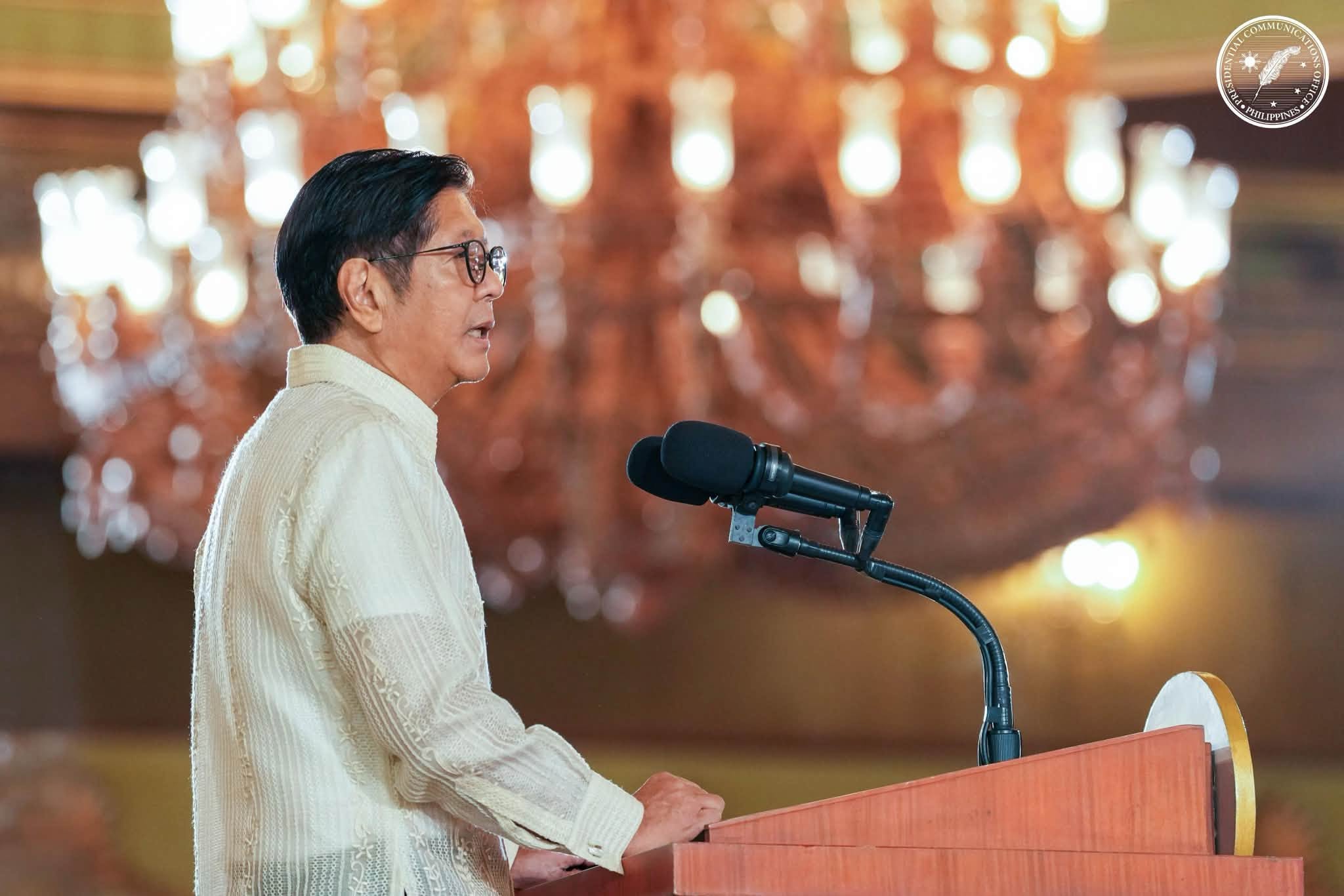

Filipino students from low-income households stand to gain wider financial support after President Ferdinand Marcos Jr. approved a new measure broadening the reach of government-funded higher education on Friday.

Now enacted as Republic Act No. 12325, the legislation amends the Universal Access to Quality Tertiary Education Act and builds on RA No. 10931, the earlier statute that eliminated tuition and assorted fees for enrollees at state universities and colleges, local universities and colleges, and government technical-vocational schools.
A central feature of the amended law is the wider scope of the Tertiary Education Subsidy, which now extends further help to learners from marginalized and neglected sectors. Among those covered are eligible members of the Pantawid Pamilyang Pilipino Program. The updated framework also folds in a broader set of schooling costs, an adjustment meant to open the door to tertiary studies for a larger number of Filipinos.
During his remarks, Marcos framed the law as an extension of a commitment his government had already made. “It is a measure that builds on the government’s promise and strengthens it for the years to come—bringing us closer to a future where every Filipino family has at least one child who completes a bachelor’s degree or a technical-vocational education and training (TVET) program,” he said.

The President pointed to gains in how Philippine institutions are viewed internationally. “In 2022, only 12 of our local colleges made it to the World University Rankings for Innovation. Today, 140 of our colleges have made it into the same rankings. This is a result of deliberate choices that have been made by government,” he said.
Support under the revised law may also reach students outside the public system. “Poor and deserving students taking priority programs who are not covered by existing grants may also receive government support to pursue their studies in qualified private higher education and technical-vocational institutions,” Marcos said.
He restated that schooling will stay a leading concern of his administration, arguing that each graduate of a degree or TVET track widens prospects for their household and contributes to national strength.
Financing for the sector reflects that priority. The 2027 National Expenditure Program, pegged at P7.2 trillion overall, allots between P1.314 trillion and P1.326 trillion to education—the single largest share of the budget, a distribution the Constitution requires.
