



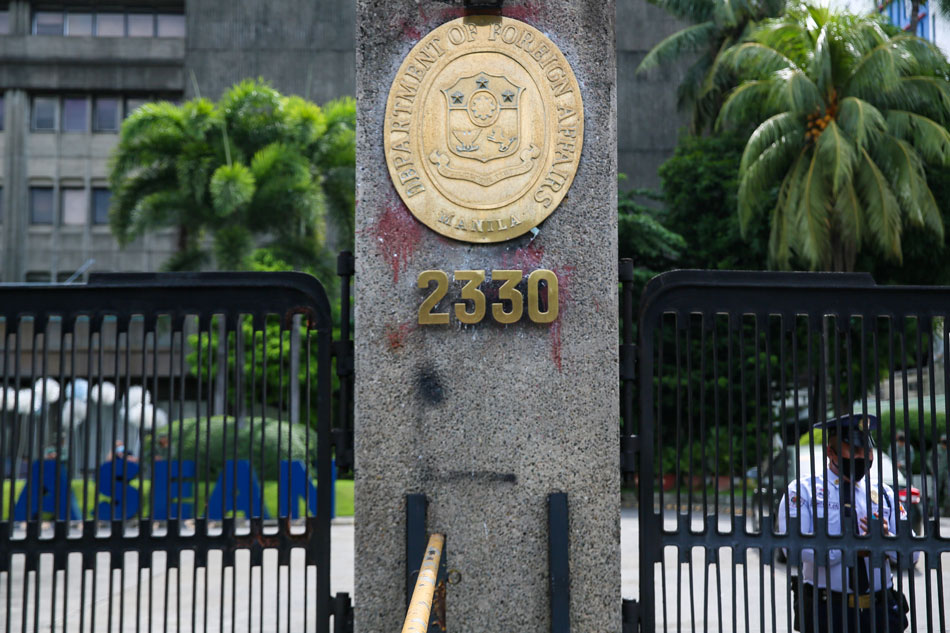

Manila called Monday for the United States and Iran to stay faithful to the framework deal they reached earlier this month, warning that fresh hostilities around the Strait of Hormuz risk derailing months of fragile diplomacy.

The appeal came in a statement from the Department of Foreign Affairs (DFA), which described the government as “gravely concerned” over the latest flare-up in the strategic waterway and the reported strikes across the region. The agency pressed all sides to keep faith with the initial agreement struck between Washington and Tehran.
“We continue to urge all involved parties pursue constructive dialogue in finding a negotiated diplomatic solution to the conflict, as well as refrain from actions that could undermine the progress of the peace talks,” the DFA said.
The Philippine plea lands at a delicate moment. President Donald Trump and Iranian President Masoud Pezeshkian signed a memorandum of understanding on June 17 meant to wind down the war and lift the blockades choking the strait. That arrangement frayed within days: Iran declared the passage closed again on June 20, pointing to continued Israeli strikes in southern Lebanon as a breach of the ceasefire terms, an accusation the US military has rejected.

The renewed friction carries direct weight for the Philippines, which draws the overwhelming share of its crude oil from Middle Eastern suppliers and relies on the same sea lane for fertilizer imports critical to its farms. The strait, roughly 21 miles across at its tightest point between Iran and Oman, normally carries around a fifth of the world’s seaborne oil.
Manila spent the spring negotiating its own arrangement with Tehran. Foreign Affairs Secretary Ma. Theresa Lazaro secured an assurance from Iranian Foreign Minister Seyed Abbas Araghchi that Philippine-flagged vessels, energy cargoes and Filipino seafarers would be granted safe transit, a commitment the DFA later said held even after Trump threatened a naval blockade.
Commercial shipping through the chokepoint remains far below pre-war levels. CNN, citing MarineTraffic data, reported that just over two dozen vessels crossed in the 24 hours before Monday, against a daily average of roughly 110 ships before the conflict began in February.
A point of contention has also opened over how the waterway will be made navigable again. French President Emmanuel Macron said this week that France and Oman intended to work with partners to clear mines from the strait, but Iran’s deputy foreign minister, Kazem Gharibabadi, countered that the demining falls to Tehran alone under the terms of its accord with Washington, according to Reuters.
