



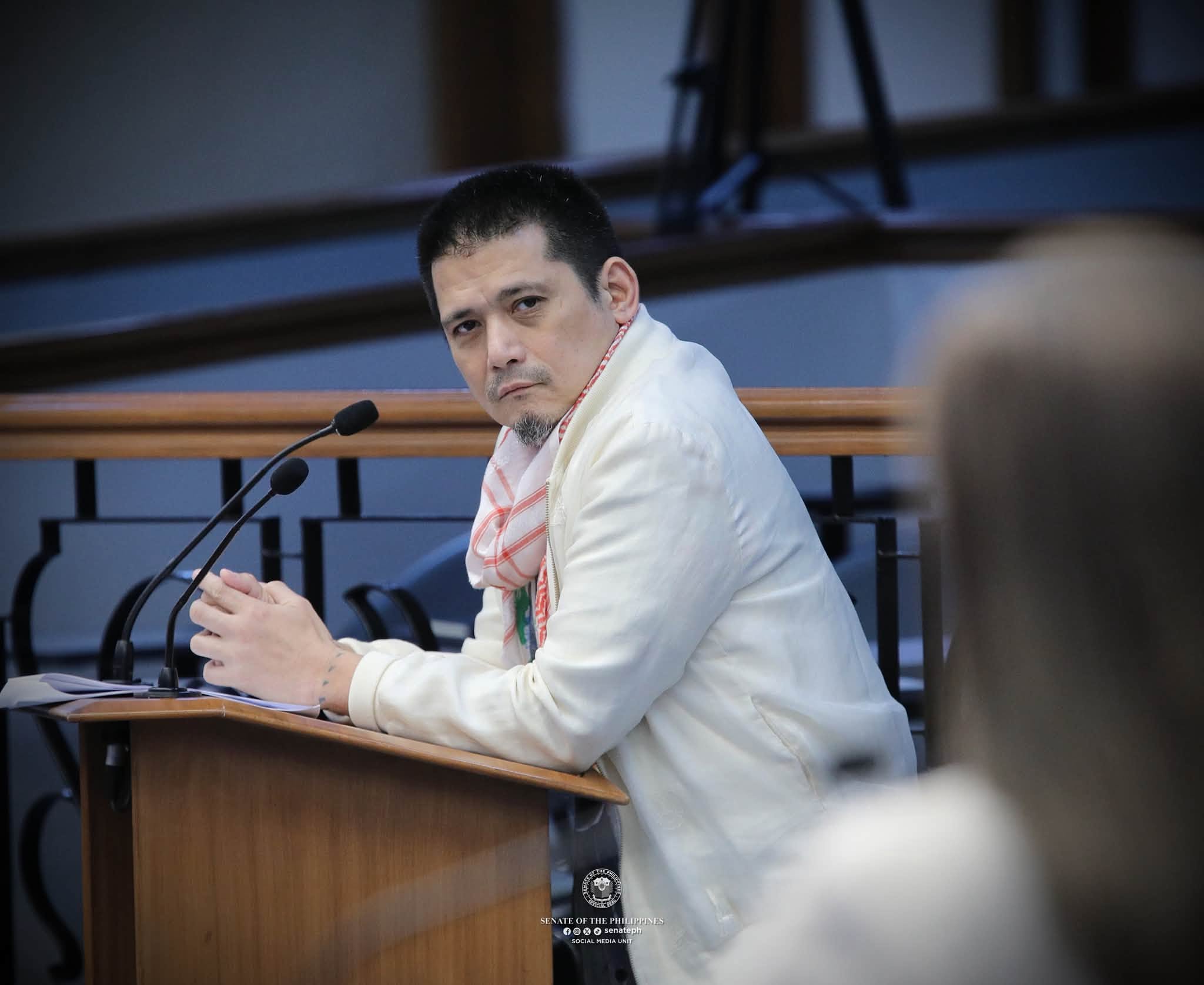

A one-line social media post from Senator Robin Padilla — “A subpoena has arrived” — served as the first public signal that prosecutors had formally reached him over the disappearance of a colleague wanted by an international tribunal.

The Department of Justice validated the development on Tuesday, September 15, confirming that a subpoena had been issued to the actor-turned-lawmaker. The order stems from a Philippine National Police complaint alleging a violation of Section 1, paragraph (c) of Presidential Decree No. 1829, the statute covering obstruction of apprehension and prosecution of criminal offenders, according to the Abante report that carried the DOJ’s confirmation.
Under the terms of the subpoena, Padilla has been directed to appear at the DOJ on two dates — September 25 and October 9, both at 2 p.m. He was also instructed to turn in a counter-affidavit along with any supporting documents and sworn statements from witnesses he intends to present.
The matter traces back to the predawn hours of May 14, when Senator Ronald “Bato” dela Rosa was seen leaving the Senate building in Padilla’s company. That departure came only hours after gunfire rang out at the chamber’s compound. Dela Rosa, a former national police chief, is the subject of an International Criminal Court warrant tied to crimes against humanity — an offshoot of the deadly anti-narcotics campaign waged during the Duterte administration.

Padilla has never disputed giving his colleague a lift. His account, laid out in earlier interviews, framed the episode as an ordinary favor: Dela Rosa asked to ride with him out of the premises and was let off in Makati, where a separate vehicle collected him. The senator has argued there was nothing improper in the arrangement, reasoning that Dela Rosa could not be treated as a fugitive absent a locally issued arrest warrant.
Investigators saw it differently. The PNP’s Criminal Investigation and Detection Group concluded after its inquiry that the movement of Dela Rosa amounted to more than a spur-of-the-moment ride, describing it instead as a “highly coordinated, pre-planned logistical maneuver specifically executed to avoid detection.” On that basis the unit endorsed the obstruction complaint to the DOJ, naming Padilla alongside others it said had a hand in the escape.
The road to the subpoena was not a straight one. Prosecutors initially bounced the complaint back to the police, citing gaps that required further investigation and more evidence, before the CIDG refiled it. As of last week, DOJ spokesperson Polo Martinez said the case remained in preliminary investigation with no resolution reached — a statement that pushed back against an NBI official’s suggestion that the probe had already wrapped up.
Padilla is also a respondent in a separate obstruction case lodged before the Office of the Ombudsman by the civic group Tindig Pilipinas, which named him together with former Senate President Alan Peter Cayetano and ex-Senate sergeant-at-arms Mao Aplasca. That parallel proceeding produced its own dispute over paperwork: the Ombudsman first announced in July that Padilla had ignored its summons, then reversed course weeks later, acknowledging that his counter-affidavit had in fact been filed on time but had been routed straight to the investigating panel and left out of the central records.
