



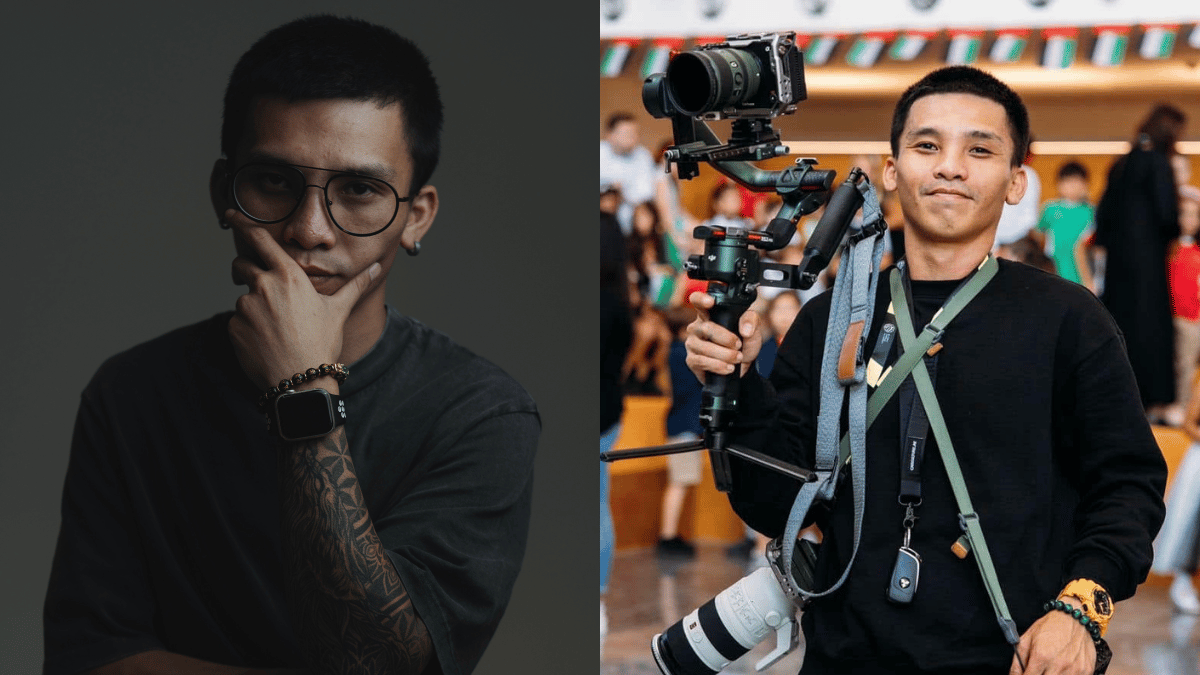

Every camera store in Dubai is full of people who own better gear than they know how to use. The equipment is easy to buy; the eye is the hard part, and no receipt can hand it to you. James Durias Arieta learned that the long way — not in a film school, not on a payroll, but on his own days off, wandering the city with a camera and no one to answer to but the pictures he brought home.

The 33-year-old cinematographer now runs MadCreators, a Dubai-based creative agency built around commercial campaigns and visual storytelling. He shapes concepts, shoots them, and lives with them through post-production, working with brands and agencies on everything from major events to national advertising work. But that résumé is the destination, not the map. To understand how he got here, you have to go back to a version of him who had not yet touched a professional set — a young man clocking out of an office job with an itch that a paycheck could not scratch.
The procurement officer with a camera
When he first landed in the Emirates, videography was a hobby he could not stop thinking about, not a career he was chasing. His first job overseas had nothing to do with images at all. “My first job overseas was as a Procurement Officer for a construction contracting company,” James shares with TGFM. The work paid the bills. The weekends belonged to something else.
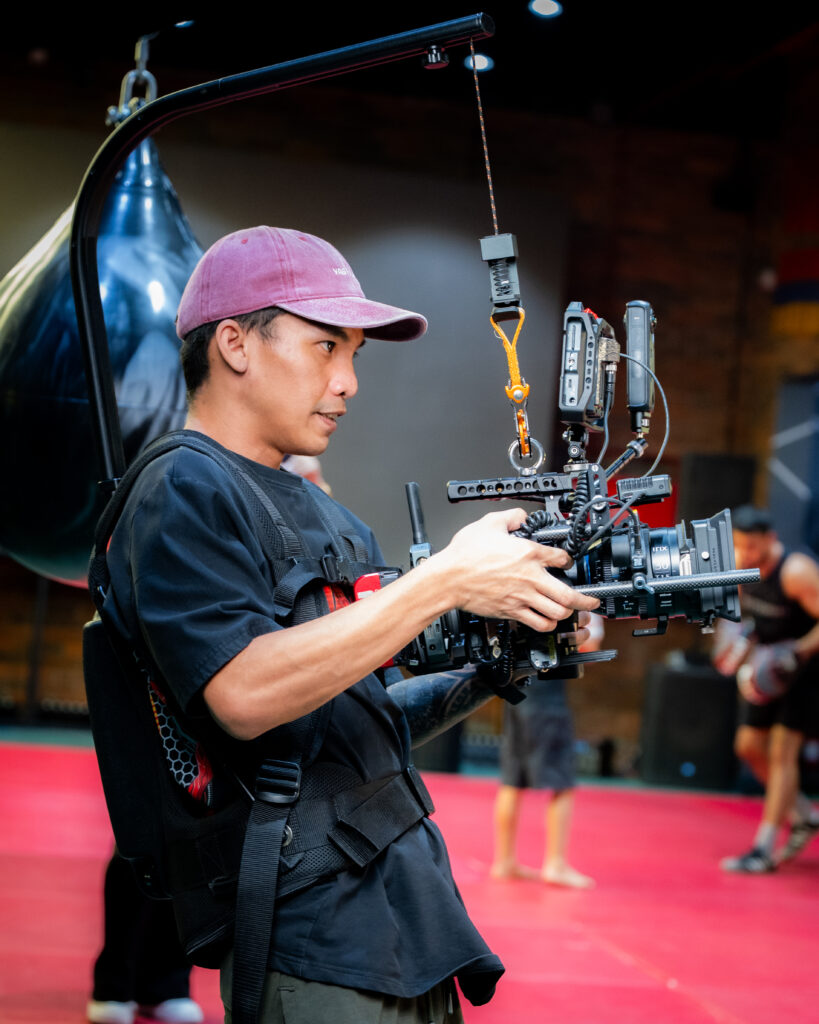
“After working throughout the week, I would dedicate my weekends to exploring Dubai with my camera, practicing, experimenting, and teaching myself how to tell stories through visuals,” the Filipino cinematographer says. There was no mentor waiting, no structured course, no guarantee that any of it would amount to a living. There was only a city full of light and a man determined to learn how to catch it.
What he was really doing on those weekends was building an argument — to himself, and eventually to the market — that he belonged behind a camera. The argument held. The hobby edged its way into his working hours, then took them over entirely. He moved from procurement into videography, from videography into cinematography, and finally into the founder’s chair at his own agency.
The origin of the whole adventure, though, had nothing to do with ambition. It was far simpler, and far more human.
A journey that began with his mother
He did not grow up planning to conquer Dubai. He grew up learning how to get by. Raised mostly by his father while his mother worked in the Emirates, he understood early that wanting something and earning it were the same sentence. As a student, he sold eggs and found other small ways to bring in money for his schooling. “Those experiences were difficult, but looking back, they taught me independence, resilience, and the value of hard work at a very young age,” James says.
So when Dubai finally called, it was not the skyline that pulled him. It was a face he had missed for years.
“One of my biggest reasons for coming was simply that I wanted to see my mother again after being apart from her for so long,” James says. He admits he was hesitant to make the move at all. The city was an abstraction; his mother was not. He came for her, and stayed for a reason he could not have predicted.
“I never imagine that Dubai would eventually become the place where I would build my career and discover what I was truly capable of,” the former procurement officer says. What started as a reunion turned into something larger. “Dubai taught me to dream beyond the circumstances I grew up with,” he explains. “What began as a journey to reunite with my mother eventually became a journey of discovering my purpose.”
That purpose did not announce itself all at once. It accumulated — one weekend shoot, one small job, one hard lesson at a time.
The nights that built a career
Before the agency, before the endorsements, there were stretches that tested how badly he wanted it. He is candid about the lean years. “There were periods when life was extremely difficult. I had very little, and sometimes having one proper meal in a day was already enough,” James recalls. He learned to survive on his own and stay focused when comfort was nowhere in sight.

What could have broken him became his engine instead. After a full day of work, he would still make time to shoot, edit, study, and place himself around people who could sharpen his skills. Crucially, he stopped punishing himself for getting things wrong. “I stopped seeing mistakes as failures and started seeing them as part of the process,” the Filipino filmmaker says.
He talks about mindset the way other people talk about tools — as something practical, something you use. “I believe in visualizing the life you want, working consistently toward it, and maintaining faith even when you cannot yet see the result,” James says. The discipline was not glamorous. It was showing up to the work after the work, on days when no one was watching and nothing was guaranteed.
His parents anchored him through it. His children, who came later, redefined what the effort was for. “Today, my greatest motivation is my children,” James says. “Watching them grow gives every sacrifice a deeper purpose.” He wants to hand them a good life, but he wants them to understand its origins just as much. “I want them to know that their father started with very little, made mistakes, struggled, kept learning, and never stopped believing that life could become better.”

From day-off hobbyist to a stage in Karachi
The decision that changed everything was also the riskiest: leaving steady employment to freelance and commit fully to the creative industry. It was a gamble on the version of himself he had been quietly building on those weekends. The bet paid off in ways the younger man walking around Dubai with a camera could not have imagined.
His work earned recognition at the Doha Photography Festival in Qatar. He became a Nikon brand endorser and instructor across the GCC, running workshops and connecting with creators throughout the region. He has also been honored during Kalayaan celebrations in the community. And then came a moment that closed a loop he did not know he had opened.
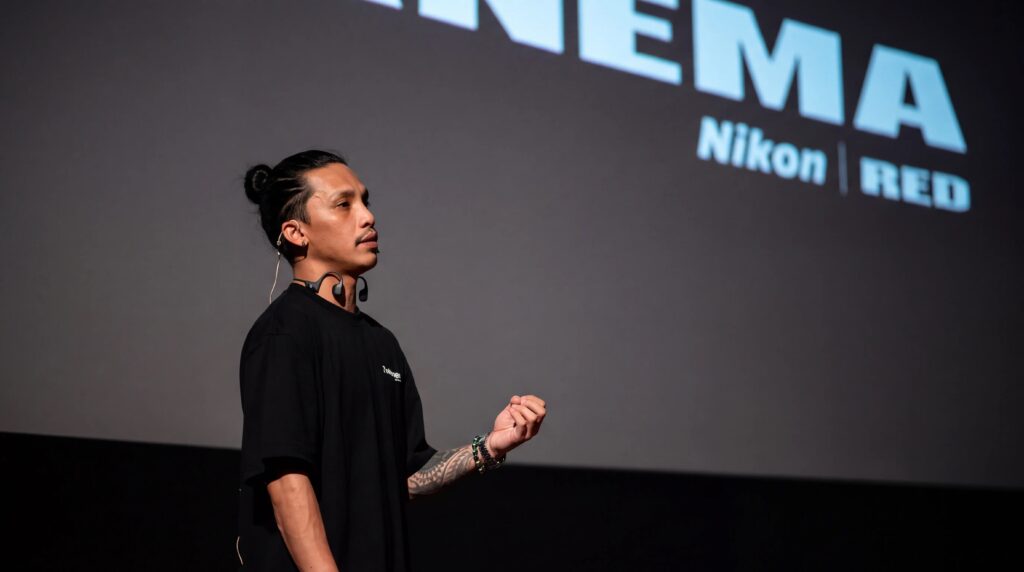
Invited to speak at one of Nikon’s major launch events in Karachi, Pakistan, he stood in front of a room and shared his creative journey — the same journey that had begun with a self-taught amateur on his days off. “Standing on that stage and sharing my experiences was a full-circle moment for me,” James says. “I started as someone walking around Dubai with a camera on my days off, simply trying to learn. Years later, that same passion has taken me to different countries and allowed me to share what I have learned with other creators.”
Dubai’s real gift, James says, was less about opportunity than about proof of what he could do with it. “Being surrounded by that diversity has challenged me creatively and professionally. It made me realize that your background does not have to determine how far you can go,” the cinematographer says. But he is quick to correct any impression that the city simply hands out success. “Opportunities do not automatically become success,” James says. “You still have to work hard, remain disciplined, build relationships, continuously improve yourself, and find your own path.”
Giving the ladder back
At this point in his career, the cinematographer has stopped measuring goals purely by what he can win. He has started thinking about what he can return. He already runs workshops for aspiring creators, where he passes along not just technical craft but the missteps and lessons that shaped him. His message to beginners is a rebuke of every excuse he once could have made himself: you do not need the best equipment, the perfect conditions, or all the answers before you start.
His next ambition is to remove the last barrier that once stood between him and his own dream — money. “My future goal is to develop free online coaching sessions where aspiring photographers, videographers, and filmmakers can learn from my experiences regardless of their financial situation,” James says. He remembers exactly what it felt like to hold a dream with empty pockets. “If the knowledge I have gained can make someone else’s journey a little easier, I want to share it.”
Ask him what he wants to leave behind, and the answer is not a portfolio. “I want my legacy to be more than the campaigns I created or the brands I worked with,” the Nikon instructor says. “I want it to include the people I encouraged to believe that their own journey was possible.”
His advice to fellow Filipinos abroad carries the weight of someone who has lived every line of it. He tells them not to bury the hard things they have already survived, but to convert them. “Instead of carrying those experiences as anger or bitterness, turn them into fuel,” James says. He is realistic about how heavy the expat life can be — the self-doubt, the loneliness, the nagging question of whether the sacrifice is worth it. His reframing of those low moments is the closest thing he has to a creed: “A difficult chapter does not mean you have a bad story.”
For all the awards and stages, his definition of success circles back to the boy selling eggs to stay in school. “True success is being able to look back at the person you once were, appreciate every struggle that shaped you, provide a better life for the people you love, and hopefully inspire someone else to believe that they can do the same,” James says. He came to Dubai to find his mother. He ended up finding himself — and now spends his days teaching others how to look for the same thing through a lens.
