



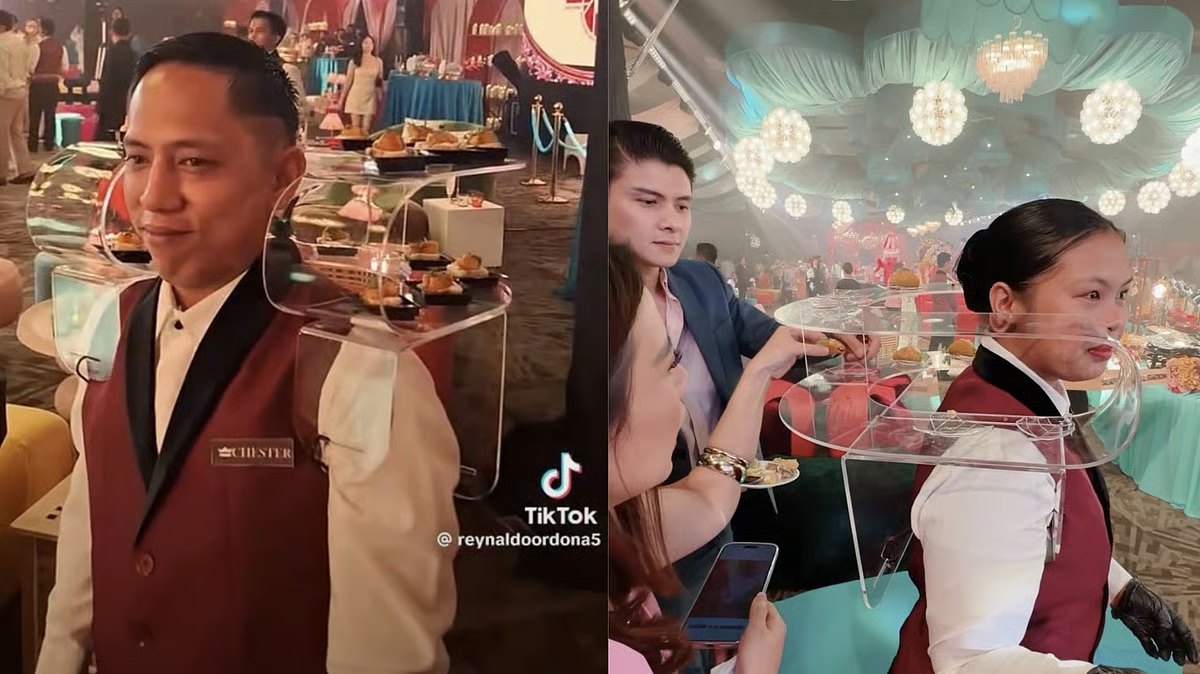

A content creator’s post did what most viral moments do — it moved faster than anyone could prepare for. When clips from Nice Print Photo’s 20th anniversary celebration began circulating online, the backlash followed almost immediately, forcing two companies to respond publicly within days of each other.

At the center of the controversy: a food service and entertainment concept that placed staff in tray-fitted headpieces and positioned women in lamp-like costumes with their faces covered. Critics wasted little time labeling it dehumanizing, with many questioning how the idea made it past the planning stage at all.
Juan Carlo, the event’s catering partner, was among the first to acknowledge the damage. “We have seen the concerns raised… and we hear you,” the company said. “As a catering team, we take full responsibility for how our service is experienced… We recognize that it may have caused discomfort to some.”

Nice Print Photo addressed the controversy in a statement on Sunday, March 22. “While the concept was intended as an artistic performance, we duly recognize that the execution was perceived by some as insensitive and may have caused discomfort. This was never our intention,” it said, adding: “We sincerely apologize to those who may have felt discomfort as we fell short of the care and respect we strive to uphold… We will use this as an opportunity to reflect and be more mindful in how we bring creative concepts to life moving forward.”
Content creator Toni Sia, whose post helped spread the footage, also walked back her involvement. “I sincerely apologize to everyone who felt hurt, offended, or uncomfortable because of it,” she wrote, acknowledging that the caption she used “did not fully reflect the respect” she had for the people in the concept.
The phrase “out of touch” appeared repeatedly across comment sections, alongside “dehumanizing” — language that pointed less to the aesthetics of the stunt and more to what critics saw as a fundamental misjudgment about using people as décor.
